
Prescription-only access in the United States
Is Clomid Prescription Only? Access and Over-the-Counter Status
Is Clomid prescription only? Yes. Clomiphene citrate tablets are labeled Rx only and are not an unrestricted over-the-counter product in the United States. Legitimate access includes a licensed clinician’s patient-specific decision and dispensing by a licensed pharmacy that receives and matches a valid prescription.
DailyMed identifies clomiphene citrate tablets as prescription medicine.
The prescription follows assessment of the treatment reason, health history, medicines and contraindications.
The pharmacy verifies the prescription and supplies a patient-labeled product.
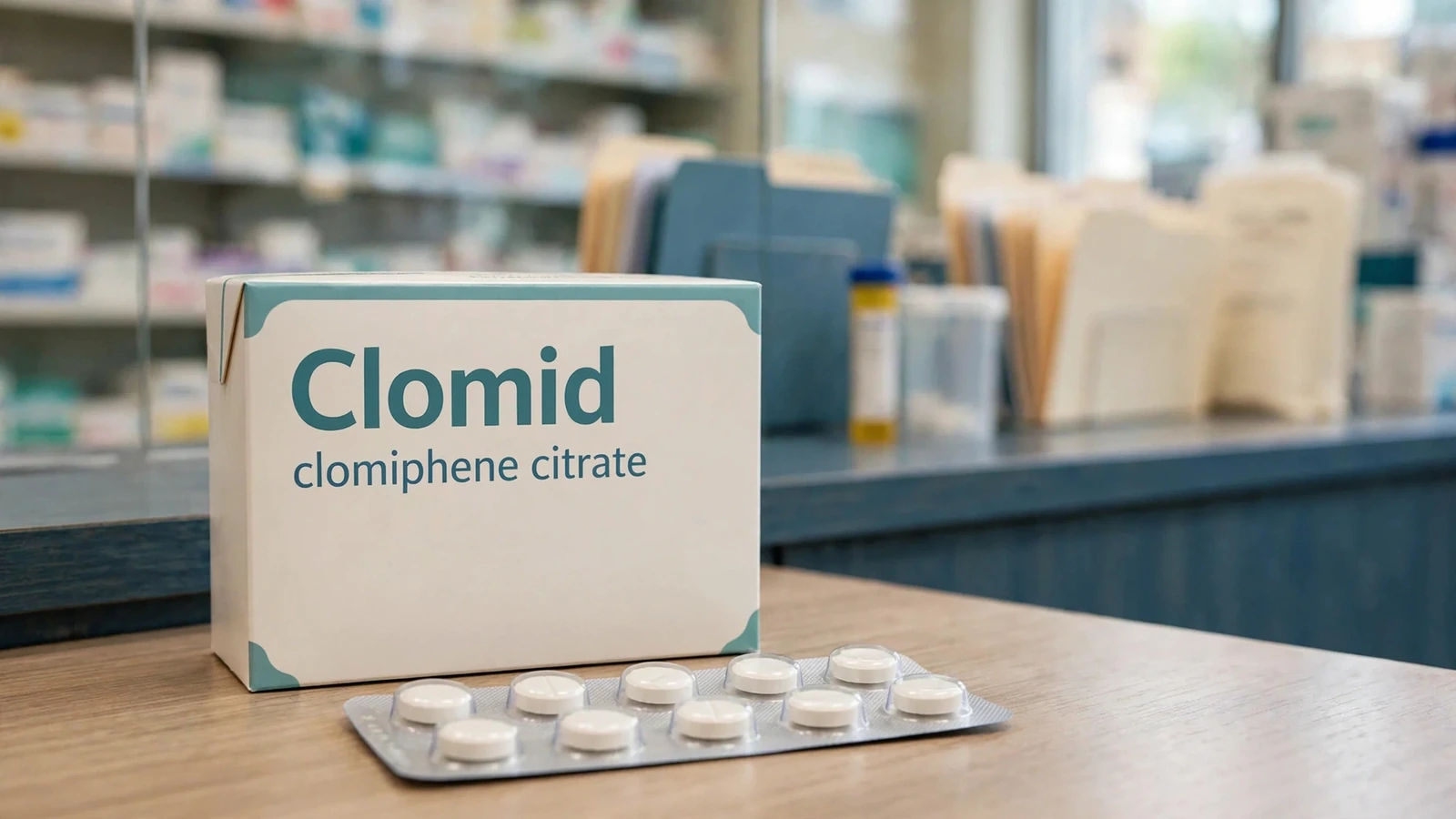
Is Clomid prescription only in the United States?
Prescription status reflects the need for professional assessment and controlled dispensing, not merely the location of the product. Clomiphene has indications, contraindications, warnings and patient-specific directions that cannot be safely reduced to a shelf label. The clinician determines whether the medicine fits the individual situation. The pharmacy then verifies and dispenses the authorized product and remains available for questions.
MedlinePlus directs patients to tell the clinician about allergies, all medicines and supplements, and important medical history. It specifically identifies liver disease, ovarian cysts other than those related to polycystic ovary syndrome, fibroids, abnormal vaginal bleeding, and pituitary, thyroid or adrenal disease for discussion. Pregnancy and breastfeeding status are also relevant. A no-prescription sale has no accountable way to show that these questions were asked and applied.
| Prescription safeguard | What it documents | What an OTC shelf cannot provide |
|---|---|---|
| Clinical decision | Why clomiphene was selected for this patient | Individual diagnostic and contraindication assessment |
| Directions | Patient-specific use instructions | A plan tailored to current findings |
| Dispensing record | Product, quantity, pharmacy and patient label | Traceable prescription-to-product matching |
| Professional contact | Prescriber and pharmacist routes for questions | Accountability for clarification and follow-up |
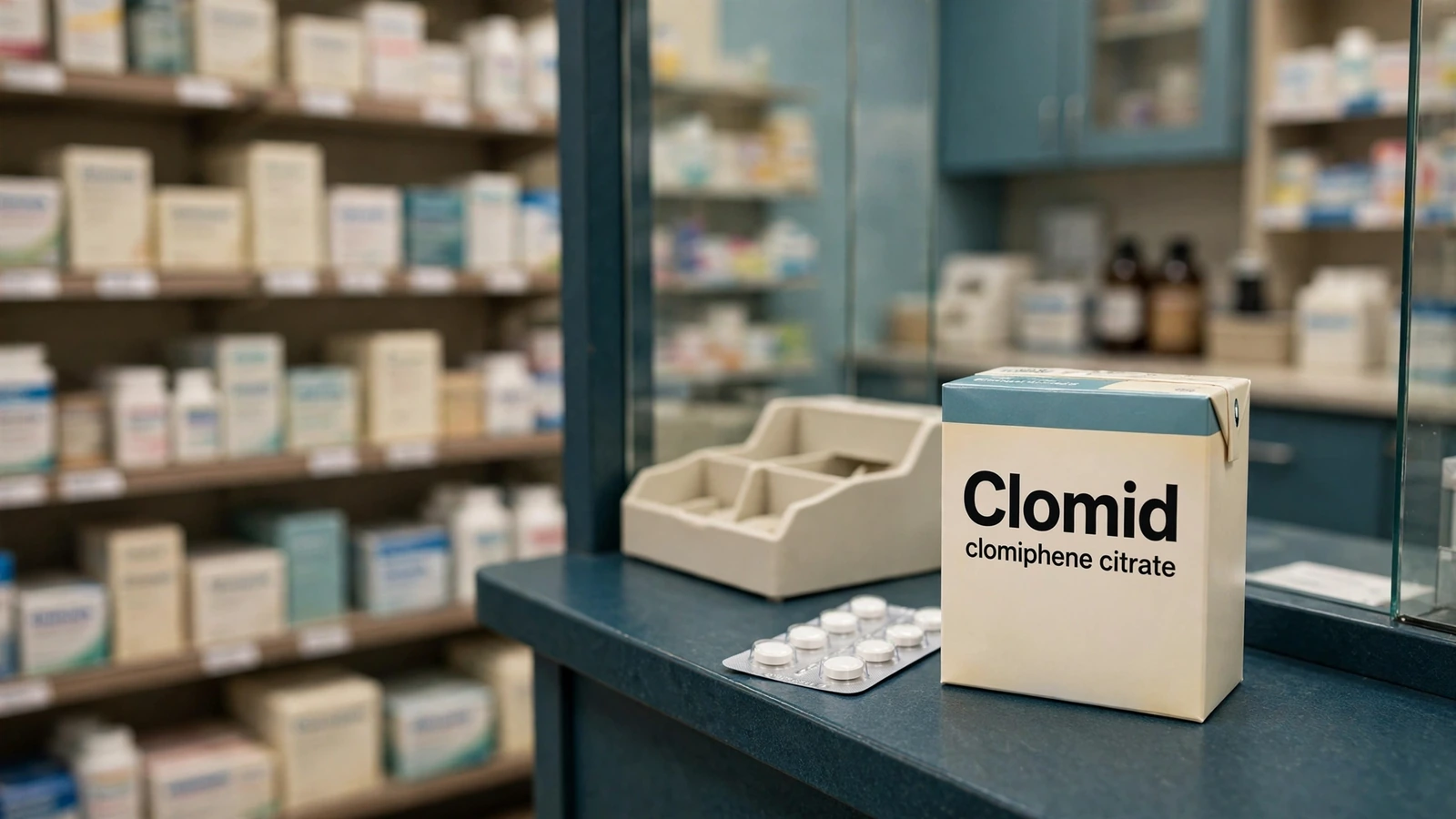
Is Clomid prescription only when ordered online?
A website may use phrases such as “no prescription needed,” “OTC Clomid,” “instant approval” or “doctor not required.” Those phrases describe the seller’s behavior, not the medicine’s legal or clinical status. FDA identifies an online pharmacy that allows prescription medicine purchases without a prescription as a warning sign. The absence of a safeguard should not be treated as a benefit.
A questionnaire can be part of collecting information, but the form itself is not a prescription. A licensed clinician must assess the individual information and decide whether to issue an authorized order. The outcome may be a prescription, a request for more information, a different plan or a recommendation for in-person care. Payment or completion of a form should not guarantee approval.
What a valid Clomid prescription service should verify
- Identity and history are collected. The service explains who provides care, what information is required and how privacy is handled.
- A licensed clinician assesses the patient. Treatment reason, history, current medicines, contraindications and monitoring needs are considered.
- The clinician makes a decision. A prescription is issued only when appropriate; the decision is not predetermined.
- A licensed pharmacy receives the prescription. It verifies patient, prescriber and product information and contacts the prescriber when clarification is needed.
- The patient receives a labeled product. The package, seal, medicine, strength, directions, quantity and pharmacy details are checked before use.
For the boundary between prescription status and unsafe-source marketing, return to Clomid without prescription offers: requirements and seller risks. This page focuses on the Rx-versus-OTC question.
Clinical questions that an OTC claim skips
Clomiphene can cause adverse effects and requires attention to warning symptoms. MedlinePlus lists blurred vision as an effect that can impair driving or machinery use and directs patients to follow clinician instructions. The official DailyMed label contains contraindications and warnings that need to be interpreted for the individual. A seller’s generic disclaimer cannot determine whether a symptom is expected, concerning or urgent for a particular patient.
Monitoring also depends on the treatment context. This page does not provide a universal dose or schedule. Do not use an old prescription, another person’s directions or an internet calendar to replace current patient-specific instructions. If a dose is missed or directions conflict, contact the prescriber or pharmacist. MedlinePlus advises not doubling a dose to make up for a missed one.
Prescription-status questions
Is Clomid prescription only or available over the counter?
It is prescription only. DailyMed labels clomiphene citrate tablets as Rx only in the United States.
Can an online service issue a prescription?
A licensed clinician may issue a prescription after a patient-specific assessment when treatment is appropriate and applicable requirements are met. The outcome cannot be guaranteed in advance.
Why is a pharmacy license relevant?
The state-board record helps establish the legal dispensing entity, location and accountability. A website logo or badge is not enough.
How to verify an online Clomid prescription service
Begin by identifying the clinical service and the dispensing pharmacy as separate legal entities. The clinical service should explain who conducts the assessment, how the clinician is licensed for the patient’s location, what information is collected, and how the outcome is communicated. The pharmacy should disclose its legal name, physical address, state-board license and a route to a licensed pharmacist. A shared website does not eliminate the need to verify both roles.
During the assessment, provide a complete current medication and supplement list rather than only the products that seem related. Include allergies, prior clomiphene use, adverse effects, the treatment reason, relevant testing and changes since any previous prescription. If the clinician requests additional information or recommends in-person care, that is a possible clinical outcome. A legitimate service should not convert every submission into the same prescription.
If a prescription is issued, save the authorized medicine name, strength, dosage form, directions and quantity. Confirm which pharmacy receives it. Do not forward a screenshot or modify the directions. At the pharmacy, ask whether the record was received and whether clarification, payment processing or stock questions remain. “Prescription issued” and “ready for dispensing” are different statuses.
When the package is supplied, read the patient label before opening it. Match the patient, medicine, strength, directions, quantity, prescriber and pharmacy. Check the seal and expiration. If tablets look unfamiliar, ask the dispensing pharmacist to identify the product; legitimate generic products can differ in appearance. If the label is missing or the named pharmacy denies dispensing it, keep the package sealed and review the counterfeit-product guidance.
Finally, preserve the follow-up route. Know whom to contact about symptoms, missed-dose instructions, unclear directions or monitoring. Prescription-only status is not a paperwork obstacle added after the medical decision; it is the structure that keeps assessment, instructions, dispensing and follow-up connected to the same patient.
What to do when a seller says the rules are different
Ask for the legal pharmacy name, physical location, dispensing jurisdiction and state-board license. Do not accept a seller’s statement that a prescription is unnecessary as proof. DailyMed’s U.S. labeling identifies clomiphene citrate tablets as Rx only, and FDA treats no-prescription sales of prescription medicines as an unsafe-pharmacy warning sign.
A seller may say that a remote “doctor approval” is included. Verify the clinician’s identity and licensing context, whether a genuine patient-specific assessment occurs, and which pharmacy receives any prescription. An automatic approval message, a generic certificate or a form completed after payment does not establish an accountable prescribing decision.
If the seller claims the product comes from another country or an unnamed warehouse, pause. FDA explains that it cannot guarantee the safety or effectiveness of medicines outside the legitimate U.S. drug supply chain. A domestic return address does not prove where the medicine was manufactured, stored or dispensed.
Use the state-licensed pharmacy route even when the seller’s package looks professional. Verification should happen before payment and before medical information is uploaded. If the source fails, do not try to repair the transaction by requesting a different package from the same anonymous operation.
Prescription status also means directions belong to the named patient. Do not share tablets, use another person’s label or treat a previous household prescription as a substitute. The pharmacist can identify the product, but only the treating clinician can determine whether a current prescription is appropriate for the individual.

Clinical subject-matter profile
Medication safety, outcomes research and evidence appraisal
This specialist profile provides subject-matter context; individual diagnosis and treatment decisions require direct clinical care.