
Missing screening, monitoring and product controls
Clomid Without Prescription Risks: Missing Screening and Product Controls
Clomid without prescription risks begin before the first tablet. Obtaining clomiphene without a prescription can remove the clinical assessment that identifies contraindications, the patient-specific directions that control use, the monitoring plan that detects problems, and the licensed supply chain that supports product identity.
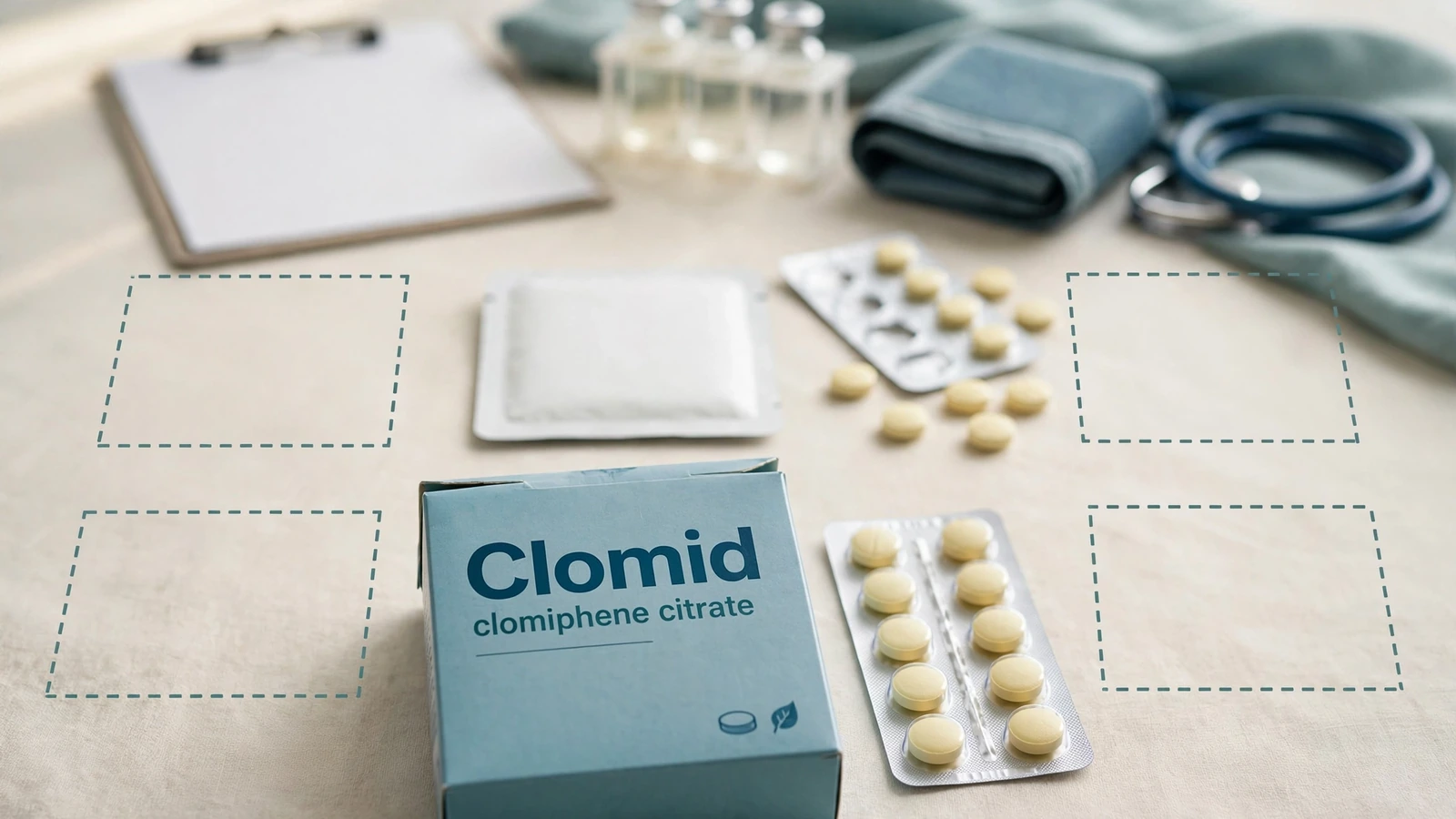
The medicine may be used without confirming the condition or excluding contraindications.
A copied schedule may not match the patient, product or current clinical plan.
An anonymous source can supply counterfeit, expired, damaged or mishandled medicine.
Without follow-up, concerning symptoms or treatment failure may be misread or ignored.
Clomid without prescription risks before the first tablet
Clomiphene is not selected by matching a symptom to an advertisement. The clinician first determines the treatment context and whether the medicine is an appropriate option. MedlinePlus tells patients to disclose allergies, all prescription and nonprescription medicines, vitamins and supplements, and important health history. It highlights liver disease, certain ovarian cysts, fibroids, abnormal vaginal bleeding, pituitary, thyroid or adrenal disease, and pregnancy or breastfeeding status for discussion.
Bypassing a prescription can mean that none of those details is assessed. The person may be treating the wrong problem, using a medicine that conflicts with a condition, relying on an old plan, or missing a need for additional assessment. Even when clomiphene was used before, a prior prescription is not a permanent authorization. Health status, other medicines and the reason for treatment can change.
| Missing step | Information not applied | Safer response |
|---|---|---|
| Diagnosis and candidacy | Treatment reason, alternatives and contraindications | Seek patient-specific clinical assessment |
| Medication reconciliation | Current prescriptions, OTC products and supplements | Provide a complete current list |
| Individual directions | Authorized strength, timing and duration | Follow the current prescription label |
| Monitoring | Response, symptoms and follow-up decisions | Use the clinician’s monitoring plan |
| Licensed dispensing | Product identity, storage and chain of custody | Use a state-licensed pharmacy |
Self-medication creates dose and timing uncertainty
This page does not provide a universal clomiphene dose or calendar. Patient-specific directions depend on the treatment context and clinician’s plan. Tablets from an uncertain source may not match the expected strength. Instructions copied from another person or an old course can be inappropriate. Increasing, repeating or extending treatment without reassessment can compound both product and clinical uncertainty.
Do not double a dose to compensate for a missed tablet and do not invent a restart schedule. MedlinePlus advises contacting the doctor for missed-dose instructions and not taking a double dose to make up for a missed one. If the label is missing, altered or inconsistent with the current plan, pause and contact the prescriber or licensed pharmacist.
Clomid without prescription risks when monitoring is missing
Clomiphene can cause adverse effects, and some symptoms need prompt attention. MedlinePlus includes blurred vision among possible effects and cautions against driving or operating machinery until the patient knows how the medicine affects them. The DailyMed label includes additional warnings and contraindications. The correct response depends on the symptom, severity, timing, patient history and clinician instructions.
An anonymous seller cannot replace the clinician or dispensing pharmacist. If you experience new visual symptoms, severe pain, breathing difficulty, marked swelling, or another sudden or concerning change, seek prompt medical assessment. Tell the clinician what product was taken, the stated strength, the amount and timing, and where it came from. Keep the package and seller records for identification.
Product risk and clinical risk can occur together
FDA warns that unsafe online pharmacies may supply products with too much, too little or no active ingredient, a wrong ingredient or harmful ingredients. The product may be fake, expired or otherwise unsafe. If a person also lacks a current prescription and monitoring plan, there may be no reliable dose record, no known chain of custody, no pharmacist to contact and no clinician expecting follow-up.
Unsafe sites can also misuse personal and financial information. A low price or discreet parcel does not compensate for an unverifiable pharmacy license or missing prescription. Verify the legal pharmacy name, physical U.S. address, state-board license and access to a state-licensed pharmacist before providing sensitive information.
Do not take the product. Keep the package, label, receipt and messages. Contact a licensed pharmacist and the treating clinician. For specific visual and chain-of-custody checks, use the counterfeit Clomid warning signs.
Risk questions
Do Clomid without prescription risks still apply after prior use?
Yes. A prior prescription does not establish current candidacy, directions or monitoring. Contact the clinician for a current assessment.
Can a seller’s laboratory report prove the package is safe?
A document supplied by an unverifiable seller does not establish a licensed dispensing chain or that the delivered product matches the document. Use a licensed pharmacy and pharmacist verification.
What should I bring to a clinician after uncertain use?
Bring the package, label, receipt, seller messages and a record of tablets taken and symptoms. Do not discard evidence that may help identify the product.
Prepare a factual account after unmonitored use
If clomiphene was taken without a current prescription, a precise account is more helpful than a general statement. Write down the product name shown, stated strength, tablet appearance, number of tablets taken, date and time of each dose, source, purchase date and storage conditions. Add all symptoms and when they began. Include current prescriptions, over-the-counter products and supplements, because the clinician needs the complete context.
Preserve the outer parcel, carton, bottle or blister, patient label if present, receipt and seller communications. Do not alter the package, combine remaining tablets with another container or discard the label. Photographs can document condition, but keep the physical product unless a licensed professional or reporting authority instructs otherwise. This evidence can help the pharmacist determine whether the product matches a known dispensing record.
Contact a clinician or pharmacist using independently verified details. State plainly that the product was not dispensed against a current prescription. Do not minimize the source or guess at authenticity. If the named pharmacy is legitimate, ask whether it dispensed the prescription number and product. If it did not, do not continue discussing the medicine through the seller’s contact route.
The clinical response depends on what was taken, the patient’s history and current symptoms. This page cannot tell an individual to continue, stop, restart or change a dose. Severe, sudden or concerning symptoms require prompt medical assessment. If there are visual changes, avoid driving or operating machinery and seek advice consistent with the official patient information and clinician instructions.
Once the immediate concern is addressed, rebuild the normal safeguards: confirm the treatment reason, reconcile medicines, identify contraindications, establish current directions, choose a licensed pharmacy and document follow-up. The purpose is not to recreate the seller’s transaction through another channel; it is to restore patient-specific clinical control and product traceability.
Do not let embarrassment delay care
Tell the clinician the real source and amount taken. The information affects product identification, risk assessment and what records may be useful. A vague statement such as “a fertility tablet” can conceal the stated strength, timing and possibility of a counterfeit product.
If there are no symptoms, professional advice may still be needed to decide what information should be documented and whether follow-up is appropriate. If symptoms are present, report their onset, severity and progression. Do not wait for the seller to explain them, and do not take another tablet as a test.
The same caution applies to leftover tablets from a legitimate old prescription. Known origin does not establish current directions, candidacy or expiration. Keep the old label for the clinician, but do not resume from it without a current decision. Safe treatment requires current health information and a new clinical decision, not around available tablets.
If the product was stored in heat, moisture, direct light or an unlabeled container, include that information. Storage uncertainty may matter even when the original source was legitimate. Do not transfer remaining tablets into a new container before a pharmacist has documented the product and advised what to do with it.

Clinical subject-matter profile
Medication safety, outcomes research and evidence appraisal
This specialist profile provides subject-matter context; individual diagnosis and treatment decisions require direct clinical care.