

Prescription · product match · licensed pharmacy
Buy Metronidazole: Safely Purchase Online for Your Needs
To buy metronidazole safely, compare the real steps and costs between a prescription and a completed pharmacy handoff. Follow the written prescription, matched product, itemized quote, and licensed dispenser. When the records align, continue to buy metronidazole online from a licensed pharmacy.
A medicine order is not complete when a form is submitted. The clinician and pharmacy perform different jobs. The clinician decides whether the condition fits metronidazole and which route is appropriate. The pharmacy confirms that the issued order matches a licensed, traceable product. Cost documentation and brand/generic comparison belong between those decisions, not in place of them.
- 01 · EvidenceCondition, symptoms, history, and tests
- 02 · DecisionClinical fit and formulation selected
- 03 · PrescriptionPatient-specific order issued
- 04 · MatchProduct, form, strength, and quantity aligned
- 05 · ReleasePharmacist check and sealed fulfillment
Process, not automatic approval
Buy metronidazole safely after the clinical decision
Metronidazole is used for selected bacterial and protozoal infections, but similar symptoms can have different causes. A clinician may need examination findings, a specimen, laboratory information, dental findings, dermatology assessment, or another form of evidence. If the information does not support metronidazole, the request should stop or move to a different care setting. An earlier prescription does not establish that a later episode is the same condition.
The route is part of the decision. An oral tablet, vaginal gel, dermatologic gel, cream, lotion, and intravenous product are not interchangeable shopping options. Each corresponds to a different treatment context and package. The pharmacy’s job is to fill the order that was issued, not to choose a route because one product is cheaper or easier to ship.
The handoff record
Documents needed to buy metronidazole safely
Clinical assessment record
This captures the condition considered, relevant history, allergy information, current medicines, symptoms that require another level of care, and the basis for the decision. It should not be a marketing receipt or an approval badge.
Patient-specific prescription
The order identifies the patient, prescriber, medicine, route, formulation, strength, quantity, and directions. Ambiguous or conflicting information must be clarified before dispensing rather than interpreted by the buyer.
Itemized pharmacy quote
The quote separates product, dispensing, delivery, insurance processing, and any service charges. It should describe the exact prescribed item without suggesting that payment guarantees a clinical outcome.
Final dispensing record
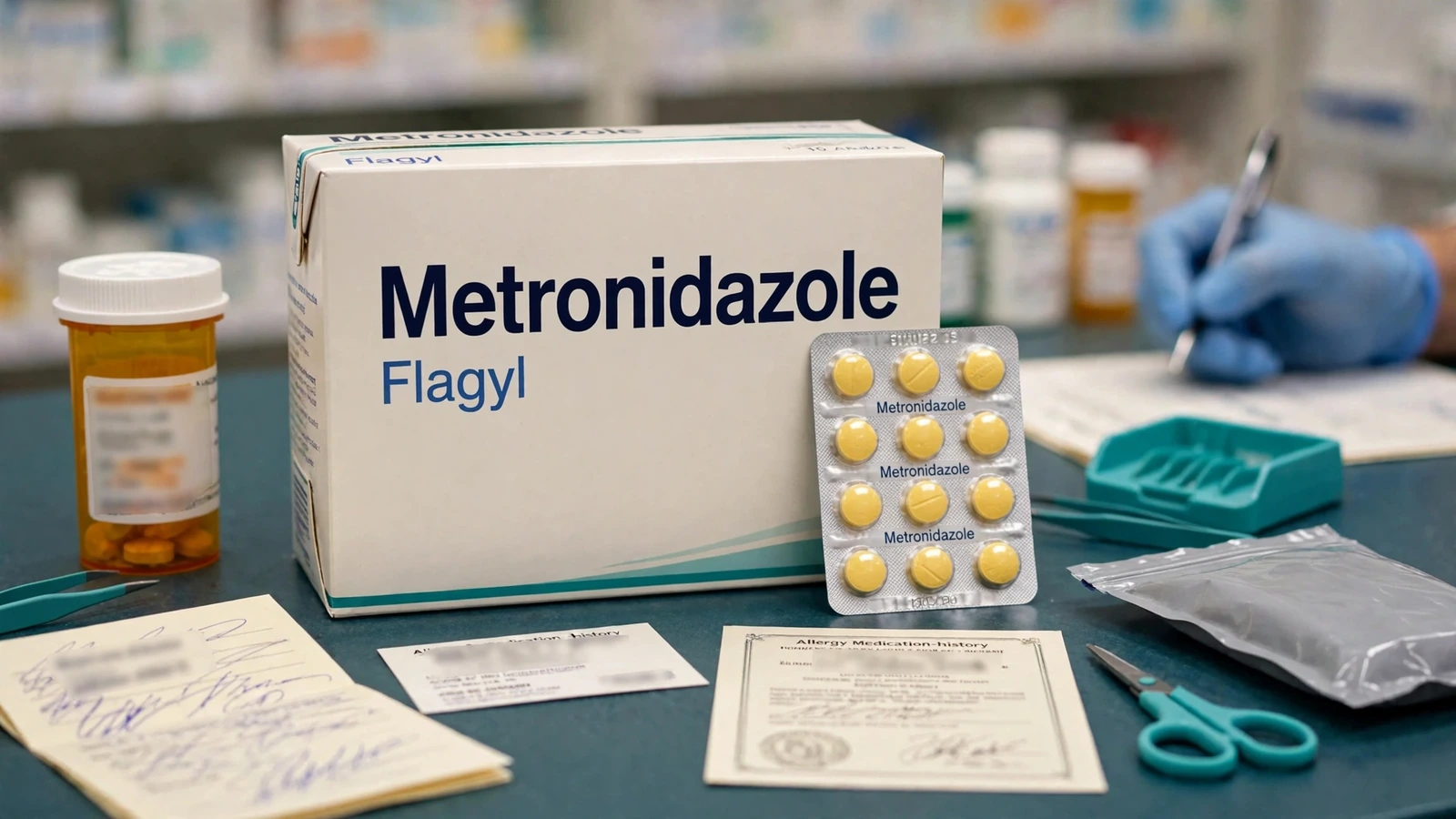
The package label, product identity, lot and expiration information, pharmacist contact route, and pickup or tracking notice create a record of what was actually supplied.
From quote to release
Use a transaction ledger instead of a single confirmation screen
A reliable process leaves a traceable sequence: the clinical service identifies the responsible clinician and decision; the prescription records the patient-specific product fields; the pharmacy identifies the licensed dispenser and pharmacist contact; the quote names the exact item and every charge; and the final notice confirms what was released or why the order was held. Each record should refer to the same patient, route, formulation, strength, and quantity.
Before payment
Save the service scope, cancellation and refund terms, pharmacy identity, pharmacist contact route, itemized quote, delivery limits, and the exact prescription fields. A cart that substitutes a different form or hides the dispenser should be paused.
After payment
Keep the receipt, pharmacy notice, clarification messages, patient label, tracking or pickup record, and counseling information. A payment receipt is not proof that a medicine was clinically approved or correctly dispensed.
If the order is held
Record the reason: missing information, product availability, prescription ambiguity, interaction question, insurance issue, or need for direct care. Resolution should come from the responsible clinician or pharmacist rather than a sales promise.
If the product changes
Ask the pharmacist to identify the manufacturer, dosage form, strength, appearance, substitution basis, and updated label. Do not open or use a package that conflicts with the prescription record.
This ledger also separates ordinary logistics from clinical urgency. Delayed delivery, a coupon problem, or a coverage decision may affect the transaction, but severe or rapidly worsening symptoms require medical assessment rather than a faster shipping tier.
Common questions
Questions before buying metronidazole safely
Does completing an online form guarantee a prescription?
No. A licensed clinician must decide whether the condition, history, and requested route support metronidazole. The outcome can be a prescription, a different plan, more information, or in-person care.
What should match before the pharmacy hands over the medicine?
The patient, prescriber, medicine, route, formulation, strength, quantity, directions, pharmacy identity, and sealed package should agree with the issued order.
Product identity
Buy metronidazole safely with a matched pharmacy record
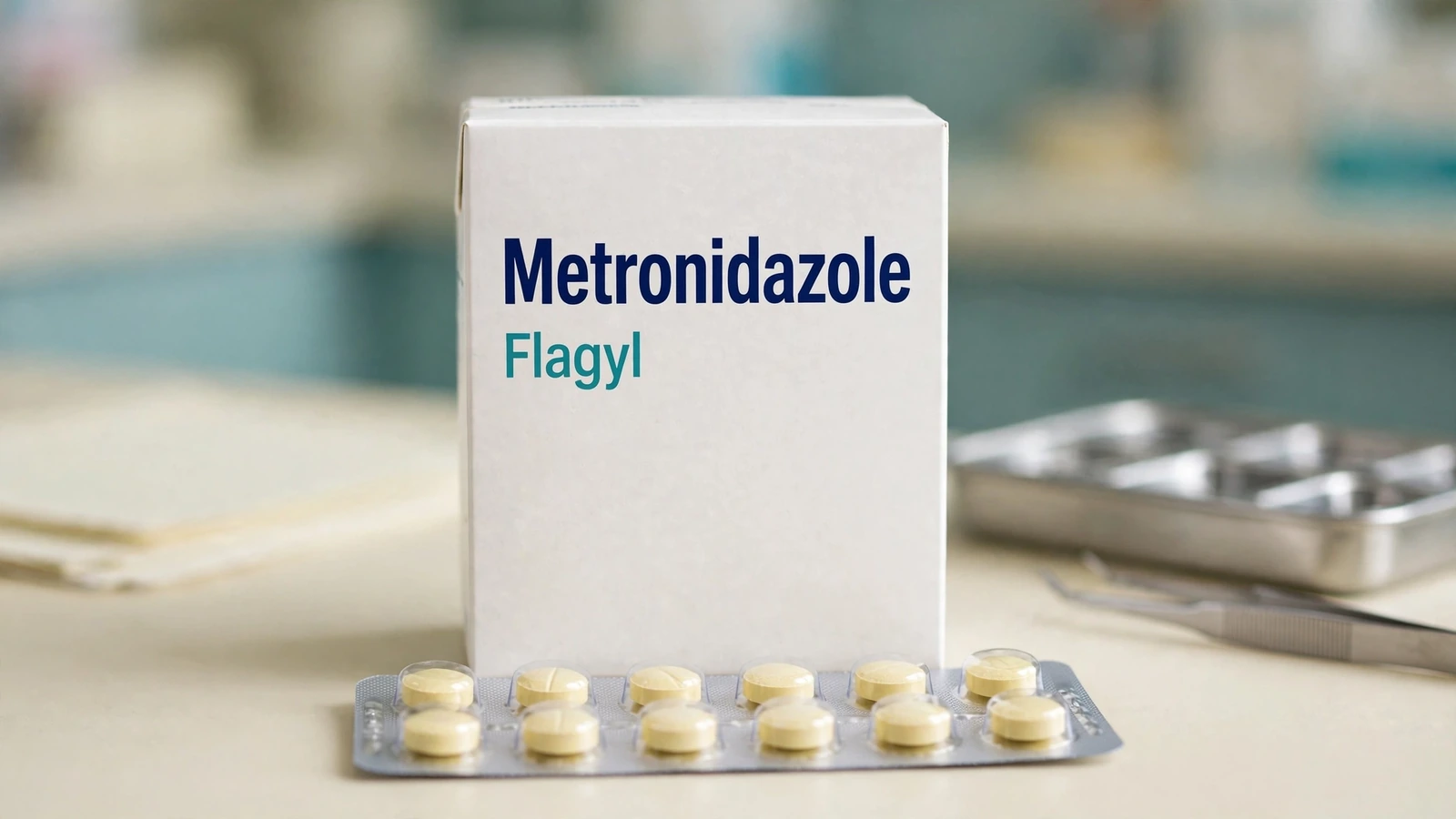
Metronidazole may appear under the Flagyl brand name or as a generic product. The active ingredient is only one match field. The pharmacist also checks route, dosage form, strength, quantity, directions, patient, prescriber, and allergies. A carton that looks familiar can still be the wrong route or strength. Likewise, an unfamiliar generic carton may be appropriate when every prescription field agrees and the product comes from a legitimate supply chain.
| Match field | Prescription record | Package or label | If they differ |
|---|---|---|---|
| Active ingredient | Metronidazole | Same ingredient stated | Hold and clarify |
| Route and form | Oral, vaginal, or skin | Exact intended formulation | Do not substitute |
| Strength and quantity | Patient-specific fields | Exact fields supplied | Contact prescriber |
| Directions | Issued instructions | Patient label agrees | Pharmacist resolves |
| Patient and prescriber | Identified on order | Identified on label | Do not release |
Patients should compare the final label with the prescription information they received and ask the pharmacist about any difference before opening or using the package. The product-match page below explains the physical checkpoints in more detail.
Licensed dispensing
Verify the dispenser before sharing health or payment data
An online storefront should identify the dispensing pharmacy, not only a service brand or marketplace. Confirm the legal business name, physical address, licensing jurisdiction, contact details, and access to a pharmacist. FDA BeSafeRx information directs consumers to avoid websites that sell prescription medicines without a prescription or do not provide a licensed pharmacist for questions.
Security badges, customer ratings, dramatic discounts, cryptocurrency acceptance, and claims of international sourcing do not establish pharmacy legitimacy. Licensing should be checked through the relevant state authority. The pharmacy should explain where it dispenses, how it protects health information, what happens when an order cannot be filled, and how a patient can report a product problem.
Transparent cost
A cash quote should identify every included service
Price comparisons are meaningful only when they refer to the same prescribed product and service scope. One quote may show medicine alone while another includes a clinical service, dispensing, standard delivery, or follow-up. Insurance adds another distinction: a pharmacy may be in network while the clinical service is not, or the product may require additional documentation. A patient should ask for an itemized total before authorizing payment.
No fixed price is stated here because formulation, strength, quantity, pharmacy, insurance, and delivery change the total. A current quote for the exact prescription is the useful evidence. Very low promotional numbers without a named product, quantity, pharmacy, and service scope are not comparable.
- Confirm whether the clinical service is included.
- Confirm the exact dosage form and quantity quoted.
- Separate pharmacy dispensing from delivery charges.
- Ask how insurance was processed and what remains unpaid.
- Keep the itemized quote and final receipt.
Three supporting decisions
Open the page that matches the unresolved process question
Price and cash cost
Separate medicine, service, pharmacy, delivery, and insurance lines without publishing invented prices.
Dispensing and product match
Follow the label, route, formulation, strength, quantity, and pharmacy identity checks before release.
Flagyl and generic forms
Distinguish brand identity from dosage form and learn why the prescription fields decide the match.
Common process failures
Stop the transaction when the records do not align
A package should not be released when the pharmacy cannot identify the prescription, the patient differs from the label, the formulation or strength does not match, the package is damaged, or the dispenser cannot be verified. A patient should also pause when a seller asks them to choose a dose, discourages pharmacist contact, offers to skip a prescription, or changes the product after payment without clinical clarification.
Urgent or worsening symptoms are a separate issue. Severe illness, breathing difficulty, facial swelling, seizures, confusion, loss of coordination, or a widespread rash requires prompt medical assessment. Delivery tracking is not a substitute for care.
Records worth keeping
- Clinical encounter summary
- Prescription information
- Itemized quote
- Pharmacy identity and contact details
- Final product label
- Payment receipt
- Pickup or tracking notice
- Pharmacist counseling notes
These records make it easier to resolve a mismatch, report a suspect product, or explain the medicine to another clinician.

Clinical subject-matter profile
Marisa Holubar, MD, MS, FIDSA
Infectious diseases and antimicrobial stewardship
Clinical focus: metronidazole use, medicine safety, and pharmacy records.
This educational page does not replace diagnosis, prescribing, pharmacy counseling, or urgent medical care.