
Brand record · generic record · dosage-form match
Flagyl vs Generic Metronidazole: Brand and Form Checks
Flagyl and generic metronidazole can share the same active ingredient, but a pharmacy still has to match the prescribed route, dosage form, strength, quantity, and patient directions. Brand identity does not make oral, vaginal, and dermatologic products interchangeable, and package appearance is not proof that a product is legitimate.
This comparison begins after a prescription exists. It does not recommend a seller or choose a formulation. The metronidazole dispensing process explains how the prescription, quote, pharmacy, and supplied product connect.
Brand
Flagyl record
The brand name identifies a particular marketed product history and package. The prescription, official label, dosage form, strength, and pharmacy record still decide what can be supplied.
Generic
Metronidazole record
A generic product identifies the active ingredient directly. The manufacturer and appearance can differ, but the dispensed product must correspond to the prescription and applicable substitution rules.
What equivalence does and does not mean
Flagyl vs generic metronidazole starts with the prescription
Patients often recognize a brand name more easily than an active ingredient. The pharmacist translates that brand reference into the actual prescription fields: metronidazole, intended route, dosage form, strength, quantity, and directions. If a generic product can be dispensed, the pharmacy selects an approved product that fits those fields and records the manufacturer supplied.
Equivalence does not mean that every product containing metronidazole can replace every other product. A tablet does not replace a vaginal gel, and a skin cream does not replace an oral prescription. Even two topical products can use different vehicles and application sites. The condition and route remain part of the clinical decision.
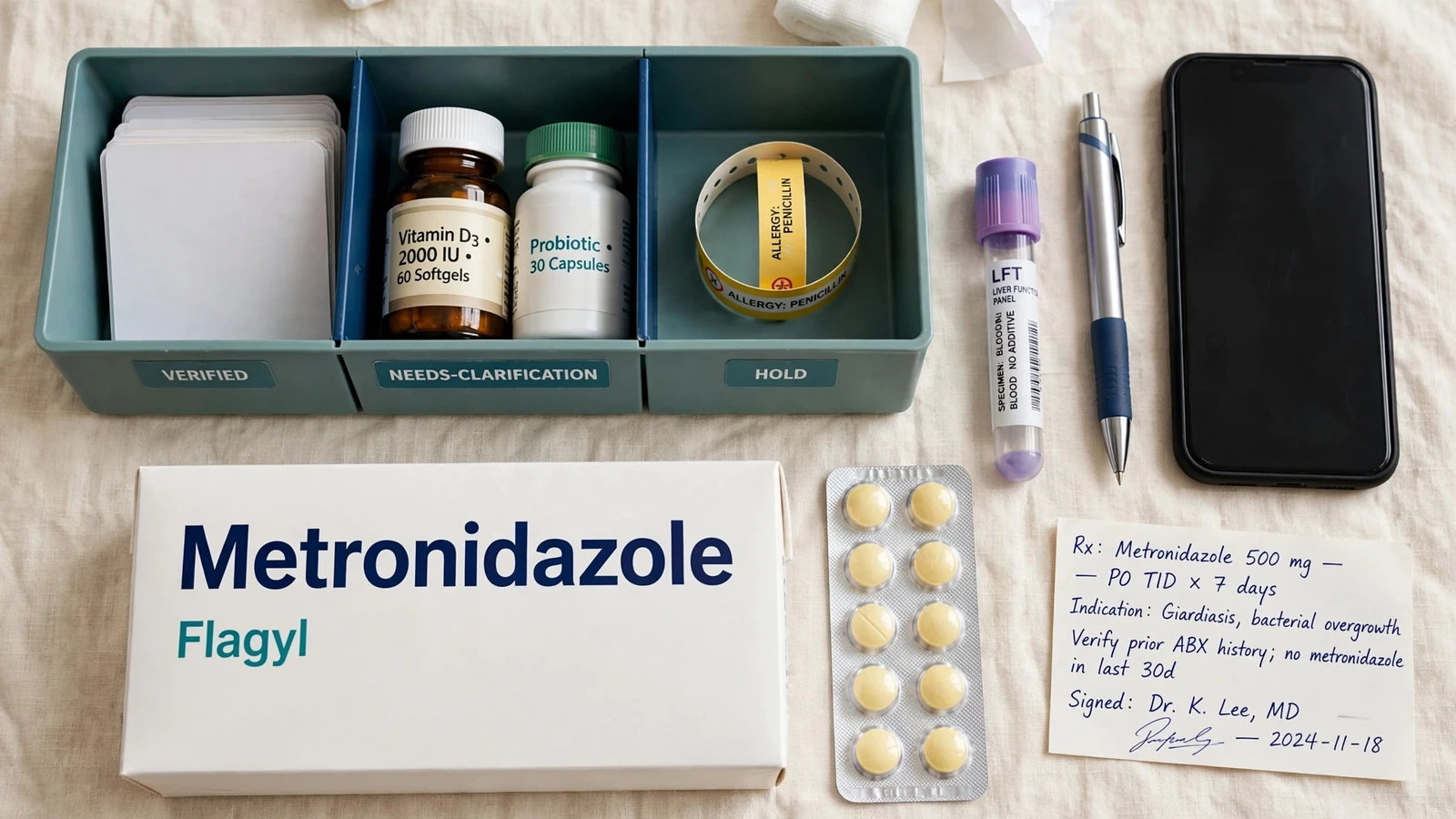
Comparison fields
Read beyond the front panel
| Field | Brand-style package | Generic package | Pharmacy check |
|---|---|---|---|
| Active ingredient | May be less prominent | Usually primary name | Must match prescription |
| Route and form | Specific marketed form | Specific generic form | Must be the prescribed route |
| Strength | Printed on label | Printed on label | Exact field match |
| Manufacturer | Brand manufacturer | Generic manufacturer | Traceable pharmacy stock |
| Appearance | Brand color and imprint | May look different | Explain unexpected change |
| Patient directions | Patient label | Patient label | Must reflect order |
A patient should not judge equivalence by box color, tablet shape, or a seller’s photograph. The pharmacist uses the prescription, official product information, stock record, and patient label. If the appearance changes, ask the dispensing pharmacy to identify the manufacturer and confirm the product before use.
Dosage forms
Flagyl vs generic metronidazole across dosage forms
Oral product
Tablets and capsules are systemic formulations used only when the diagnosed condition and prescription call for an oral route. The pharmacy matches strength, quantity, and directions.
Vaginal product
A vaginal formulation uses route-specific packaging and counseling. It is not the same product as dermatologic gel and should not be selected from a generic topical listing.
Dermatologic product
Gel, cream, or lotion intended for skin is matched to a dermatology plan. Vehicle and application site can differ even when the active ingredient name is shared.
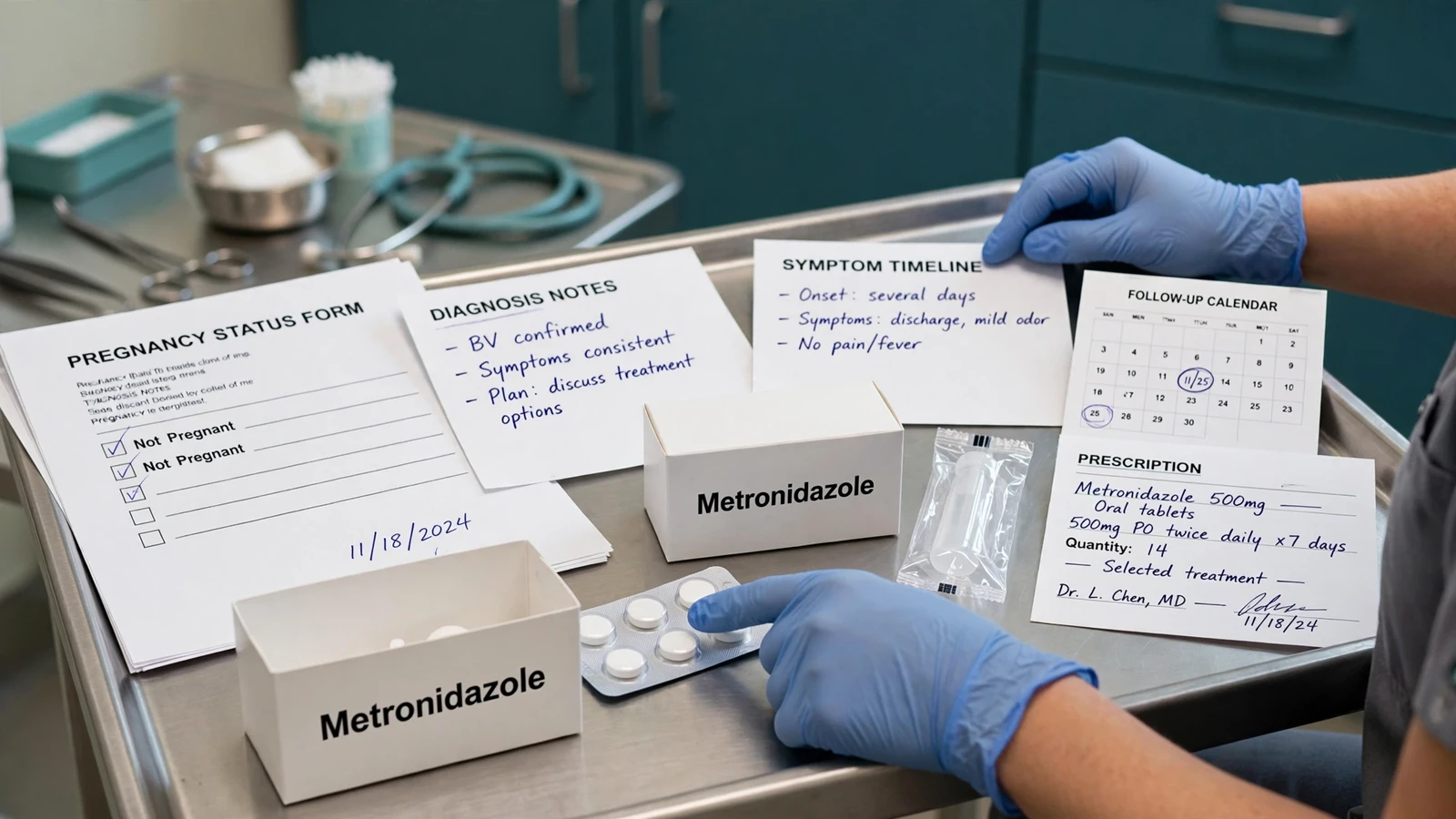
At the pharmacy counter
Ask for the identity behind a changed appearance
A refill or later prescription may be supplied by a different manufacturer. The tablet, carton, or label design can look unfamiliar. The pharmacist should identify the active ingredient, manufacturer, route, dosage form, strength, and quantity and explain why the product corresponds to the prescription.
Keep the patient label and package when asking a question. A loose tablet or cropped product photograph removes the fields needed to investigate. If the label differs from the prescription, the package is damaged, or the pharmacy cannot explain the product, do not use it until the discrepancy is resolved.
Supply-chain evidence
Brand styling is not an authenticity test
Counterfeit or diverted products can imitate colors, logos, and carton layouts. Conversely, a legitimate generic medicine may use unfamiliar colors and shapes. The stronger checks are the dispensing pharmacy’s identity and license, traceable sourcing, intact packaging, official label information, patient-specific label, lot and expiration information, and access to a pharmacist.
FDA consumer materials advise obtaining prescription medicines from a licensed pharmacy and avoiding sellers that bypass prescriptions or hide pharmacist access. A marketplace rating, influencer endorsement, unusually low price, or claim of international sourcing does not replace those safeguards.
Questions for the pharmacist
Clarify changes before leaving the package unopened
- Is this metronidazole product the prescribed route and dosage form?
- Does the strength and quantity match the order?
- Which manufacturer supplied this package?
- Why does the product look different from the previous supply?
- Do the patient label directions match the prescription?
- Whom should I contact if the package arrives damaged?
- Which patient information applies to this exact formulation?
These questions confirm the dispensing record; they do not ask the pharmacist to substitute a route or rewrite the treatment plan. If a formulation is unavailable, the pharmacist and prescriber resolve the next step.
Common mistakes
Avoid comparisons that erase the prescription
- Comparing oral and topical prices as the same product
- Choosing a brand carton without checking the active ingredient
- Rejecting a generic product because the color changed
- Accepting a generic product with the wrong route
- Using another person’s familiar-looking medicine
- Trusting a logo instead of pharmacy records
- Opening a mismatched package before clarification
Continue with product and cost checks
Connect brand identity to cost and product verification
Return to the prescription and dispensing process. The related pages show how to compare the quote for the exact product and how a pharmacist aligns the package with the prescription. Keep the prescription, stock package, patient label, pharmacy receipt, and any substitution message together. Those records let another pharmacist or clinician reconstruct what changed without relying on memory or brand appearance. Preserve the original container until every product-identity question has a documented answer.
Substitution record
How pharmacists document Flagyl vs generic metronidazole
A pharmacy may dispense an FDA-approved generic when the prescription and applicable substitution rules allow it. That does not make the package fields optional. Ask the pharmacist to identify the active ingredient, dosage form, strength, manufacturer, and imprint, and to confirm that the patient label describes the product actually supplied.
| Changed field | Acceptable explanation record | Reason to pause |
|---|---|---|
| Brand or manufacturer | Pharmacist identifies the selected approved product and substitution basis | The seller cannot name the dispensing pharmacy or manufacturer |
| Color, shape, or imprint | Pharmacist connects the appearance to the stock package and patient label | The appearance cannot be verified against the supplied product |
| Dosage form | The prescription, package, and label all identify the same oral, vaginal, or skin form | A gel, cream, capsule, or tablet is treated as interchangeable without clarification |
| Strength or quantity | The dispensed fields match the issued prescription | A cart or fulfillment notice silently changes a prescription field |
Keep the medicine sealed while a discrepancy is investigated. A photograph found online cannot prove that a tablet is authentic or that it belongs to the correct prescription. Use the pharmacy’s verified contact details and preserve the order, package, label, and communication record.
Inactive ingredients and tolerability
Ask product-specific questions without changing the prescription yourself
Manufacturer changes may alter tablet appearance and inactive ingredients. A patient with a prior reaction, allergy concern, swallowing issue, or unexplained new symptom should bring the exact package to the pharmacist and clinician. They can compare current labeling and decide whether the product or treatment plan needs clarification.
Do not split, crush, substitute, or change a formulation based on a brand comparison page. Product design and patient-specific instructions determine what is appropriate.
A familiar carton may feel reassuring, but branding does not establish the diagnosis, route, or dose. Conversely, a different-looking generic is not automatically wrong. The documented prescription-to-package match and licensed pharmacist confirmation are the decisive records.
Keep the current and prior labels together when appearance changes so a pharmacist can compare manufacturer, active ingredient, form, strength, and directions without relying on memory.

Clinical subject-matter profile
Marisa Holubar, MD, MS, FIDSA
Infectious diseases and antimicrobial stewardship
Clinical focus: medicine identity, substitution records, and pharmacy safety.
This page explains product identity and does not replace prescribing or pharmacist counseling.