
Post-prescription dispensing · product identity · label alignment
Metronidazole Dispensing and Product Match at the Pharmacy
Metronidazole dispensing is complete only when the patient-specific prescription, selected product, and final pharmacy label agree. The active ingredient is one checkpoint. The pharmacist also matches route, dosage form, strength, quantity, directions, patient, prescriber, allergies, package integrity, and traceability before release.
This page covers the physical and documentary match after a prescription has been issued. It does not choose treatment or recommend a pharmacy. The prescription and dispensing process shows how this check fits between the clinical decision and pharmacy handoff.
Four stations
Metronidazole dispensing begins with the issued order
The five-part product match
Name alone is not enough
Metronidazole can be supplied as oral tablets or capsules, a vaginal product, a dermatologic gel, cream, or lotion, and other formulations used in different care settings. A prescription for one route cannot be filled with another route merely because the active ingredient is the same. The dosage form and application site change the package, counseling, and safety information.
Strength and quantity are separate fields. A pharmacy cannot combine, split, or replace products simply to approximate the written order unless the prescriber and applicable pharmacy rules support that change. Directions on the patient label must reflect the issued prescription. If the prescription is unclear, the pharmacist contacts the prescriber rather than asking the patient to choose.
Document pairings
Metronidazole dispensing matches three records
Prescription ↔ stock package
The active ingredient, route, dosage form, strength, and quantity must correspond. The package should be intact and traceable through the pharmacy’s supply chain.
Prescription ↔ patient label
The patient and prescriber are correct, and the label directions do not conflict with the order. Any abbreviation or unclear instruction is resolved before release.
Stock package ↔ patient label
The label is attached to the medicine actually selected. It does not describe tablets when the package contains a topical or vaginal product.
Patient record ↔ final release
Allergies, current medicines, prior reactions, and counseling needs are considered before the sealed product leaves the pharmacy.
Field-by-field check
Use the mismatch table before accepting the package
| Field | What should agree | Possible mismatch | Correct response |
|---|---|---|---|
| Patient | Order and label | Different name or identifier | Do not accept |
| Active ingredient | Order and package | Different medicine | Pharmacist investigates |
| Route and form | Order, package, label | Tablet, vaginal, or skin product differs | Hold dispensing |
| Strength | Order and label | Number or unit differs | Clarify with prescriber |
| Quantity | Order and package | Count or package amount differs | Reconcile record |
| Directions | Order and label | Timing or route conflicts | Do not guess |
| Package condition | Intact and traceable | Damage, broken seal, missing information | Replace or investigate |
Route is visible
Separate oral, vaginal, and skin products before labeling
A dispensing workspace should make mismatched formulations difficult to confuse. Oral tablets, vaginal applicators, and skin tubes belong in distinct storage and verification locations. Scanning a barcode can support the process, but it does not replace the pharmacist’s check of the written order, stock package, and patient label.
When a product is unavailable, the pharmacy should not silently replace it with another route or formulation. The pharmacist contacts the prescriber, documents the decision, and supplies only a product that can be legally and clinically matched. The patient should receive new information when the appearance or manufacturer changes.
Brand and generic
Equivalent ingredient does not erase form checks
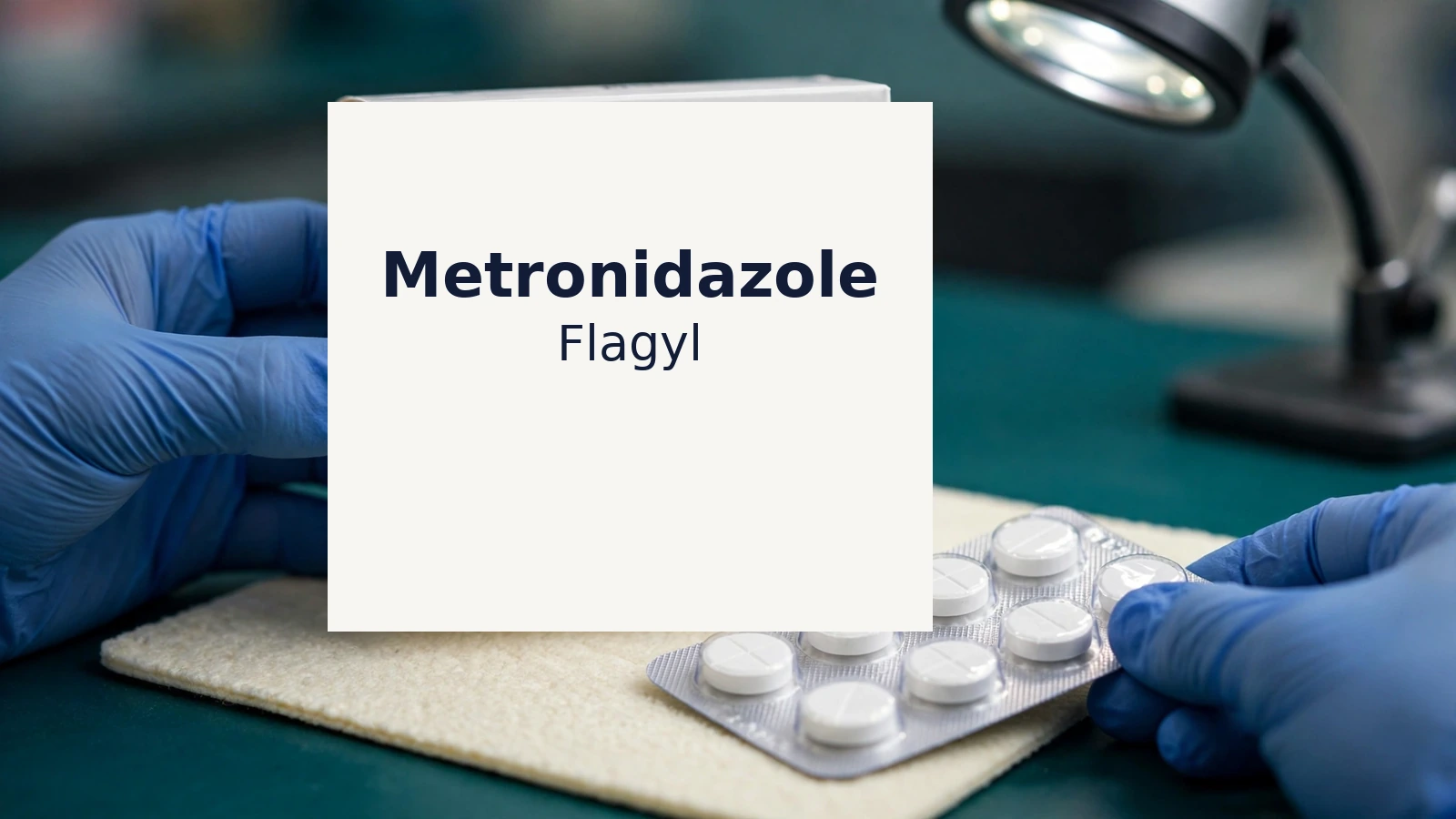
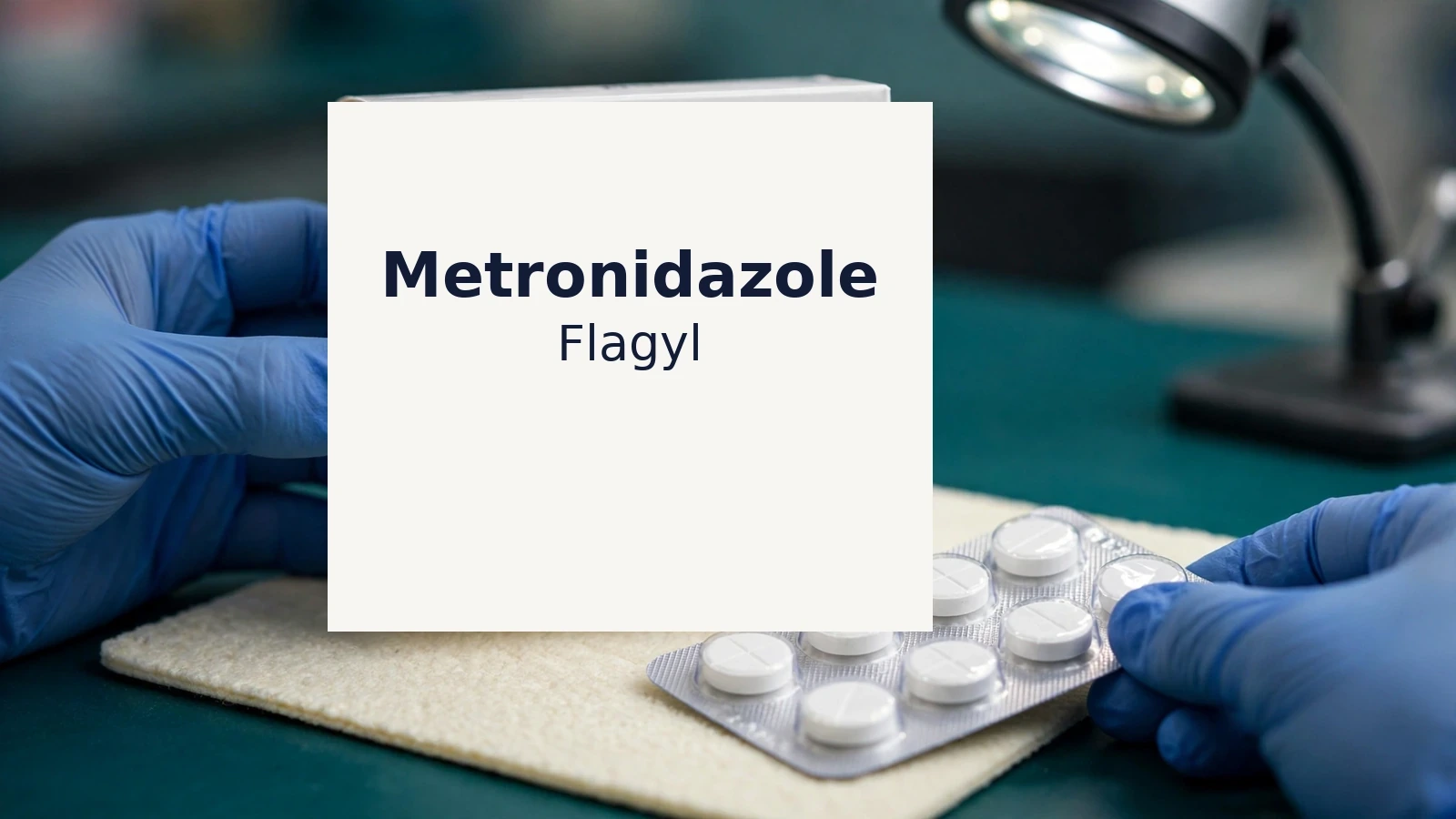
Flagyl is a brand name associated with metronidazole. A generic product may be dispensed when the prescription, product approval, and pharmacy rules allow it, but brand identity is not the entire match. Patients may notice a different carton, tablet color, imprint, or manufacturer. The pharmacist should explain the change and confirm that the active ingredient, route, formulation, strength, quantity, and directions still agree.
A brand-style package should not be treated as proof of authenticity, and a generic appearance should not be treated as evidence of lower quality. Pharmacy identity, traceable sourcing, intact packaging, official labeling, and a patient-specific label provide stronger evidence. The Flagyl and generic metronidazole comparison explains how brand, dosage form, and dispensing records differ.
Pharmacist counseling
Complete metronidazole dispensing with counseling
Before release, the patient should know which product was supplied, how it corresponds to the prescription, how to store it, and whom to contact with a question. Counseling should address the official patient information relevant to the prescribed formulation, interactions identified in the medicine record, possible adverse effects, and warning symptoms that need medical attention. The exact instructions come from the prescription and official labeling, not from this page.
Patients should be able to reach the dispensing pharmacy after pickup or delivery. If the package arrives damaged, the label is unreadable, the product differs from the record, or symptoms raise concern, pause and contact the pharmacist or clinician. Severe symptoms require prompt medical care.
Patient-side check
Confirm the package before the first use
- Read the patient name and pharmacy information.
- Compare the medicine and dosage form with the prescription record.
- Compare strength, quantity, and directions.
- Inspect seals and expiration information.
- Ask about a changed appearance or manufacturer.
- Keep the pharmacy contact and patient information.
This check does not transfer prescribing responsibility to the patient. It helps detect a visible discrepancy so the pharmacist can resolve it before the medicine is used.
Common failure points
Reject shortcuts that hide the dispensing record
- Unidentified dispensing pharmacy
- No pharmacist contact
- Medicine offered without a prescription
- Product route changed after payment
- Generic substitution without explanation
- Missing patient label
- Damaged or unsealed package
- Directions copied from a website
Continue with dispensing and product checks
Connect the physical match to cost and brand records
Return to the metronidazole dispensing process for the complete handoff. The related pages compare itemized cost and explain Flagyl and generic form records.
Release audit
Reconstruct the handoff when a discrepancy appears
A mismatch is easier to resolve when each transition has a record. Start with the issued prescription, then identify the pharmacy stock package used to fill it, the patient label produced from that selection, and the final counseling or delivery record. Do not rely on a cropped storefront image or a checkout description that cannot be connected to the sealed package.
Wrong or unclear patient label
Keep the medicine unopened. Photograph the full label and package, record the order number, and contact the dispensing pharmacy through independently verified details. Do not correct or cover the label yourself.
Unexpected appearance
Ask the pharmacist to identify the manufacturer, imprint, dosage form, strength, and substitution record. Appearance can change, but the pharmacy must connect the supplied item to the prescription and stock record.
Damaged or unsealed package
Do not use the product. Preserve the container and shipping materials, take clear photographs, and request pharmacy instructions for replacement, investigation, or safe disposal.
Conflicting directions
Do not choose between the prescription, package, and portal message. Ask the pharmacist and prescriber to resolve the conflict and provide a corrected, documented instruction.
Record the date, person contacted, professional role, answer, and next action. A customer-service promise cannot substitute for pharmacist verification of a medicine or prescriber clarification of an order.
Remote delivery
The parcel should preserve the same pharmacy chain of custody
The shipment notice should identify the dispensing pharmacy and connect to the prescription record. On arrival, compare the outer package, sealed medicine container, patient label, and included information. Confirm that the correct patient received the parcel and that the product was protected from obvious damage or tampering.
Delivery speed does not prove authenticity, and delay does not authorize use of an older supply. Contact the pharmacy if the parcel is missing, damaged, opened, or inconsistent with the order.
After clarification
Close the discrepancy with a documented outcome
The outcome may be confirmation of the supplied product, a corrected label, replacement, return, disposal instructions, prescriber clarification, or a decision not to dispense. Save the final message and any new prescription or label with the original record.
If symptoms are severe or rapidly worsening, seek direct care. Product troubleshooting is not a substitute for clinical assessment.

Clinical subject-matter profile
Marisa Holubar, MD, MS, FIDSA
Infectious diseases and antimicrobial stewardship
Clinical focus: prescription matching, dispensing records, and medicine safety.
This page does not replace prescription instructions or pharmacist counseling.