
Measure the right skin features
Rosacea Follow-Up While Using Topical Metronidazole
Rosacea follow-up with topical metronidazole separates inflammatory bumps, persistent redness, flushing, skin sensitivity, eye symptoms, medicine use, and adverse effects. One selfie or one bad flare day cannot show whether the medicine is helping the feature it was prescribed to target.
This page provides a general tracking structure. It does not set an individual treatment duration, application schedule, stopping rule, or diagnosis.

Board-Certified Dermatologist. Clinical focus: rosacea follow-up and topical treatment tolerance.
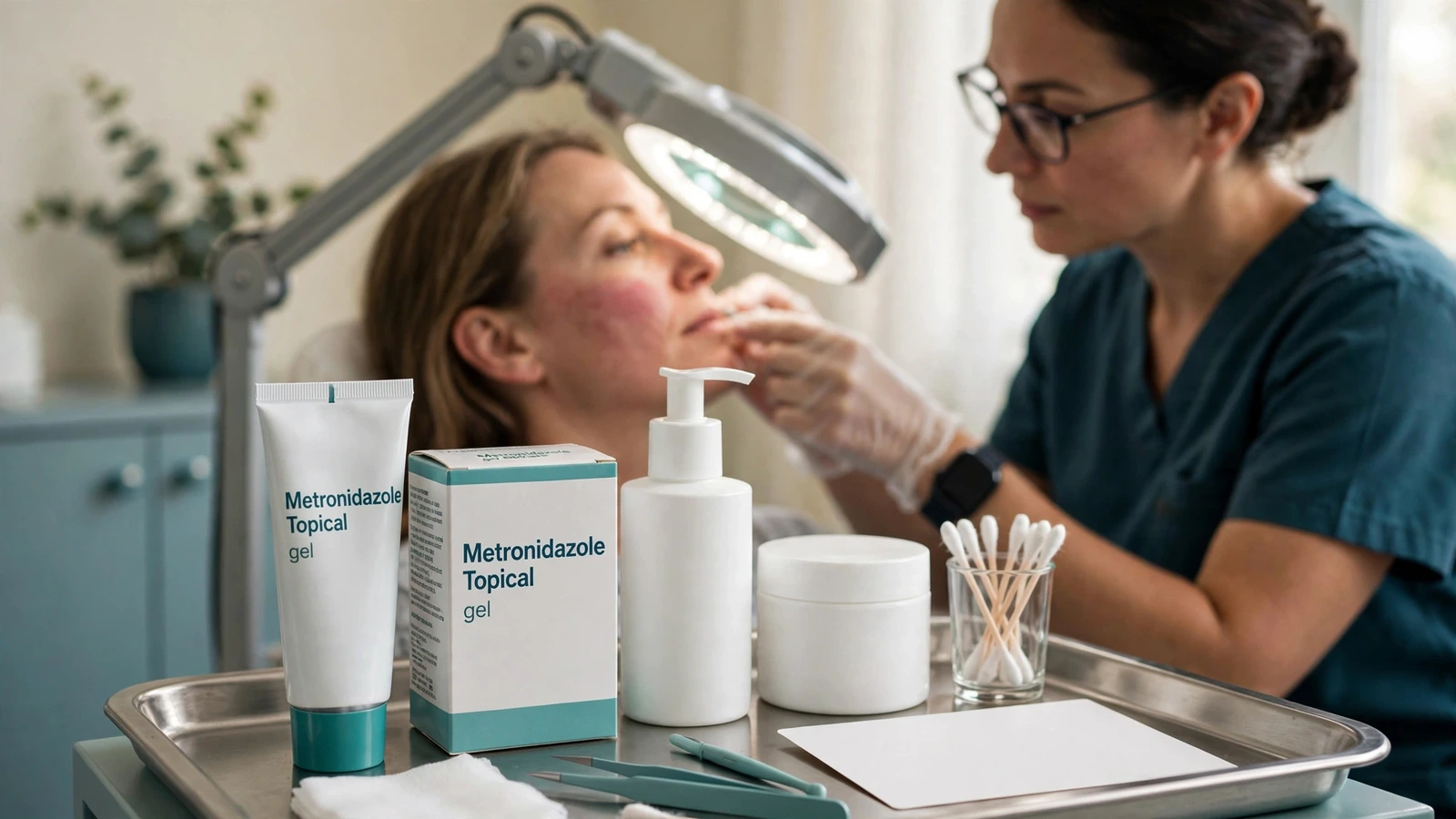
Rosacea follow-up with topical metronidazole starts with the target
The American Academy of Dermatology’s rosacea diagnosis and treatment material describes metronidazole as a topical option for acne-like breakouts. Rosacea can also involve persistent redness, flushing, visible vessels, skin thickening, or eye symptoms. Those features may require different parts of a treatment plan.
A follow-up that asks only “Is the rosacea better?” mixes unlike outcomes. Inflammatory bumps may improve while flushing remains unchanged. Redness may vary because of heat or sun exposure even when the medicine is being used consistently. Eye symptoms can appear independently of the facial skin response. The record should preserve those distinctions.
For the topical metronidazole overview, return to topical metronidazole forms and skin checks. It defines the topical route, product matching, and initial safety questions.
Inflammatory lesions
Track new and existing bumps or pustules by facial zone. Avoid squeezing lesions before photographs or appointments because that changes their appearance.
Background redness and flushing
Record persistent redness separately from brief flushing episodes, including heat, exercise, sun, stress, foods, drinks, or products that may have preceded them.
Tolerance
Note dryness, tightness, burning, stinging, itching, scaling, rash, swelling, numbness, or tingling and their timing relative to application.
Eye and eyelid symptoms
Record gritty feeling, burning, dryness, light sensitivity, eyelid changes, pain, or vision change. Facial gel should not be placed in the eyes.
Keep rosacea follow-up with topical metronidazole consistent
The MedlinePlus topical metronidazole record tells patients to use the medicine exactly as directed. A follow-up should therefore include the exact gel, cream, or lotion; concentration; start date; label directions; facial sites; missed applications; and any pause advised because of a reaction. It should not hide inconsistent use or compensate with extra applications.
Also record the skin-care routine. A new cleanser, scrub, acid, retinoid, benzoyl peroxide, fragrance, sunscreen, moisturizer, or makeup product can change tolerance. Weather, indoor heat, cold, wind, exercise, illness, and known triggers can change redness and flushing. These details let a clinician interpret a trend without blaming every fluctuation on the medicine.
| Field | Baseline | During use | Bring to follow-up |
|---|---|---|---|
| Product | Form, strength, pharmacy label, start date | Missed use, package problem, substitution question | Original container or clear label photograph |
| Target lesions | Facial zones and approximate burden | New, stable, improving, or worsening zones | Short dated notes and consistent photographs if used |
| Redness/flushing | Usual background and known triggers | Episodes, duration, trigger context | Pattern rather than isolated worst-day image |
| Tolerance | Pre-existing sensitivity and routine | Dryness, burning, stinging, rash, swelling | Timing, duration, severity, and related products |
| Eyes | Dryness, eyelid symptoms, contacts, eye history | New gritty feeling, pain, light sensitivity, vision change | Urgent symptoms reported immediately, not saved for a routine visit |
If photographs are used
Use similar lighting, camera, distance, angle, facial expression, time of day, and skin-care stage. Capture the same front and side views. Avoid filters, beauty modes, flash in one image but not another, or makeup changes that hide texture and redness.
Photographs supplement a symptom and treatment record. They cannot show burning, stinging, eye discomfort, or whether the medicine was used as directed.
If photographs are not used
A short written record can still be useful. Choose consistent facial zones and note inflammatory lesions, persistent redness, flushing, scaling, burning, and eye symptoms. Include trigger context and product changes.
Do not delay care for a severe reaction in order to create a perfect record.
Tolerability is an outcome, not a side note
MedlinePlus lists increased redness, dryness, burning, irritation, and stinging as possible effects. The current DailyMed topical-gel label also addresses contact dermatitis, eye irritation, hypersensitivity, and neurologic symptoms. Even when inflammatory lesions appear improved, a persistent reaction can change the plan.
The page on skin reactions during topical metronidazole treatment explains how to record location, timing, severity, other products, and warning signs. Do not restart or increase a product after a concerning reaction without clear instructions.
Bring these items to the appointment
- The original medicine container or pharmacy label.
- Gel, cream, or lotion form and concentration.
- Start date and actual use pattern.
- List of missed applications or pauses.
- Current cleanser, moisturizer, sunscreen, makeup, and active products.
- Other prescriptions, nonprescription medicines, vitamins, and supplements.
- Dated lesion and symptom notes.
- Eye symptoms and relevant eye-care history.
- Pregnancy or breastfeeding status.
- Questions about the next checkpoint and warning signs.
Tell the clinician about anticoagulants such as warfarin, past hypersensitivity, neurologic symptoms, and any pharmacy substitution. A topical product still belongs in a full medicine history.
Questions that keep the appointment focused
Ask which rosacea feature the topical medicine is intended to improve and how that feature should be tracked. Confirm whether the current form and routine are appropriate, what local effects warrant a call, how eye symptoms should be handled, and when another assessment is needed. If progress is limited, ask whether the issue is diagnosis, application, tolerance, trigger control, another rosacea feature, or the need for a different component of care.
If the texture or layering is the main problem, the comparison of metronidazole gel and cream for rosacea identifies the information a pharmacy and dermatologist need before a form change.
Follow-up can change without declaring failure
Rosacea is chronic and can fluctuate. A clinician may continue the current plan, adjust the skin routine, change the dosage form, address a trigger, investigate a reaction, add treatment for another rosacea feature, or reconsider the diagnosis. A change is not proof that the initial product was counterfeit or that the condition is untreatable.
Likewise, early comfort is not a reason to stop prescribed care without instruction. Keep the follow-up interval and stopping rules tied to the prescriber and actual product label rather than an online timeline.
A pharmacy refill is also a continuity checkpoint
Before a refill is dispensed, compare the current medicine name, concentration, gel or cream form, directions, manufacturer if relevant, and container with the previous package. Report a changed appearance, odor, texture, pump, or label rather than assuming the product is identical. Confirm that the prescriber still has the current medicine list, pregnancy or breastfeeding status, allergies, and any new neurologic or eye symptoms.
A refill should not erase the treatment record. Bring forward missed use, pauses, local reactions, other skin products, and the response of the targeted lesions. If there has been no clinical checkpoint for a long period, ask who should reassess the diagnosis, rosacea features, and ongoing place of the medicine. Continued access and continued clinical appropriateness are related but not identical questions.
If a pharmacy substitution changes the vehicle, mark the date in the diary. This allows the next appointment to separate a disease flare from a formulation or routine change.
Also record whether the package was opened late, stored outside its instructions, damaged, or shared between households. These details can affect continuity and should be discussed without attempting to correct the problem by using extra product.
Rosacea follow-up with topical metronidazole separates four questions
Is the targeted lesion pattern changing? Is the product being used as directed? Is the skin tolerating the vehicle and routine? Have new skin or eye findings appeared? Answering those separately gives the dermatologist a clearer basis for the next decision.
Evidence basis: American Academy of Dermatology rosacea treatment material; MedlinePlus topical metronidazole information; current DailyMed topical-gel labeling. These sources support general tracking and do not define an individual schedule, treatment duration, or stopping decision.