

Facial skin route
Topical Metronidazole for Rosacea: Forms and Skin Checks
Topical metronidazole is a prescription skin medicine used for inflammatory lesions of rosacea. Gel, cream, and lotion place the active ingredient in different vehicles, so the prescription and dispensed package must match. Diagnosis, application site, skin tolerance, other products, eye protection, and follow-up matter more than choosing a texture from a photograph.
Rosacea treatment with topical metronidazole is separate from oral metronidazole and vaginal treatment for bacterial vaginosis. It provides education, not a diagnosis or a personal application schedule.

Board-Certified Dermatologist. Clinical focus: rosacea, topical products, and skin safety.
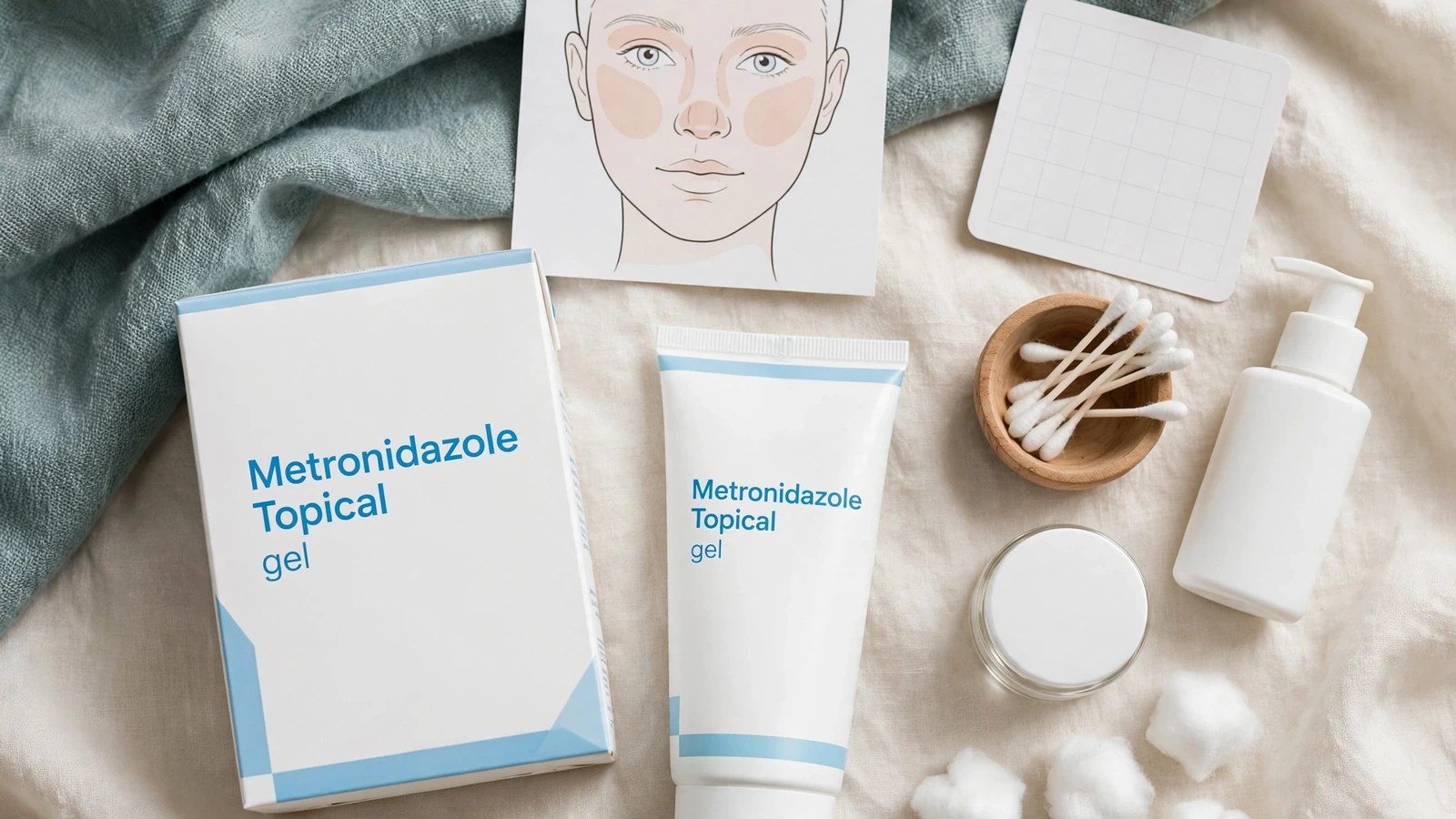
Topical metronidazole for rosacea starts with the treatment target
Rosacea is a chronic inflammatory facial skin condition with several possible features, including persistent redness, flushing, visible blood vessels, acne-like bumps, sensitivity, and eye symptoms. Not every red or bumpy face is rosacea, and not every rosacea feature responds to the same treatment. The American Academy of Dermatology explains that dermatologists build a plan around the signs and symptoms present, triggers, skin-care needs, and treatment response.
The AAD’s material on rosacea diagnosis and treatment includes metronidazole among topical medicines used to reduce acne-like breakouts and notes that treatment plans can combine medicine, skin care, trigger management, and procedures. That scope matters: topical metronidazole is not a universal solution for every facial-redness complaint.
When a prescription has been issued, use the licensed pharmacy information shown above. This page remains focused on rosacea, topical product matching, and skin-safety questions.
Gel
A gel vehicle can feel light and dry differently on the skin. The exact concentration, base, and directions are product-specific. Gel labeled for facial skin must never be treated as vaginal gel.
Cream
A cream has a different vehicle and may interact differently with a person’s moisturizer, sunscreen, makeup, or sensitive areas. It should match the formulation named on the prescription.
Lotion
A lotion is another topical dosage form with its own package and instructions. Availability varies, and a pharmacist should clarify any substitution rather than relying on texture alone.
Compare forms of topical metronidazole for rosacea
The MedlinePlus topical metronidazole record describes cream, lotion, and gel applied to the skin for rosacea. It instructs patients to use the medicine exactly as directed and to avoid the eyes, mouth, nose, or vagina. It also tells patients to disclose allergies, all medicines and supplements, pregnancy or breastfeeding, and relevant health information.
The current DailyMed topical-gel label identifies metronidazole gel as a skin product indicated for inflammatory lesions of rosacea. Manufacturer labels can differ in concentration, inactive ingredients, packaging, and directions. The pharmacy label and current package insert for the actual product take priority.
Before first use, match the patient name, medicine, strength, dosage form, route, directions, pharmacy, expiration information, and tamper evidence. A package that says vaginal use is not a facial product. An oral tablet cannot be crushed into skin care. A cosmetic product containing a similar-sounding ingredient is not the prescription medicine.
- Confirm the diagnosis. Facial redness can have several causes, and ocular symptoms can change the plan.
- Match the form. Gel, cream, or lotion must agree with the prescription and dispensing label.
- Simplify the routine. List cleansers, moisturizers, sunscreen, makeup, active ingredients, and other topical prescriptions.
- Protect sensitive sites. Keep the medicine away from eyes, mouth, inner nose, and mucosal tissue unless the label specifically says otherwise.
- Track tolerance. Record burning, dryness, stinging, redness, itching, rash, numbness, or tingling and when each occurs.
- Set a follow-up point. Decide how progress will be judged and whom to contact if symptoms or reactions change.
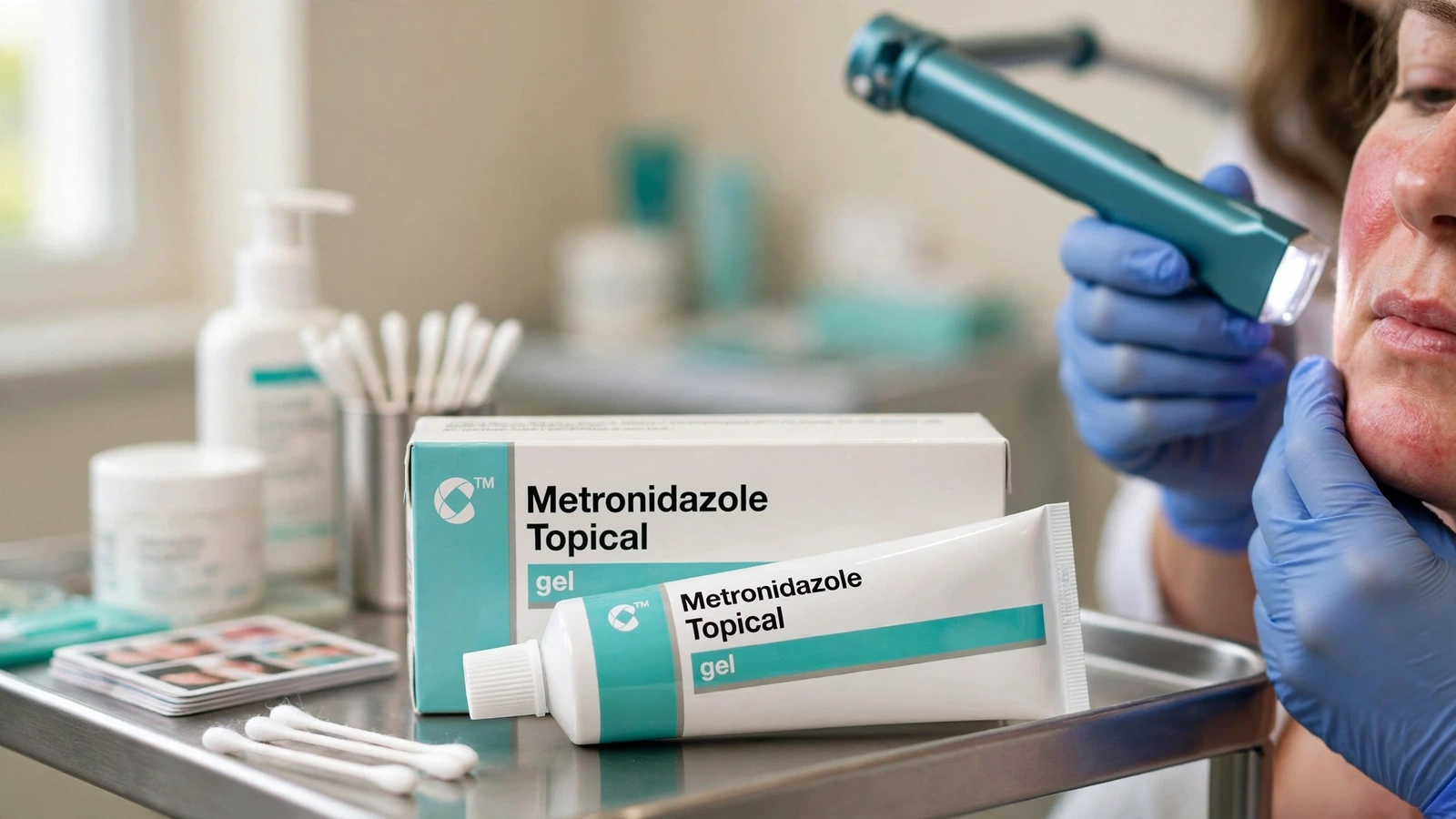
Before applying the first time
Read the entire pharmacy label and patient information. Ask where on the face the medicine belongs and how to sequence it with cleanser, moisturizer, sunscreen, makeup, or another prescription. Do not add exfoliants, scrubs, acids, retinoids, benzoyl peroxide, fragranced products, or new cosmetics merely because the skin feels oily or bumpy.
Tell the prescriber about prior reactions to metronidazole or related medicines, contact dermatitis, neurologic symptoms, blood disorders, pregnancy or breastfeeding, and anticoagulant medicines such as warfarin. Product labeling includes cautions that require an individualized history.
During the first weeks
Use a consistent, gentle routine and observe the same facial zones under similar lighting. Track inflammatory bumps separately from flushing, persistent redness, scaling, burning, and eye symptoms. This makes it easier to distinguish treatment response from irritation or a trigger flare.
More product does not establish faster response and can make tolerance harder to interpret. If an application is missed, follow the patient instructions or ask the pharmacy; do not improvise extra applications.
Expected local effects and warning signs are not the same
MedlinePlus lists increased redness, dryness, burning, irritation, and stinging among possible topical effects. The DailyMed label also describes contact dermatitis and eye irritation. A mild local effect still deserves documentation because its timing, location, and persistence can determine whether the skin-care routine, application technique, or medicine plan needs adjustment.
Stop and seek prompt advice for a spreading rash, hives, marked swelling, severe eye exposure or eye symptoms, or neurologic complaints such as new numbness, burning, pain, or tingling. Trouble breathing or swelling of the face or throat is an emergency. Do not test a reaction by applying more product to a larger area.
The focused page on skin reactions during topical metronidazole use separates common irritation patterns from findings that need a faster response.
Follow-up with topical metronidazole for rosacea
Rosacea fluctuates. A useful follow-up does not rely on a single good or bad day. Record inflammatory lesions, persistent redness, flushing episodes, burning or stinging, eye symptoms, medication tolerance, missed applications, and relevant trigger changes. If photographs are used, keep lighting, distance, camera, and time of day reasonably consistent.
The goal is not to promise a fixed cure date. It is to decide whether the prescribed form is being used correctly, whether the targeted lesions are changing, whether side effects are acceptable, and whether another component of rosacea needs attention. The page on rosacea follow-up while using topical metronidazole provides a structured record.
Licensed fulfillment should preserve the dermatology plan
After a prescription is issued, verify the dispensing pharmacy and confirm that the package is a topical skin product. Match the patient, medicine, concentration, gel or cream form, directions, prescriber, pharmacy contact details, expiration information, and intact seal. A photograph that resembles a known tube does not prove that the contents, strength, or route are correct.
If the pharmacy proposes a substitution, ask whether the concentration, dosage form, inactive ingredients, container, and directions change. A different manufacturer is not automatically a problem, but the change should remain traceable if tolerance changes. A vaginal metronidazole gel must never be substituted for facial gel, and oral medicine must not be improvised into a topical preparation.
Keep the product in its original container and contact the pharmacy about a damaged pump or tube, missing label, unexpected color or odor, or directions that conflict with the dermatologist’s plan. Record refill changes in the skin diary. This connects clinical response to the actual product rather than to the medicine name in isolation.
Care has distinct clinical and pharmacy responsibilities: the dermatologist establishes the diagnosis and treatment target, the prescription defines the product and use, the licensed pharmacy dispenses and clarifies the package, and follow-up tests response and tolerability.
Refills should carry the same traceability. Confirm that the ongoing product remains part of the current plan, and report a new reaction, eye symptom, pregnancy or breastfeeding change, or anticoagulant medicine before assuming that a previous authorization answers the current safety question.
Questions about topical metronidazole for rosacea
Can facial gel and vaginal gel be substituted?
No. They are designed for different application sites and must match the prescription, concentration, package, and instructions.
Should burning or eye symptoms wait until routine follow-up?
Persistent or worsening irritation needs product-specific advice. Severe eye pain, vision change, facial swelling, breathing difficulty, or a severe rash requires urgent assessment.
Choose the next rosacea-specific question
- Compare vehicle and routine fit in metronidazole gel versus cream for rosacea.
- Separate irritation from urgent findings in topical metronidazole skin reactions.
- Build a consistent progress record in follow-up during topical metronidazole care.
Evidence basis: American Academy of Dermatology rosacea treatment material; MedlinePlus topical metronidazole information; current DailyMed topical-gel labeling. These sources do not replace diagnosis, prescribing, product instructions, or dermatologist follow-up.