
Tolerance and warning signs
Skin Reactions During Topical Metronidazole Treatment
Topical metronidazole skin reactions can include dryness, burning, stinging, irritation, or increased redness. A spreading rash, marked swelling, severe eye symptoms, or neurologic complaints need a different response. Record what happened and contact the appropriate clinician when symptoms are persistent or concerning.
This page cannot diagnose a reaction. It explains how to preserve useful evidence and why route, vehicle, other skin products, and timing matter.

Board-Certified Dermatologist. Clinical focus: topical reactions and dermatology safety.
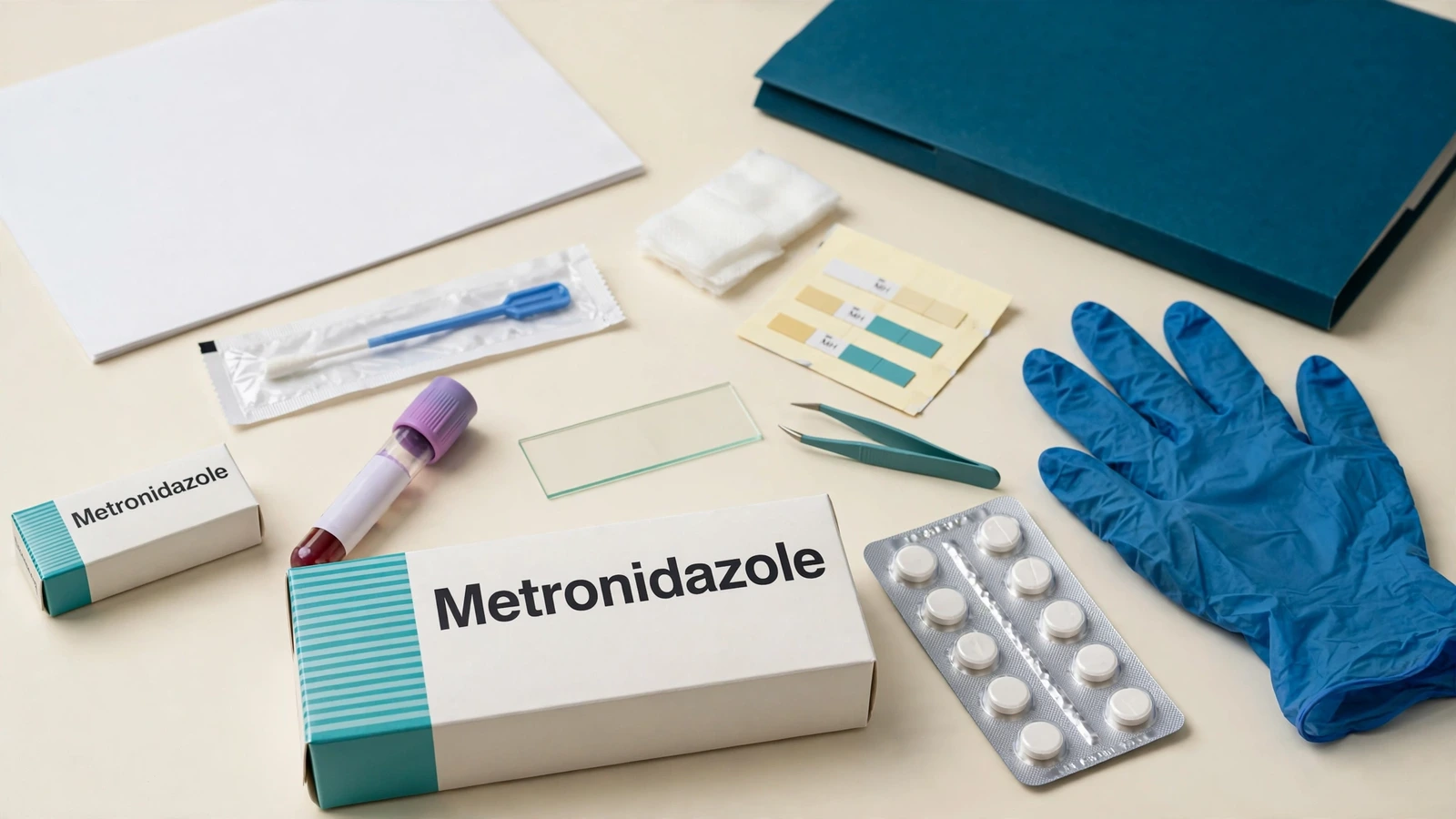
Topical metronidazole skin reactions can overlap with rosacea
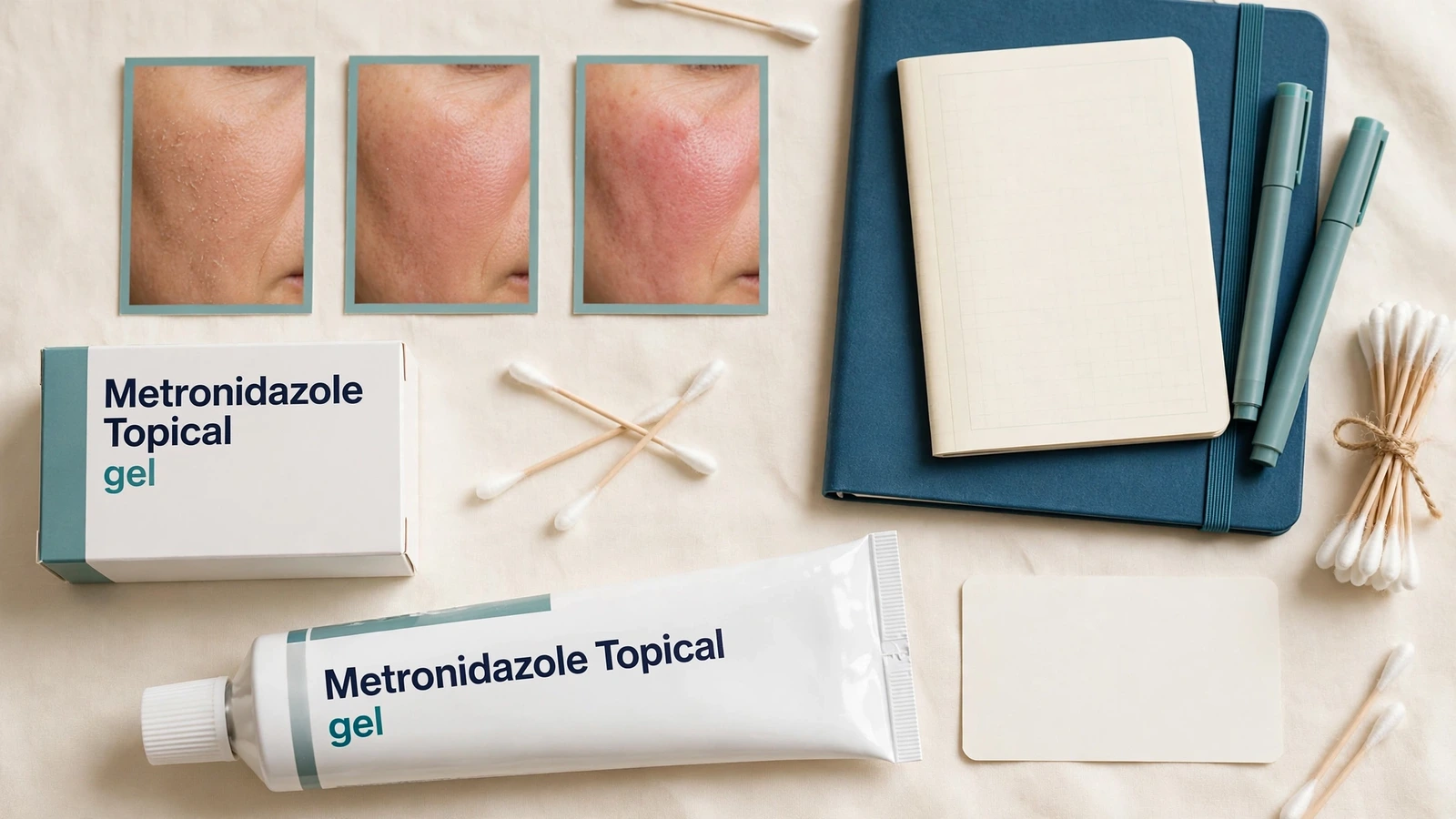
Rosacea itself can produce redness, burning, stinging, sensitivity, bumps, and flare-related discomfort. A cleanser, moisturizer, sunscreen, makeup product, fragrance, exfoliant, retinoid, benzoyl peroxide, or weather exposure can add similar symptoms. Topical metronidazole can also cause local effects. A red face after application therefore does not identify the cause on appearance alone.
The MedlinePlus topical metronidazole record lists increased skin redness, dryness, burning, irritation, and stinging among possible effects. The current DailyMed topical-gel label includes warnings about contact dermatitis, eye irritation, hypersensitivity, and neurologic symptoms. Product formulation matters because inactive ingredients vary.
For product and treatment context, return to topical metronidazole forms and skin checks. It keeps reactions linked to diagnosis, product matching, and follow-up.
Observe and record
Mild, brief dryness, stinging, or redness that settles may still be useful to document. Note location, timing, duration, product amount, and what else touched the skin.
Contact the clinician
Increasing or persistent burning, cracking, marked irritation, a new rash, worsening eye-area symptoms, or a reaction that prevents normal use needs prompt product-specific advice.
Seek urgent help
Trouble breathing, swelling of the face or throat, a severe or blistering rash, sudden vision change, severe eye pain, or new neurologic symptoms require urgent assessment.
Record topical metronidazole skin reactions precisely
| Detail | What to record | Why it helps |
|---|---|---|
| Product | Metronidazole form, concentration, package, start date, and label directions. | Gel, cream, and lotion vehicles can differ. |
| Location | Exact facial zones, eyelids or eye exposure, neck, or another unintended site. | Distribution can distinguish contact, spread, and route errors. |
| Timing | Minutes or hours after application, duration, and whether it repeats. | Temporal association is more useful than a single photograph. |
| Appearance | Redness, bumps, scaling, cracks, swelling, hives, blisters, or drainage. | Different patterns have different urgency. |
| Sensation | Dryness, heat, burning, itching, stinging, pain, numbness, or tingling. | Neurologic sensations deserve explicit mention. |
| Other products | Cleanser, moisturizer, sunscreen, makeup, actives, and other prescriptions. | Multiple changes can hide the actual trigger. |
If photographs are appropriate, use similar lighting and distance and do not delay urgent care to create documentation. Keep the original medicine container and pharmacy label available. Do not transfer the product into an unlabeled jar.
The vehicle may change the experience
A gel may dry quickly or sting on compromised skin; a cream may feel richer or interact differently with moisturizer and sunscreen. Neither outcome proves that one form is universally safer. Inactive ingredients and the person’s skin barrier can matter.
Use the comparison of metronidazole gel and cream for rosacea to check formulation boundaries without substituting products.
The routine may create the signal
Introducing a scrub, acid, retinoid, fragranced product, new sunscreen, or several cosmetics near the same date can make attribution difficult. Heat, wind, cold, exercise, and known rosacea triggers also affect symptoms.
List every new exposure and the order of application. A dermatologist can then decide which variable should change first.
What to do after an eye exposure
Topical metronidazole is for skin and should be kept away from the eyes. Follow the product information for accidental contact and rinse as directed. Remove contact lenses only if the exposure instructions or a clinician advise it and it can be done safely. Seek prompt advice for ongoing redness, tearing, pain, light sensitivity, or blurred vision. Sudden vision change or severe eye pain needs urgent assessment.
Do not apply the medicine to the eyelid margin or inside the nose or mouth unless the specific prescription instructions clearly include that site. Rosacea can affect the eyes, but ocular rosacea requires its own clinical assessment rather than facial gel placed in the eye.
Medicine history still matters for a topical product
Tell the prescriber about previous hypersensitivity to metronidazole or related medicines, all prescriptions and supplements, pregnancy or breastfeeding, blood disorders, and neurologic symptoms. Current labeling also calls attention to anticoagulants such as warfarin or other coumarin medicines. A topical route can reduce systemic exposure compared with oral use, but it does not erase the need for a complete history.
New numbness, pain, burning, or tingling should be reported rather than assumed to be ordinary facial sensitivity. Explain whether the sensation is limited to the application site or occurs elsewhere, when it began, and whether it is progressing.
- Pause the experiment. Do not add extra product, move it to another area, or combine it with a new active ingredient to see what happens.
- Preserve the evidence. Keep the container and write down the exact product, timing, facial zones, sensations, visible changes, and other exposures.
- Use the right contact. The dispensing pharmacy can clarify identity and label directions; the prescriber or dermatologist can assess tolerance and the skin condition.
- Escalate warning signs. Allergic, severe eye, severe skin, or neurologic symptoms need faster medical attention.
- Restart only with a clear plan. Do not re-challenge a concerning reaction simply because the redness later improved.
Follow-up should measure response and tolerability separately
A treatment can reduce inflammatory lesions yet still cause a local effect that needs adjustment. Conversely, a comfortable texture does not prove the targeted rosacea features are improving. At follow-up, compare inflammatory bumps, persistent redness, flushing, burning or stinging, eye symptoms, missed applications, and routine changes as separate fields.
The page on rosacea follow-up while using topical metronidazole provides a structured checkpoint. Use it to bring a clearer record, not to make a self-directed stop, restart, or substitution decision.
A patch test is not a substitute for prescribing instructions
People sometimes propose placing a small amount on an unprescribed area to “test” a facial medicine. That can create a reaction on different skin without predicting how the prescribed facial zones will respond, and it can be unsafe after a previous hypersensitivity. Do not invent a patch-testing plan. Ask the prescriber how to begin the exact product and what to do if a reaction occurs.
If a clinician advises a limited introduction, document the exact site, amount as stated in the directions, timing, and result. Keep every other product stable during that observation unless instructed otherwise. A successful limited exposure does not authorize use in the eyes, mouth, inner nose, vaginal tissue, broken skin, or a larger area than prescribed.
After any clinically significant reaction, make sure the medicine and suspected reaction are recorded accurately in the health record. “Allergic” and “irritating” are not interchangeable labels, but both deserve enough detail to protect future prescribing. Include the formulation, manufacturer if known, symptoms, timing, treatment required, and outcome.
Ask how the event should appear on the pharmacy profile and what information to carry to another clinician. A precise record can prevent an unsafe future re-exposure while avoiding a vague label that obscures which product, route, and reaction actually occurred.
Respond to topical metronidazole skin reactions by urgency
Record the product, site, timing, routine, and reaction; then match the response to severity. Mild local effects, persistent dermatitis, eye exposure, allergic symptoms, and neurologic complaints do not belong in one category. A product-specific conversation is safer than a generic claim that burning is normal.
Evidence basis: MedlinePlus topical metronidazole information; current DailyMed topical-gel labeling; American Academy of Dermatology rosacea treatment material. These sources do not diagnose a reaction or replace urgent assessment, product instructions, or dermatologist care.