
Condition-specific human oral therapy
How Oral Ivermectin Fits Into Strongyloidiasis Care
Ivermectin for strongyloidiasis is a prescription treatment used after the infection and its clinical form have been assessed. Management of uncomplicated intestinal infection is not the same as hyperinfection or disseminated disease. Exposure history, immune suppression, diagnostic findings, ability to take oral medicine, and follow-up evidence all shape the plan.
This page stays with strongyloidiasis treatment context. It does not calculate a personal dose, address broad ivermectin uses, or extend the medicine to an unconfirmed rash, cough, or gastrointestinal complaint.


Ivermectin for strongyloidiasis starts with infection severity
Strongyloides stercoralis is a human parasitic roundworm capable of an autoinfection cycle. Larvae can mature and reinfect the same host, allowing infection to persist for years after the original soil exposure. Some people have no symptoms. Others develop intermittent abdominal pain, diarrhea or constipation, rash, cough, or other findings that overlap with many unrelated disorders.
The CDC’s clinical overview of Strongyloides separates acute and chronic infection from hyperinfection syndrome and disseminated strongyloidiasis. That distinction is critical. High-dose corticosteroids and other forms of impaired immunity can accelerate autoinfection, increase the number of migrating larvae, and produce severe gastrointestinal, pulmonary, neurologic, or systemic illness.
A prescription decision therefore begins with more than current symptoms. Residence or travel in an endemic area, prior testing, unexplained eosinophilia, corticosteroid exposure, HTLV-1 infection, hematologic malignancy, transplantation, and planned immune suppression can all change how urgently a clinician investigates the possibility of infection.
Why ivermectin for strongyloidiasis follows confirmation
Traditional stool examination can miss larvae when the burden is low. The CDC describes serial stool examination as the diagnostic reference but notes its limited sensitivity, while specialized concentration or culture methods and serology may add information. Serology can cross-react with other parasites and may not cleanly distinguish active from past infection. No single result should be interpreted without exposure and clinical context.
Map residence, travel, soil exposure, immune status, and prior parasite testing.
Use condition-appropriate stool, serologic, or other testing chosen by the clinician.
Separate uncomplicated intestinal infection from hyperinfection or dissemination.
That sequence prevents two errors. The first is using ivermectin as a diagnostic trial for nonspecific symptoms. The second is treating a severe presentation as if it were uncomplicated intestinal disease. In a person who is acutely ill, cannot absorb oral medicines, or has signs of dissemination, the care setting and route problem require specialist management rather than a copied outpatient instruction.
Where oral ivermectin fits
The current DailyMed human tablet label lists intestinal, nondisseminated strongyloidiasis due to S. stercoralis as an indication. CDC identifies ivermectin as first-line therapy for acute and chronic strongyloidiasis and provides a separate approach for hyperinfection or disseminated infection. The exact directions belong to the prescriber and must match the diagnosed form.
The medicine acts against susceptible intestinal stages. That statement does not guarantee eradication in every person and does not make early symptoms a reliable measure of clearance. Larval output can be low and intermittent. Immune status, absorption, severe disease, reinfection risk, and follow-up findings may alter the response or next step.
Oral treatment also presumes that the patient can take and absorb the medicine. Ileus, obstruction, known or suspected malabsorption, or critical illness can make the usual oral treatment unreliable. CDC describes specialist procedures used when oral administration is not possible. Those are not do-it-yourself alternatives and should never be reconstructed from a veterinary formulation without formal clinical and regulatory oversight.
Follow-up asks whether infection evidence persists
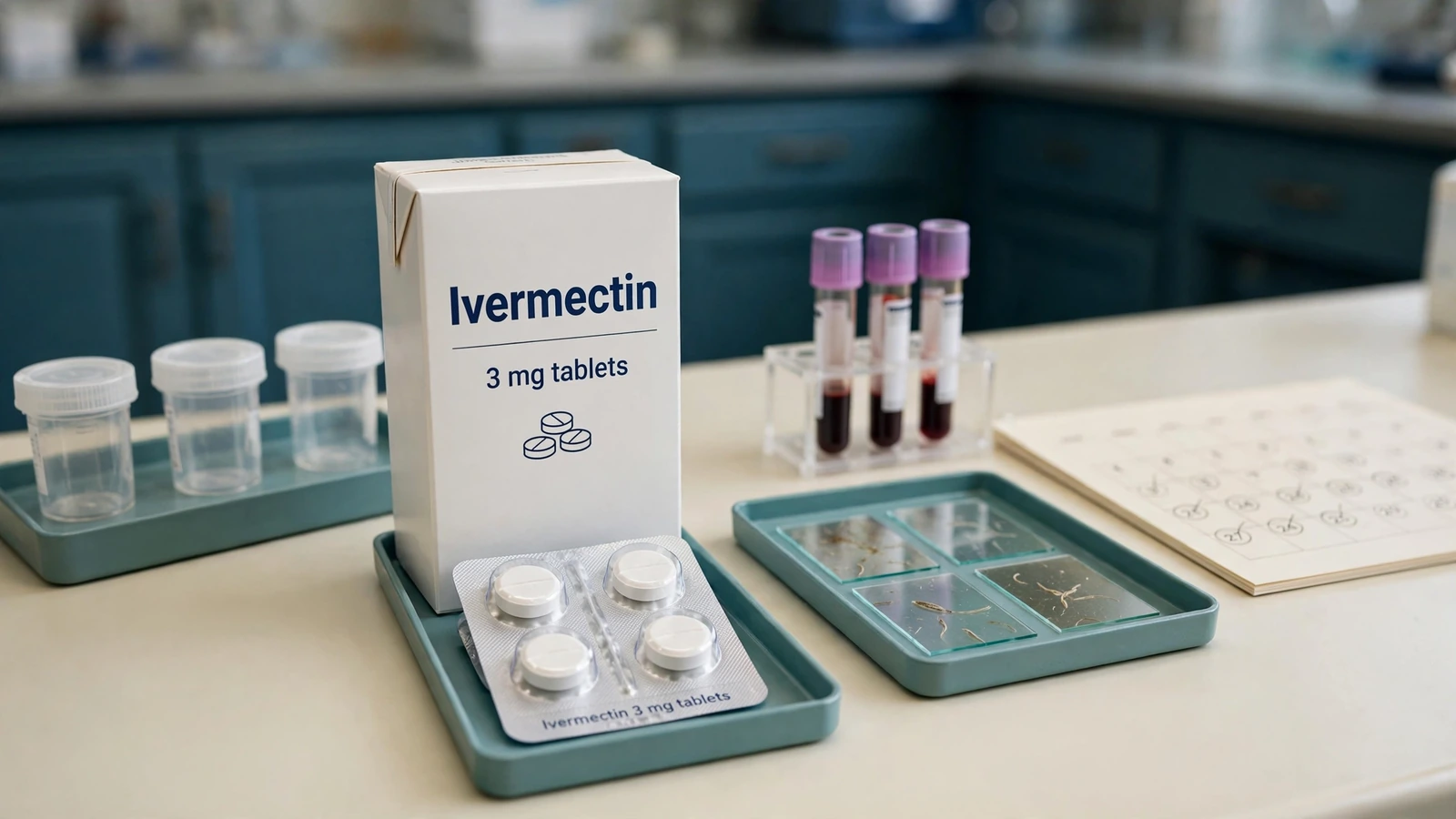
CDC recommends follow-up stool examinations two to four weeks after treatment when a patient had a positive stool examination and persistent symptoms. If larvae reappear, the clinician considers retreatment. The label also emphasizes follow-up stool examinations to verify eradication. These recommendations explain why feeling better and proving clearance are not always the same event.
A useful follow-up record includes the original evidence for diagnosis, exact product and directions, whether every planned dose was taken, vomiting or absorption problems, new immune-suppressing medicines, ongoing exposure risk, symptoms over time, and the result of repeat testing. A single unlabeled message such as “still sick” does not give the clinician enough information to distinguish persistence, reinfection, treatment intolerance, or another diagnosis.
Symptom resolution also does not authorize keeping tablets for future episodes. A new rash, cough, or bowel change may have a different cause. If immune-suppressing treatment is planned later, the history of strongyloidiasis should remain visible in the medical record so the relevant team can decide whether additional assessment is needed.
Safety checks that cannot be separated from the indication
- Prescription status
- The human oral tablet is prescription-only. A prior diagnosis or old directions do not create a standing authorization.
- Contraindication
- The label contraindicates use in a person hypersensitive to any component of the product.
- Relative cautions
- CDC names pregnancy or lactation, body weight under 15 kilograms, and suspected or confirmed Loa loa infection among relative contraindications in this context.
- Interactions
- Give the prescriber and pharmacist a full list of medicines and supplements. The label notes postmarketing increased INR reports with warfarin.
- Adverse effects
- Reported effects in strongyloidiasis trials included dizziness, itching, rash, nausea, diarrhea, and other gastrointestinal or neurologic symptoms.
- Follow-up
- Persistent symptoms with prior positive stool findings call for repeat examinations rather than an unsupervised repeat dose.
Pregnancy, breastfeeding, low body weight, severe illness, and possible co-infection require a condition-specific risk decision. A general statement that a drug is “well tolerated” cannot replace that decision. Safety is attached to the person, the infection, the product, and the care setting.
When to seek care
Contact the treating clinician the same day for persistent vomiting, worsening diarrhea with dehydration, a spreading rash, new numbness, marked dizziness, fever, increasing weakness, or symptoms that worsen during immune-suppressing treatment. Severe Strongyloides illness can involve the lungs, bowel, nervous system, and bloodstream; rapidly changing symptoms deserve direct assessment.
For less urgent concerns, record the onset, severity, medicine timing, hydration, bowel symptoms, rash changes, and any new prescription. Do not double, extend, or repeat the regimen to respond to symptoms. The next action may be testing, supportive care, reassessment of the diagnosis, or treatment in a higher-acuity setting.
Common mistakes in strongyloidiasis care
- Diagnosing the infection from symptoms alone.
- Omitting remote residence or travel history.
- Starting corticosteroids without surfacing prior risk.
- Treating severe illness as uncomplicated infection.
- Assuming symptom relief proves parasite clearance.
- Repeating old directions without follow-up evidence.
The central tradeoff is clear: delaying treatment can be dangerous in a high-risk infected person, while treating without a credible diagnosis can miss another cause and expose the patient to avoidable harm. This is why strongyloidiasis care depends on timely clinical judgment rather than a generic antiparasitic checklist.
Prepare a record that supports the next decision
Before an infectious-disease visit, assemble the countries and regions where you lived or traveled, approximate dates, known soil exposure, earlier parasite tests, prior antiparasitic prescriptions, and any history of an unexplained fast-moving rash, intermittent bowel symptoms, or eosinophilia. Include hospital records if severe respiratory or gastrointestinal illness occurred. Remote exposure can remain relevant because autoinfection allows the organism to persist.
List every current and planned immune-suppressing treatment. Name oral or intravenous corticosteroids, transplant medicines, cancer treatment, and biologic therapy rather than writing only “immune medicine.” If another clinician expects to start treatment soon, give the infectious-disease team the date and contact information. This allows the teams to balance the risk of delaying necessary therapy against the danger of unrecognized hyperinfection.
Bring the complete medication list and the exact human oral ivermectin label if treatment has already started. Note vomiting, missed doses, new bowel obstruction symptoms, and whether follow-up specimens were collected. These details do not diagnose persistence, but they help the clinician decide whether the next useful step is testing, urgent assessment, a treatment change, or observation.
Evidence boundary
This page relies on the current DailyMed human prescription label and the linked CDC Strongyloides pages. It cannot diagnose strongyloidiasis or prescribe a regimen, and it does not replace condition-specific clinical care.