
Filarial infection treatment context
How Oral Ivermectin Fits Into Onchocerciasis Care
Ivermectin for onchocerciasis is a prescription treatment that reduces susceptible microfilariae after the infection has been diagnosed and geographic co-infection risks have been assessed. It does not kill adult Onchocerca volvulus worms. That limitation explains why ongoing skin, eye, and infection monitoring can remain necessary after treatment.
This page addresses one human systemic indication. It does not recommend a personal dose, direct readers to a seller, or treat an unexplained rash or eye symptom as proof of onchocerciasis.

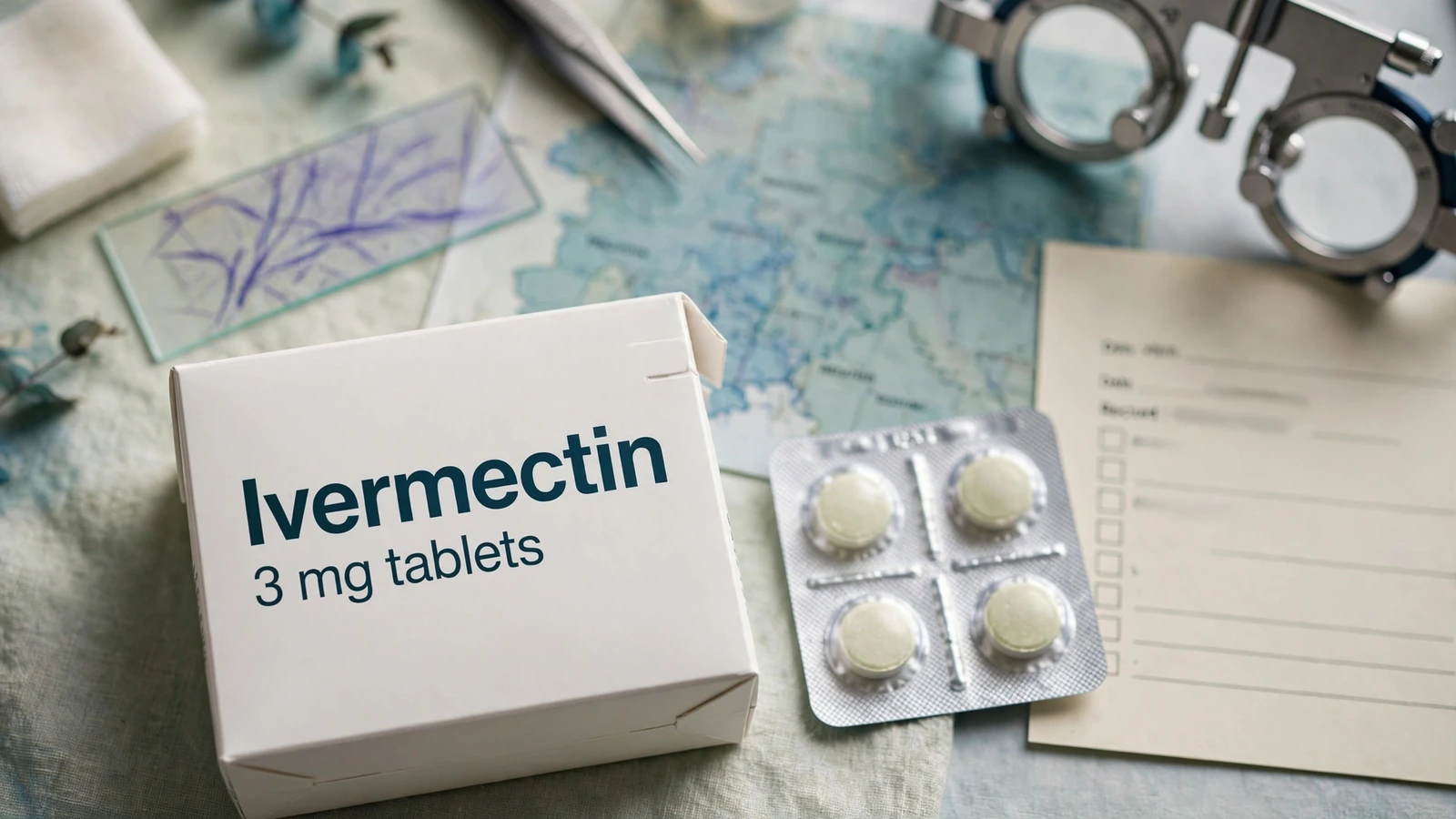
Ivermectin for onchocerciasis begins with parasite biology
Onchocerciasis is caused by the filarial worm Onchocerca volvulus and is transmitted through repeated bites from infected blackflies in areas where transmission occurs. Adult worms live in subcutaneous nodules and produce microscopic larvae called microfilariae. Those microfilariae migrate through skin and eye tissues, where inflammatory injury can contribute to intense itching, rash, skin changes, and visual disease.
The CDC’s clinical overview of onchocerciasis notes that many infected people have no symptoms, while heavier or longstanding infection may involve skin, eyes, or palpable nodules. A history of living in or traveling to an endemic area helps define risk, but exposure alone does not establish the diagnosis.
This biology is why a generic statement such as “ivermectin kills worms” is incomplete. The clinically relevant target is not every worm in every location. The life stage and tissue burden shape symptoms, treatment goals, reaction risk, and the duration of follow-up.
Why ivermectin for onchocerciasis requires parasite-specific evidence
CDC identifies microscopic examination of a skin snip for microfilariae as the central diagnostic method. Eye examination can identify microfilariae or tissue damage, and removed nodules may show adult worms. Antibody testing can support evidence of filarial exposure, but it may not identify the exact filarial species and cannot replace the full exposure and examination record.
| Evidence area | What it contributes | What it cannot do alone |
|---|---|---|
| Travel or residence | Defines plausible endemic exposure | Does not prove infection |
| Skin snip | Looks for microfilariae | Requires skilled collection and reading |
| Eye examination | Assesses worms and tissue injury | Does not map every body site |
| Nodule evaluation | May identify adult worms | A nodule may be difficult to feel |
| Filarial antibody | Supports exposure to filariae | May not specify the species |
The diagnostic boundary matters especially when symptoms are common. Itching, rash, eye irritation, or a subcutaneous lump can have many causes. Treating those findings without condition-specific evidence can delay the correct diagnosis and can miss the geographic history needed to assess loiasis.
Oral ivermectin targets microfilariae, not adult worms
What it addresses
According to current human labeling and CDC treatment information, ivermectin acts against tissue microfilariae. Lowering this burden helps control the parasite stage associated with skin and eye symptoms.
What remains
Adult worms in subcutaneous nodules are not killed by ivermectin. They may continue producing microfilariae, so treatment and monitoring can extend beyond a single encounter.
The DailyMed human prescription label states the adult-worm limitation directly. It also describes inflammatory and ophthalmologic reactions that may follow death of microfilariae. Those reactions can overlap with disease symptoms, making timing and clinical assessment essential.
The treatment goal should therefore be stated precisely: reduce susceptible microfilariae and manage their clinical effects while monitoring for ongoing evidence of infection. It is not a promise that one prescription removes all adult infection or permanently ends the need for follow-up.
The Loa loa precaution can change the entire plan
Parts of Central and West Africa have overlapping transmission of O. volvulus and Loa loa. A person with heavy Loa loa microfilaremia can develop severe or fatal encephalopathy after an effective microfilaricidal medicine. The exposure history must therefore include specific countries and regions, not merely “international travel.”
CDC’s onchocerciasis treatment recommendations state that a person with Loa loa co-infection should not be treated for onchocerciasis without expert consultation. This is not a screening step a patient can replace with an internet checklist. The appropriate testing and specialist workup depends on exposure, symptoms, and available laboratory expertise.
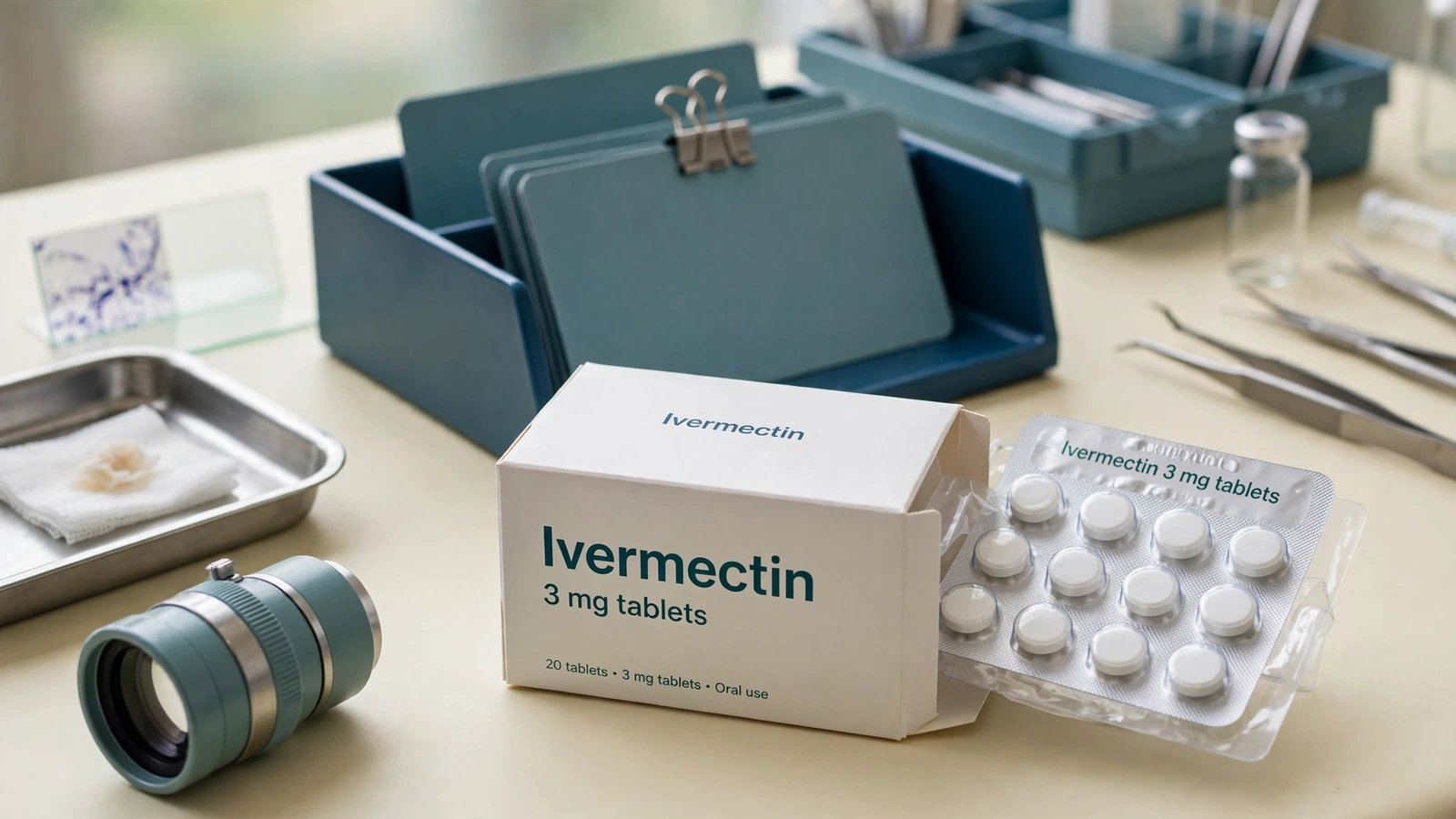
Monitoring continues because adult infection can persist
A follow-up plan may include skin symptoms, examination findings, skin snip results, and eye assessment. The exact schedule is determined by an experienced clinician and the person’s continuing evidence of infection. Someone who no longer lives in an endemic area may still require repeated assessment while microfilariae or clinical findings persist.
Record the treatment date, exact product and directions, symptoms before and after treatment, swelling, rash, fever, dizziness, eye changes, and any neurologic symptoms. Also note new travel, pregnancy, breastfeeding, and changes to prescription or nonprescription medicines. This allows the treating team to distinguish an inflammatory response, adverse drug effect, ongoing infection, or unrelated illness.
Do not use persistence of a nodule alone to decide that another dose is needed. Adult worms may remain even when the clinical question is whether microfilariae or related symptoms continue. Likewise, an improvement in itching does not prove that follow-up can end. The plan is built from evidence, not from one symptom in isolation.
Prescription and safety boundaries
Human oral ivermectin is prescription-only. The label contraindicates use in people hypersensitive to a product component. CDC identifies additional situations needing a tailored risk decision, including pregnancy, breastfeeding, and body weight under 15 kilograms. Possible Loa loa co-infection is a distinct expert-level concern rather than a routine caution.
A complete medication list is necessary. Include warfarin and other prescriptions, nonprescription medicines, vitamins, supplements, and herbals. The label notes postmarketing reports of increased INR with warfarin, which makes anticoagulation coordination important without proving a predictable effect for every patient. Do not stop, start, or reschedule either medicine without the relevant clinicians.
Adverse effects can reflect the medicine, the inflammatory response to dying microfilariae, or the underlying infection. Reported onchocerciasis reactions include itching, edema, rash, fever, lymph-node swelling or tenderness, joint symptoms, orthostatic hypotension, and tachycardia. The context and severity determine the response.
When symptoms require medical care
Call emergency services now for a seizure, severe confusion, unusual inability to wake, coma-like unresponsiveness, collapse, trouble breathing, facial or throat swelling, sudden inability to stand or walk, loss of bladder or bowel control with neurologic change, or a rapidly blistering rash.
Contact the treating clinician the same day for worsening vision, red or painful eyes, marked facial or limb swelling, fever with extensive rash, severe dizziness on standing, fast heartbeat with weakness, or new mental-status changes. A person with relevant African exposure and possible loiasis should mention that history immediately.
Milder itching, rash, muscle or joint discomfort, headache, or swollen lymph nodes should still be documented and discussed according to the written plan. Do not repeat a dose to chase symptoms. Treatment-related inflammation may need assessment, and worsening findings can require supportive care or a different level of monitoring.
Who this page cannot direct
- A person without parasite-specific diagnostic evidence.
- Anyone seeking a personal dose or interval.
- A patient with possible Loa loa co-infection.
- A pregnant or breastfeeding patient without specialist input.
- A child under the established weight threshold.
- Anyone with an acute neurologic or eye emergency.
The tradeoff is not simply treatment versus no treatment. Onchocerciasis can damage skin and vision, while microfilaricidal treatment in the wrong co-infection context can create severe harm. Timely parasite expertise resolves that tension more safely than delay, self-treatment, or a copied regimen.
Questions that follow-up is meant to answer
Follow-up determines whether skin or eye findings are improving, whether microfilariae remain detectable, whether adult-worm infection continues to produce clinically relevant evidence, and whether a reaction requires a different monitoring plan. It also revisits exposure geography if the initial history was incomplete. These questions are more informative than asking whether the medicine “worked” after a single symptom changes.
Keep copies of skin-snip, eye-examination, and treatment records together. Record any move back to an endemic area, new blackfly exposure, pregnancy, breastfeeding, or change in medicines. This longitudinal record helps the specialist distinguish continuing infection from a treatment reaction or another skin or eye disorder.
Source and evidence boundary
This page uses the current DailyMed human prescription label and the linked CDC onchocerciasis pages. It does not diagnose infection, set a regimen, or replace a parasite specialist.