
Vehicle and skin routine
Metronidazole Gel vs Cream for Rosacea: Form Differences
Metronidazole gel vs cream for rosacea compares two topical vehicles that contain the same active medicine. Texture can affect spread, drying, layering, and tolerance, but it does not make the products interchangeable. The prescription, concentration, package, application site, and directions must match before either form reaches the face.
This comparison does not select a form or application frequency for an individual. It also does not apply to vaginal metronidazole gel, oral tablets, or other conditions.

Board-Certified Dermatologist. Clinical focus: rosacea formulations and skin tolerance.
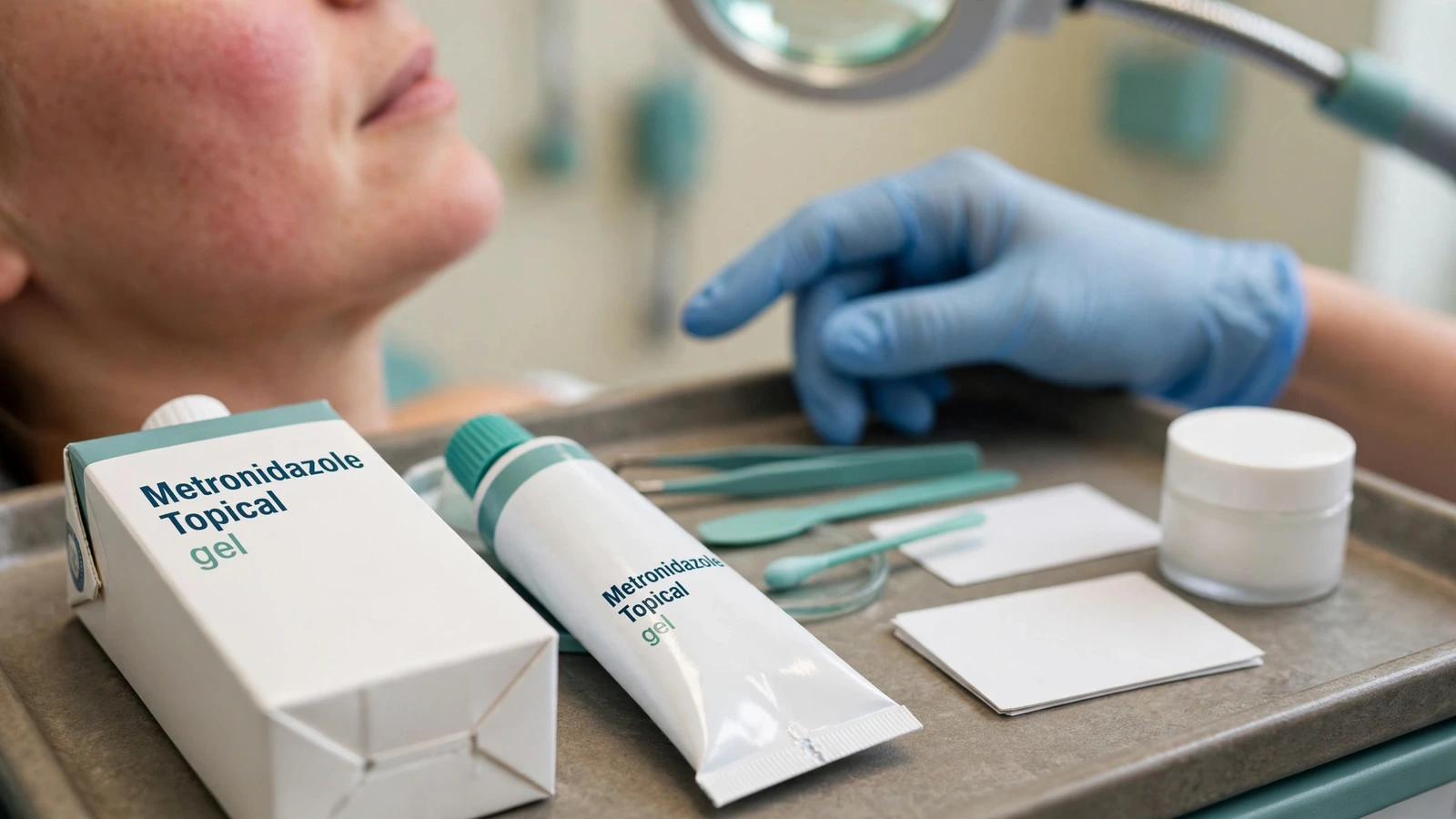
Metronidazole gel vs cream for rosacea starts with the full product
The MedlinePlus topical metronidazole record lists cream, lotion, and gel as skin dosage forms used for rosacea. The vehicle surrounding metronidazole can differ in water content, emollients, thickeners, preservatives, alcohols, and other inactive ingredients. Those differences can change how the product feels and layers, but they do not permit a person to substitute one package for another without pharmacy or prescriber confirmation.
The current DailyMed topical-gel label identifies a skin product for inflammatory lesions of rosacea and provides formulation-specific warnings and directions. A cream from another manufacturer can have different inactive ingredients and labeling. Compare the actual packages, not generic photos.
For broader topical metronidazole care, use topical metronidazole forms and skin checks. It separates rosacea care from oral and vaginal routes.
| Decision point | Topical gel | Topical cream |
|---|---|---|
| Identity | Must say topical skin gel and match the prescribed concentration. | Must say topical skin cream and match the prescribed concentration. |
| Vehicle feel | Often lighter and quicker-drying, depending on the formula. | Often more emollient, depending on the formula. |
| Layering | Drying or pilling can vary with moisturizer, sunscreen, and makeup. | Richness or occlusion can vary with the rest of the routine. |
| Tolerance | Inactive ingredients may sting or dry sensitive skin. | Inactive ingredients may irritate or feel heavy on some skin. |
| Route boundary | Not vaginal gel; not for eyes, mouth, or inner nose. | Not a vaginal product; not for eyes, mouth, or inner nose. |
| Substitution | Requires confirmation because form, strength, directions, and package can differ. | |
How metronidazole gel vs cream for rosacea can feel different
It is tempting to pair gel automatically with oily skin and cream with dry skin. That shortcut misses important variables: baseline sensitivity, contact allergies, facial zones involved, climate, cleanser, moisturizer, sunscreen, makeup, other prescriptions, and the exact inactive ingredients. Rosacea can also produce burning or stinging even when the skin appears oily.
A dermatologist may consider how the vehicle fits the whole plan, but the product is still chosen for a diagnosed condition and treatment target. The American Academy of Dermatology’s rosacea treatment material describes metronidazole as one option for acne-like breakouts and emphasizes that rosacea plans vary with signs and symptoms. A vehicle preference cannot establish the diagnosis or prove that topical metronidazole is appropriate.
Questions for a gel prescription
Ask whether the pharmacy label says topical use, whether the concentration matches, and which facial areas are included. Confirm the order of cleanser, medicine, moisturizer, sunscreen, and makeup. If the gel pills, burns, or dries, record which product was placed before and after it and how long the effect lasted.
Never use a package labeled vaginal gel on facial skin. Similar medicine names do not erase the route printed on the label.
Questions for a cream prescription
Ask the same identity and sequencing questions. Note whether the cream feels comfortable, produces persistent burning, seems to trap heat, or conflicts with another topical product. Do not thin, mix, or transfer it into another container unless a clinician or pharmacist specifically directs that action.
If the dispensed form differs from the prescription or prior plan, pause before use and contact the pharmacy.
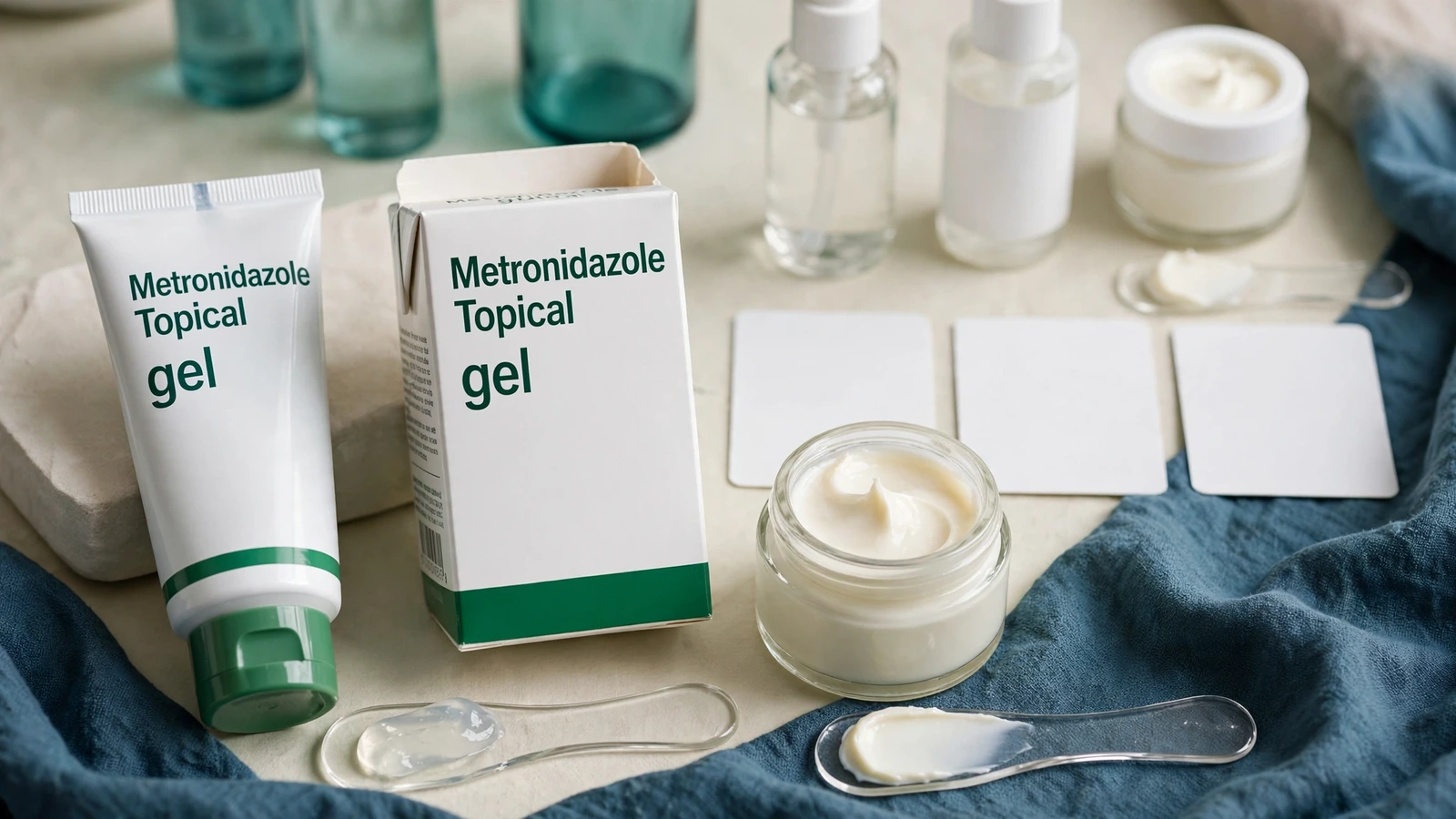
Build a routine that reveals, rather than hides, tolerance
Use a gentle cleanser and avoid introducing several new products at the same time. Fragranced products, scrubs, exfoliating acids, retinoids, benzoyl peroxide, and harsh astringents can complicate burning, dryness, and redness. This does not mean every active ingredient is permanently prohibited; it means changes should be coordinated so that a reaction can be traced.
Apply only to the skin areas and with the frequency stated on the prescription label. More product is not a valid test of effectiveness. Keep it out of the eyes, mouth, inner nose, and vaginal tissue. Wash hands according to the patient instructions, and do not share the container.
Keep the medicine in its original container and follow storage directions. If the cap, seal, pump, tube, expiration information, or appearance is abnormal, ask the dispensing pharmacy before applying it.
Record the target
Count inflammatory bumps separately from flushing, persistent background redness, visible vessels, scaling, and eye symptoms.
Record the vehicle
Write down gel or cream, concentration, manufacturer if relevant, package type, and when it entered the routine.
Record the context
Note cleanser, moisturizer, sunscreen, makeup, other prescriptions, weather, heat, exercise, and known triggers.
Record the reaction
Describe location, severity, timing, duration, and whether redness, burning, dryness, itching, rash, numbness, or tingling is new.
Local irritation deserves a specific response
MedlinePlus lists increased redness, dryness, burning, irritation, and stinging as possible effects. A transient sensation and a worsening inflammatory rash are not the same, but a webpage cannot reliably classify a person’s reaction. Photograph the area if appropriate, record timing, and contact the prescriber when the reaction is persistent, increasing, or difficult to distinguish from rosacea.
The detailed page on topical metronidazole skin reactions describes the information to capture and the signs that need faster attention. Do not repeatedly reapply a product to test whether a reaction returns.
Compare response under consistent conditions
A vehicle cannot be judged from one application or a single flare day. Use the prescribed product consistently unless a reaction requires advice. At follow-up, compare the same skin features under similar lighting and routine. Include missed applications, product changes, triggers, and side effects. Avoid claiming success or failure based only on how quickly a gel dries or how moisturizing a cream feels.
The page on rosacea follow-up during topical metronidazole care provides a structured way to separate inflammatory lesions, background redness, flushing, tolerance, and eye symptoms.
Pharmacy substitutions should remain traceable
If the pharmacy dispenses a different manufacturer, container, concentration, or dosage form, compare the new label with the prescription before applying it. Ask whether the change is an equivalent product or a formulation change that needs prescriber approval. Record the date of the change and keep the old product name in the follow-up note; otherwise a new sensation may be blamed on metronidazole generally when the vehicle changed.
A pump, tube, jar, or measured dispenser can also change how consistently the product is applied. Do not estimate a replacement amount from memory or transfer the contents. Ask the pharmacist to demonstrate the package if the directions are unclear. If the product separates, changes color or odor, leaks, or arrives without intact labeling, pause and request verification.
These checks are not proof that one branded or generic product is superior. They preserve the link between the prescribed form, the dispensed package, the skin response, and the clinician’s next decision.
Keep photographs of the front label only if they do not expose private information, and do not rely on memory when speaking with a new pharmacy. Exact product details allow a safe comparison.
Choosing between metronidazole gel vs cream for rosacea
Gel versus cream is a product-matching and tolerance question inside a dermatologist-led rosacea plan. Confirm the exact form, keep the routine simple, protect sensitive sites, and document both target lesions and reactions. Do not substitute a vaginal gel, borrow another person’s tube, or select a vehicle solely from a product image.
Evidence basis: American Academy of Dermatology rosacea treatment material; MedlinePlus topical metronidazole information; current DailyMed topical-gel labeling. These sources support general education and do not select a product, dose, schedule, or treatment plan for an individual.