

Human systemic antiparasitic treatment
Ivermectin for Humans: What Oral Treatment Is Used For
Ivermectin for humans is a prescription oral antiparasitic medicine with specific systemic uses, not a general treatment for any infection or unexplained symptom. In current U.S. labeling, the human tablet is indicated for intestinal strongyloidiasis and onchocerciasis. The diagnosed parasite, affected life stage, exposure history, and patient safety record determine whether it fits.
This page explains the recognized human oral treatment contexts and the limits that keep those contexts distinct. It does not select a dose, catalog every adverse effect, address nonprescription access, or discuss topical products. A clinician must confirm the condition and decide whether treatment is appropriate.


Ivermectin for humans starts with the oral medicine
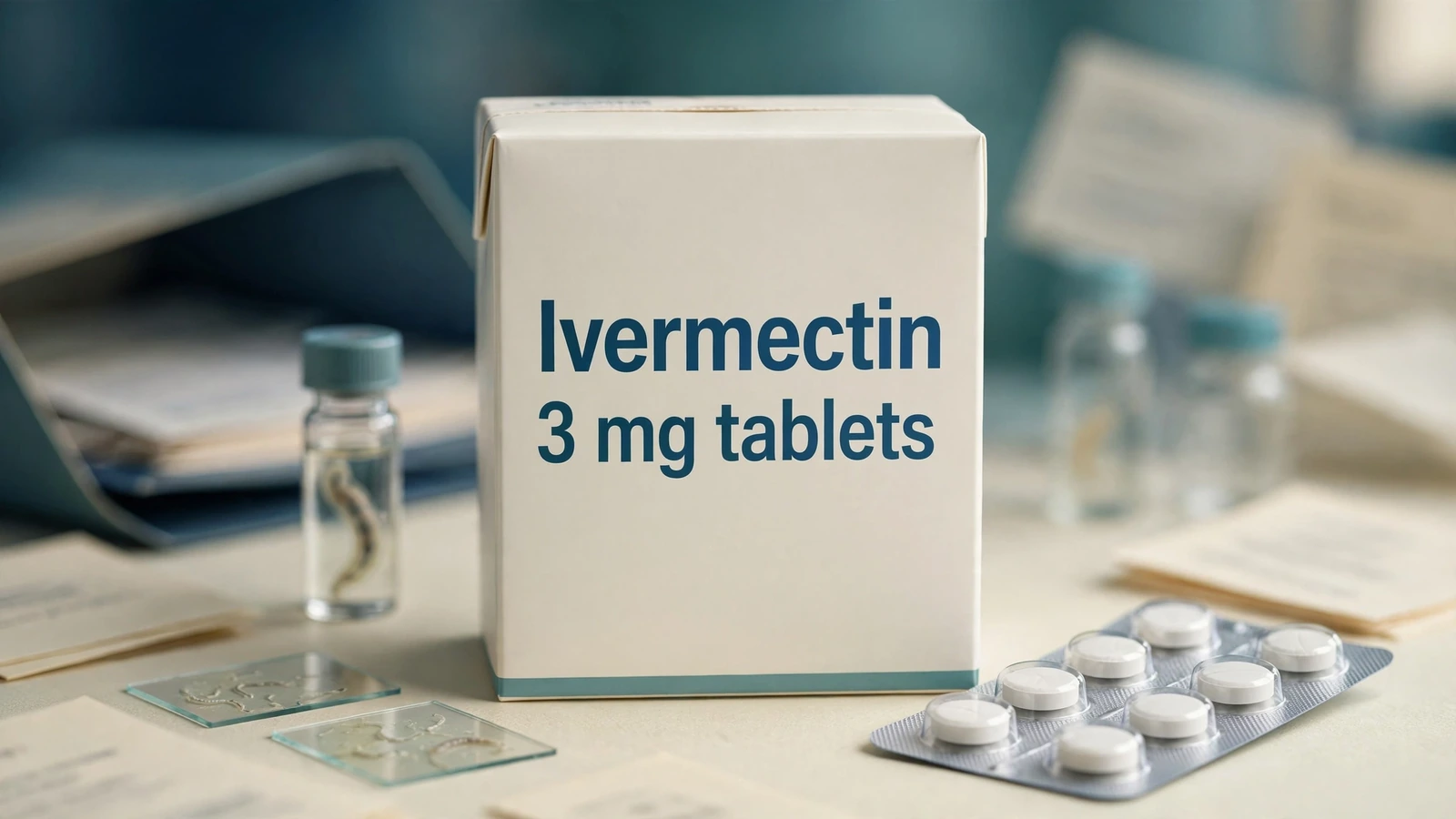
The official DailyMed prescribing information for Stromectol identifies a human prescription tablet taken by mouth. That route and regulatory record matter. A familiar ingredient name printed on another product does not establish that the product is intended for people, that it has the same concentration, or that its inactive ingredients and manufacturing controls match a human prescription medicine.
Systemic means the medicine is absorbed after oral administration and reaches tissues through the body. It does not mean that every parasite, every stage of a parasite, or every symptom responds in the same way. The label describes activity against intestinal stages of Strongyloides stercoralis and tissue microfilariae of Onchocerca volvulus, while also naming important limits. Those limits are part of the indication, not fine print that can be separated from it.
Ivermectin for humans has diagnosis-specific uses
Intestinal strongyloidiasis
Strongyloides stercoralis can persist through an autoinfection cycle. Many infections are quiet, while gastrointestinal, skin, or respiratory symptoms can occur. Immune suppression, particularly corticosteroid exposure, can change a chronic infection into hyperinfection or disseminated disease. Diagnosis and immune status therefore belong in the treatment decision before the prescription is interpreted.
Onchocerciasis
Onchocerca volvulus is a filarial infection associated with skin and eye disease. Oral ivermectin reduces tissue microfilariae, the immature worms linked to symptoms, but it does not kill adult worms. Continued assessment can remain necessary because adult worms may continue producing microfilariae after a treatment round.
The difference is practical. A stool-centered workup and follow-up plan for strongyloidiasis is not interchangeable with the skin, eye, exposure, and co-infection assessment used for onchocerciasis. The medicine name may be the same, but the condition being treated changes what the clinician is trying to clear, suppress, or monitor.
Diagnosis defines what “used for” means
Symptoms do not identify these infections by themselves. Abdominal discomfort, diarrhea, rash, cough, itching, eye symptoms, or fatigue overlap with many conditions. The diagnostic record should connect a plausible exposure to condition-appropriate testing and clinical findings. That prevents an antiparasitic prescription from becoming a trial-and-error response to symptoms with no confirmed target.
| Question | Strongyloidiasis care | Onchocerciasis care |
|---|---|---|
| Organism | Strongyloides stercoralis | Onchocerca volvulus |
| Core evidence | Stool or serologic context | Skin snip and eye findings |
| Important history | Immune suppression and exposure | Endemic exposure and loiasis risk |
| Treatment target | Susceptible intestinal stages | Tissue microfilariae |
| Follow-up focus | Persistence or recurrent larvae | Skin, eye, and infection evidence |
The CDC’s clinical care recommendations for Strongyloides connect treatment with relative contraindications, severe-disease management, and follow-up examinations when symptoms and positive stool findings persist. That structure shows why an indication is more than a disease name next to a medicine. It includes the setting in which the medicine is used and the evidence that determines what happens next.
What oral ivermectin does to susceptible parasites
Ivermectin binds selectively and with high affinity to glutamate-gated chloride channels found in invertebrate nerve and muscle cells. The label describes increased chloride permeability, hyperpolarization, paralysis, and death of susceptible parasites. This molecular explanation is useful only when paired with the species and life-stage limits in the same source.
In strongyloidiasis, labeled activity is limited to intestinal stages. In onchocerciasis, it acts against tissue microfilariae rather than adult worms in subcutaneous nodules. Those are not minor exceptions. They explain why the outcome is assessed differently and why retreatment or continued monitoring may be considered in one context even though a dose has already been given.
Mechanism also does not make a diagnosis. A medicine can have a well-described effect on a susceptible parasite and still be inappropriate when the symptoms come from another cause, the relevant organism has not been identified, or a patient-specific risk changes the balance. The narrower page on how oral ivermectin acts against susceptible parasites explains the channel effect without turning it into a claim of broad usefulness.
Safety screening stays attached to every systemic use
The human tablet is prescription-only. Before it is used, the clinician and pharmacist need an accurate record of allergies, pregnancy or breastfeeding, body weight, current prescriptions, nonprescription medicines, supplements, prior reactions, neurologic symptoms, and the diagnosed condition. A past prescription does not prove that a new episode has the same cause or that the former directions still fit.
The label contraindicates the product in a person with hypersensitivity to any component. CDC condition pages add context that can change the treatment plan, including low body weight, pregnancy or lactation, immune suppression in strongyloidiasis, and possible Loa loa co-infection in a person being assessed for onchocerciasis. These are reasons for clinical decision-making, not prompts for a reader to calculate a workaround.
When symptoms need prompt or urgent care
Seek emergency care now for trouble breathing, swelling of the face or throat, collapse, a seizure, inability to wake normally, severe confusion, a rapidly spreading or blistering rash, or sudden major difficulty standing or walking. Those findings can signal a severe allergic, neurologic, or inflammatory reaction and should not wait for a routine message.
Contact the treating clinician the same day for new faintness on standing, marked swelling, worsening eye symptoms, fever with a spreading rash, persistent vomiting, new numbness, or a meaningful change in mental status. During onchocerciasis care, inflammatory responses to dying microfilariae can contribute to symptoms; CDC’s onchocerciasis treatment information also emphasizes expert involvement when Loa loa co-infection is possible.
Milder symptoms still belong in the record. Note when they began, whether they are worsening, what other medicines were taken, and whether hydration or food intake changed. Do not repeat a dose or add another antiparasitic solely because symptoms continue. Persistent symptoms may reflect the infection, a medicine reaction, another diagnosis, or a follow-up question that requires testing.
Common mistakes that blur human ivermectin uses
- Treating nonspecific symptoms as a parasite diagnosis.
- Assuming one infection’s treatment plan fits another.
- Ignoring immune-suppressing medicines or travel history.
- Equating the ingredient name with a human product.
- Expecting one dose to remove every parasite stage.
- Repeating treatment without condition-specific follow-up.
A related mistake is using a general uses page as a dosing instruction. Dose selection belongs to the diagnosed condition and the individual’s verified record. The linked dosage-and-safety section separates those clinical factors rather than providing a self-service calculation.
Continue with related human uses
If a clinician has determined that human oral ivermectin is appropriate and issued a prescription, continue to order human ivermectin online from a licensed pharmacy. For condition-specific information, choose the relevant topic below:
- Oral ivermectin in strongyloidiasis care
- Oral ivermectin in onchocerciasis care
- The mechanism page linked above explains susceptible parasite action and life-stage limits.
Evidence boundary
Clinical statements on this page are limited to current human oral labeling from DailyMed and the linked CDC clinical-care pages. This information cannot diagnose an infection, choose a regimen, or replace instructions issued for an individual prescription.