
When symptoms come back
Recurrent BV After Metronidazole and When to Reassess
Recurrent BV after metronidazole deserves reassessment, not an automatic refill or a larger amount. Odor, discharge, irritation, pain, or urinary symptoms can reflect recurrence, another infection, an irritant reaction, incomplete use, a product mismatch, or a condition needing different care.
This page describes a safe follow-up record. It does not decide whether the current symptoms are BV and does not recommend a personal repeat regimen.

Infectious diseases and antimicrobial stewardship. Clinical focus: recurrent BV and antimicrobial use.
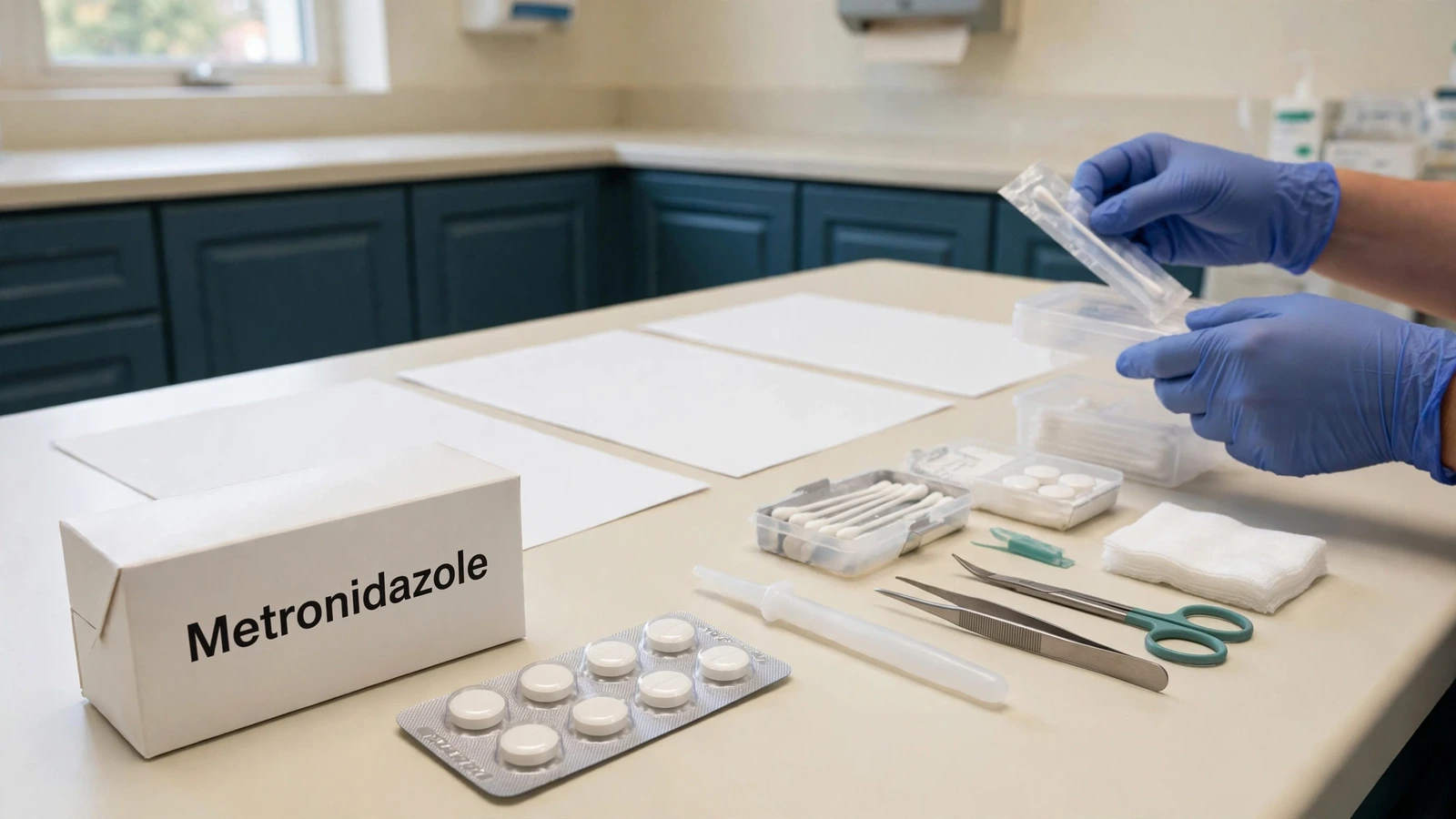
Recurrent BV after metronidazole can follow different patterns
The CDC’s bacterial vaginosis recommendations state that persistent or recurrent BV is common and advise patients to return for assessment if symptoms recur. The same material notes that data on optimal management of persistent or recurrent BV are limited. That uncertainty is a reason for a clearer record, not for guessing.
Some people mean that symptoms never fully stopped. Others describe a symptom-free interval followed by a similar odor or discharge. A third group notices a different complaint—such as intense itching, pelvic pain, bleeding, urinary burning, sores, or fever—and labels it recurrence because metronidazole was used before. These patterns should not be merged. Timing and symptom character help determine whether the clinician should confirm BV, test for another cause, inspect for irritation, or assess a more urgent condition.
Return to metronidazole routes and follow-up for BV for the broader condition context. It keeps recurrence connected to diagnosis and formulation rather than treating a previous prescription as permanent.
Before treatment
Record how BV was diagnosed, what competing causes were considered, pregnancy or breastfeeding, other medicines, allergies, and relevant health conditions.
During treatment
Note the exact oral or vaginal product, how it was used, any missed doses or applications, vomiting, local irritation, systemic adverse effects, and any label question discussed with the pharmacy.
After completion
Write down whether symptoms fully resolved, partly improved, never changed, or worsened. Include the date the product was finished and the first symptom-free day if there was one.
At return
Describe which symptoms came back, when, how they differ from the earlier episode, and whether new pain, bleeding, fever, urinary symptoms, rash, or pregnancy concern has appeared.
Reassess recurrent BV after metronidazole before repeating treatment
The CDC material on vaginal discharge explains that history alone is not sufficient to diagnose vaginitis accurately. That remains true even when a person has a documented BV episode in the past. Candidiasis, trichomoniasis, cervicitis, irritant reactions, and noninfectious conditions can overlap with BV symptoms or appear after antimicrobial treatment.
Reassessment can include a focused history, examination, point-of-care observations, or laboratory tests, depending on the presentation and setting. It may confirm a recurrent episode, identify a different condition, or show that the route or product was not used as intended. The page on BV diagnosis before metronidazole explains this differential in more detail.
Product mismatch
Oral tablets, vaginal gel, and topical skin products are not interchangeable. A wrong route, wrong applicator, unclear label, or package that does not match the prescription needs pharmacy clarification.
Incomplete exposure
Missed tablets or applications, vomiting after an oral dose, or stopping because of adverse effects matters. Do not “make up” medicine without instructions; give the timeline to the prescriber.
Another cause
New itching, urinary pain, pelvic pain, bleeding, sores, or fever may point away from an uncomplicated recurrence and can change the urgency and testing.
True recurrence
When a clinician reconfirms BV, the management decision still depends on prior treatment, time to return, tolerance, health history, and current official recommendations.

Route history belongs in the follow-up note
A person who previously used oral tablets should record systemic adverse effects, vomiting, missed doses, and medicine interactions. Someone who used vaginal gel should record local burning or irritation, applicator problems, leakage, missed applications, and whether another vaginal product was used at the same time. This does not prove why symptoms returned, but it gives the clinician product-specific evidence.
The separate comparison of metronidazole tablets and vaginal gel shows the route boundaries. It also explains why the same active ingredient does not make different dosage forms substitutes.
Do not use a skin gel on vaginal tissue or swallow a vaginal product. Do not assume that a leftover package is still current, correctly stored, or appropriate for the new episode. A pharmacy should resolve discrepancies in medicine name, dosage form, strength, route, quantity, directions, or expiration information before use.
A compact record for the follow-up visit
- Date and method of the earlier BV diagnosis.
- Exact medicine name, formulation, route, and label directions.
- Start and finish dates.
- Missed use, vomiting, or application difficulty.
- Adverse effects and how they were handled.
- Date symptoms improved or resolved.
- Date and character of returning symptoms.
- New medicines, products, exposures, or health changes.
- Pregnancy or breastfeeding status.
- Questions about prevention and the next follow-up point.
Bring the current package or a clear photograph of its pharmacy label if available. Do not share another person’s prescription or remove tablets from an unlabeled container.
Safety checks continue after the course
The MedlinePlus oral metronidazole record lists serious symptoms that need medical attention, including seizures, confusion, coordination problems, numbness or tingling, and severe skin or allergic reactions. The vaginal metronidazole record also describes product-specific adverse effects and route precautions.
Tell the clinician about all prescription medicines, nonprescription products, vitamins, supplements, allergies, neurologic conditions, blood disorders, and liver or kidney disease. Official sources differ on alcohol wording: CDC’s BV material says available evidence does not support a convincing disulfiram-like interaction, while current product information can still instruct avoidance. Follow the exact dispensed label and ask the prescriber or pharmacist to reconcile differences.
What a responsible next step can look like
A clinician may decide that current findings support BV, another condition, or further testing. If BV is reconfirmed, the choice of a subsequent regimen is individualized and may depend on which established regimen was used before, how soon symptoms returned, tolerance, pregnancy or breastfeeding, other medicines, and the pattern of prior episodes. This page intentionally does not select among those options.
Ask for a clear follow-up point: what improvement should be observed, what to do if symptoms persist, which effects require a call, and when another assessment is appropriate. That turns recurrence from a vague cycle into a documented clinical problem.
Prevention questions should stay evidence-bound
People with repeated symptoms often receive strong advice about douching, cleanses, supplements, boric acid, probiotics, partner treatment, or long-term medicine. These topics do not all have the same evidence, safety profile, or role. Tell the clinician exactly what has been tried, including nonprescription and vaginal products, and ask which measures are supported for the documented pattern.
Avoid adding several interventions between episodes because that makes both benefit and irritation difficult to interpret. A written prevention plan should name the condition being addressed, the product and route if one is used, important contraindications, the follow-up interval, and the symptoms that override the routine plan. Pregnancy or possible pregnancy makes product-specific advice particularly important.
Recurrence can be frustrating, but the uncertainty should be explicit. A careful plan can acknowledge limited evidence while still defining what to observe, when to test again, and who should make the next decision.
Next steps for recurrent BV after metronidazole
Preserve the timeline and reassess the cause before repeating treatment. Recurrence is common enough to anticipate, but not specific enough to self-diagnose. A prior bottle, a familiar odor, or a product photograph cannot replace the current clinical picture.
Evidence basis: CDC bacterial-vaginosis and vaginal-discharge treatment material; MedlinePlus oral and vaginal metronidazole records. These sources support general education and do not provide an individual diagnosis, prescription, dose, or recurrence regimen.