

Condition-specific prescription care
Metronidazole for Bacterial Vaginosis: Routes and Follow-Up
Metronidazole for bacterial vaginosis may be prescribed as an oral product or a vaginal product after a clinician confirms that the symptoms fit BV. The route is part of the prescription, not a packaging preference. Diagnosis, current medicines, pregnancy or breastfeeding, prior reactions, and what happened with earlier treatment all affect the next decision.
This page stays limited to BV and vaginal-route care. Rosacea gel, cream used on facial skin, and general pharmacy-access questions require different product and clinical checks.


Confirm BV before metronidazole for bacterial vaginosis
Vaginal odor, discharge, irritation, or discomfort can occur with BV, but those symptoms do not identify one cause by themselves. The CDC’s vulvovaginal symptom recommendations state that history alone is not enough for an accurate diagnosis. Candidiasis, trichomoniasis, cervicitis, irritant reactions, and other conditions can overlap in ways that change treatment.
An assessment may include the symptom pattern, timing, vaginal-product use, sexual history, pregnancy status, and examination or laboratory findings when appropriate. The purpose is not to make every patient complete the same test panel. It is to avoid treating a label such as “BV” when the available evidence points elsewhere or when urgent pelvic symptoms need a different level of care.
Compare routes for metronidazole for bacterial vaginosis
The CDC lists oral metronidazole and vaginal metronidazole gel among established BV options. It also notes that available evidence does not directly establish that one route is more effective than the other for every patient. That prevents a simplistic “stronger” or “better” claim. Route choice belongs to the prescriber and the patient after product-specific risks and practical use are clear.
Oral route
An oral tablet creates systemic exposure. The medicine history therefore matters, including allergies, neurologic history, liver or kidney concerns, pregnancy or breastfeeding, and products that may interact. The tablet label, strength, directions, and treatment purpose must match the prescription.
Vaginal route
Vaginal gel is a route-specific product supplied for intravaginal use. The current DailyMed vaginal-gel label states that this product is not for oral, eye, or skin use. Applicator instructions and product warnings belong to that exact dispensed formulation.
A person who cannot tolerate an oral product may still need a fresh clinical decision rather than an unsupervised switch. The reverse is also true. Availability, convenience, or a familiar package does not establish that the route fits the diagnosis or the person’s health history.
The dedicated comparison of oral tablets and vaginal gel for BV organizes the practical differences without selecting a regimen for the reader.
Product-specific checks prevent route and label errors
| Checkpoint | What must agree | Why it matters |
|---|---|---|
| Diagnosis | BV findings and treatment goal | Similar symptoms may need other care |
| Route | Oral or intravaginal product | Products are not interchangeable |
| Medication history | Prescription, nonprescription, and supplement list | Interactions and precautions differ |
| Label | Patient, product, formulation, and directions | Appearance alone is unreliable |
| Follow-up | Expected contact and symptom plan | Persistent symptoms need reassessment |
Do not use a family member’s product, leftover tablets, or a vaginal product obtained for a prior episode. Even when the medicine name matches, the diagnosis, route, instructions, and current safety record may not. A pharmacist can verify the dispensed product, while the prescriber makes the diagnosis and route decision.
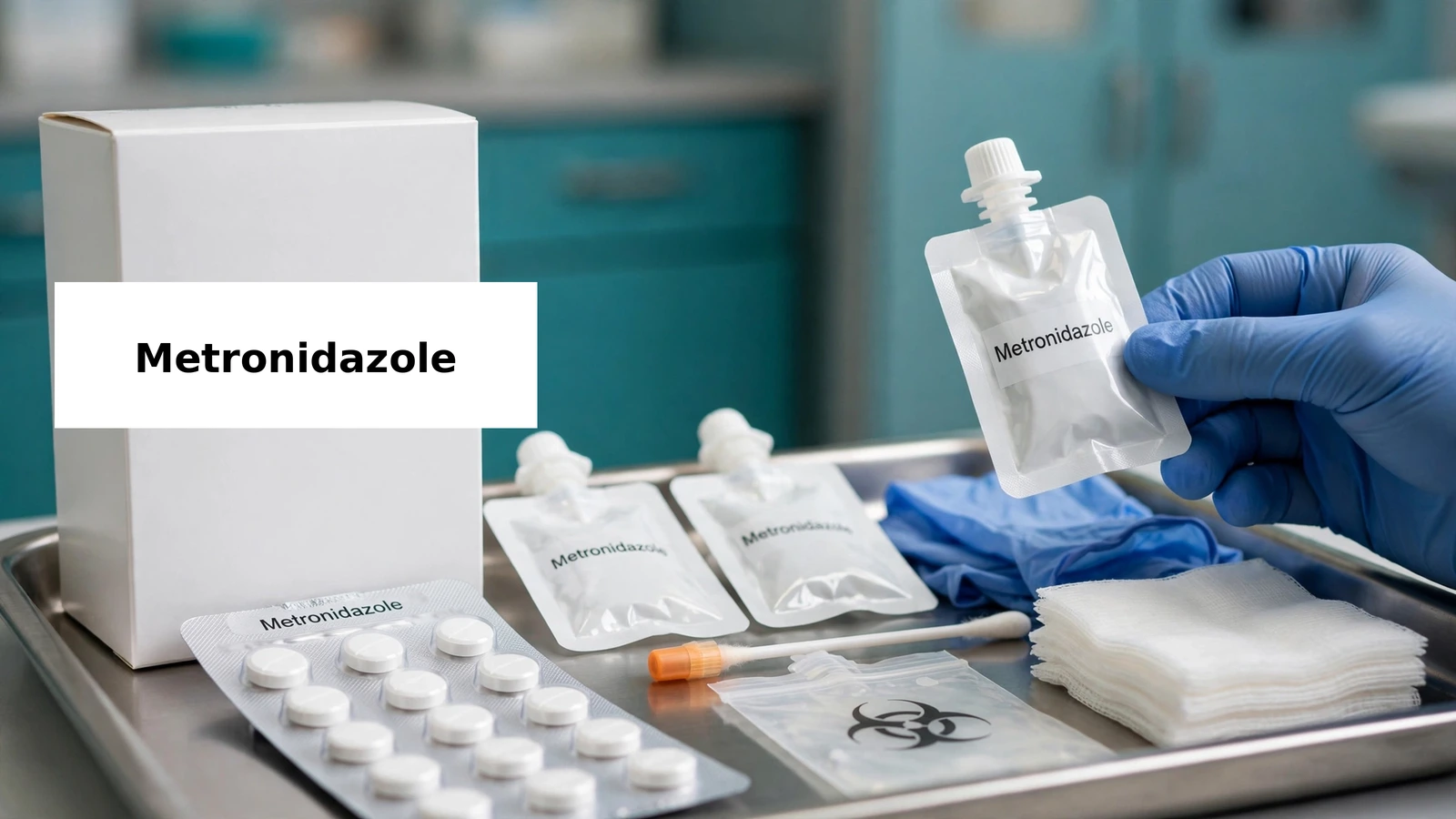
Safety information changes with the formulation
For oral metronidazole, the MedlinePlus oral medicine page directs patients to provide a complete medicine and health history and lists gastrointestinal effects, headache, metallic taste, neurologic symptoms, severe skin reactions, and allergic symptoms among issues that may require attention. That source also contains alcohol-related instructions. A patient should follow the exact current label and prescriber directions attached to the dispensed oral product.
For vaginal metronidazole, MedlinePlus vaginal medicine information emphasizes intravaginal use and warns against getting the gel in the eyes, mouth, or on the skin. Local discomfort, irritation, discharge changes, or symptoms suggesting another vaginal condition should be reported rather than covered with extra product.
There is a genuine source difference around alcohol. The CDC’s 2021 BV recommendations say the evidence did not support a convincing disulfiram-like interaction and state that abstinence is unnecessary for BV treatment. Some current product labeling still instructs patients to avoid alcohol or products containing alcohol. Because labels vary by formulation and manufacturer, the safe operational rule is to follow the instructions for the exact product and resolve conflicting advice with the prescriber or pharmacist.
Follow-up after metronidazole for bacterial vaginosis
If symptoms resolve, the CDC does not require a routine follow-up visit solely because BV was treated. Persistent or recurrent symptoms are different. Return for assessment because the original diagnosis may need confirmation, another condition may be present, the product may not have been used as intended, or the episode may represent recurrent BV.
Keep a short record: when treatment began and ended, the exact formulation, missed or interrupted use, new products used in the vagina, symptom changes, pregnancy status, and any adverse effects. This is more useful than asking for the same medicine again without context. The page on reassessment when BV symptoms return explains how clinicians rebuild that record.
Diagnosis also deserves its own boundary. Read why BV diagnosis comes before metronidazole if the main question is whether the symptoms fit BV at all.
Common mistakes in a BV treatment record
- Assuming odor or discharge proves BV.
- Switching between oral and vaginal products.
- Using leftover medicine for a new episode.
- Hiding supplements or recent adverse reactions.
- Repeating treatment when symptoms recur.
- Using vaginal gel on facial skin.
This information supports a conversation with a qualified clinician and pharmacist. It cannot diagnose BV, select a route, or replace the instructions issued for an individual prescription.
Licensed dispensing completes the route check
Once a clinician has selected metronidazole and a route, the dispensing step should preserve that decision. Confirm the legal pharmacy identity and contact details, pharmacist access, patient name, prescription status, medicine name, dosage form, strength, route, quantity, directions, expiration information, and tamper evidence. A product image, low price, familiar box, or claim of fast approval cannot replace those checks.
For vaginal gel, the package and applicator should correspond to intravaginal use. For oral medicine, the tablets or capsules and directions should match the prescription. If a substitute is offered, ask whether the form, concentration, route, and instructions remain the same and whether prescriber approval is required. Do not accept a topical rosacea gel because the active ingredient name matches.
Keep the medicine in its original labeled container, follow storage instructions, and use the pharmacy contact channel for a damaged seal, missing leaflet, changed appearance, unclear applicator, or label discrepancy. These are continuity checks, not a claim that packaging alone proves authenticity.
The most useful access record joins four facts: a documented clinical decision, an exact prescription, a verified dispenser, and a product that matches both. If any link is missing, pause before use and resolve it with the prescriber or pharmacist.
For refills, compare the new package with the current plan instead of assuming continuity. Health changes, another medicine, a different manufacturer, or a renewed symptom pattern can require clarification even when the active ingredient remains metronidazole.
Questions about metronidazole for bacterial vaginosis
Can symptoms alone confirm BV?
No. Vaginal symptoms overlap with several conditions, so diagnosis and any appropriate testing should come before selecting metronidazole or a route.
Are oral tablets and vaginal gel interchangeable?
No. The prescription identifies the route and product. A pharmacist can clarify a proposed substitution, but patients should not switch formulations on their own.
Official evidence used
Clinical statements are limited to the CDC BV and vaginal-symptom recommendations, current DailyMed vaginal-gel labeling, and current MedlinePlus oral and vaginal medicine records linked above. Product labeling and clinical recommendations can change, so confirm current instructions with the prescriber and dispensing pharmacist.