
Pre-treatment record for an oral prescription
Metronidazole Oral Tablet Checks Before Treatment Starts
Metronidazole oral tablet safety connects the diagnosis, medical history, medicine list, allergy record, clinical findings, prescription, and follow-up plan. It does not begin with a tablet strength or an old package. A clinician decides whether systemic metronidazole is appropriate; a licensed pharmacy then matches the issued prescription to the product.
Three essential checks
Metronidazole oral tablet safety begins with clinical fit
Clinical fit
The condition considered is supported by relevant symptoms, examination, testing, history, and response to previous treatment. The plan distinguishes conditions that may look similar and identifies when in-person care is needed.
Patient fit
Allergies, prior reactions, neurologic and liver history, pregnancy or breastfeeding context, current medicines, alcohol-use context, and recent treatment are recorded for patient-specific judgment.
Product fit
The issued order, pharmacy stock package, patient label, route, form, strength, quantity, directions, and counseling record correspond before the medicine is released.
A green result in one gate cannot compensate for missing information in another. A familiar diagnosis does not validate an old prescription. A verified pharmacy cannot decide that treatment is needed without an appropriate clinical order. A clinician’s decision does not excuse a pharmacy from matching the actual package and label.
Reason for treatment
Start with evidence for the condition
Record the main symptoms, where they occur, when they began, whether they are new or recurrent, and what has already been tried. Add examination findings, specimens, laboratory results, dental findings, or other records relevant to the condition being considered. A symptom label alone is not a diagnosis.
Tell the clinician about recent antibiotics or incomplete treatment. Recurrence after earlier therapy may call for confirmation of the diagnosis, adherence issues, resistance considerations, a different source of symptoms, or direct examination. It should not automatically trigger another course.
Document warning signs and barriers to follow-up. Remote assessment may be insufficient when symptoms are severe, the diagnosis is uncertain, testing is required, pregnancy-related questions are unresolved, or a person cannot be monitored safely.
History fields
Build the metronidazole oral tablet safety record
Allergies and previous reactions
Separate a documented allergy from expected discomfort, treatment failure, and an uncertain historical label. Record the product, reaction, timing, severity, and care received when known.
Neurologic history
Report seizures, neuropathy, numbness, tingling, balance changes, confusion, or other neurologic conditions and symptoms. New neurologic symptoms during treatment require prompt clinical contact.
Liver and blood history
Document known liver disease, abnormal results, blood disorders, and relevant monitoring. The clinician determines whether the history changes product selection, monitoring, or the care setting.
Pregnancy and breastfeeding context
Give accurate timing and current status. The diagnosis, route, official labeling, potential benefits, risks, and alternatives require patient-specific discussion rather than a universal web answer.
Current medicines and supplements
Include prescriptions, nonprescription products, vitamins, herbs, and recently stopped medicines. The dedicated interaction page shows how to build a reconciliation record.
Alcohol-use context
Official labeling contains alcohol-related precautions. Report beverages and alcohol-containing products honestly and follow the clinician’s and pharmacist’s patient-specific instructions.
Decision ledger
Every unresolved field needs an owner and next step
| Field | Evidence to capture | If incomplete | Responsible role |
|---|---|---|---|
| Diagnosis | Symptoms, examination, tests, history, and clinical rationale | Arrange testing or direct assessment rather than assuming a match | Clinician |
| Allergy | Product, reaction, timing, severity, and prior advice | Clarify before prescribing or dispensing | Clinician and pharmacist |
| Medicine list | Exact products, ingredients, strengths, use pattern, and recent changes | Reconcile labels and contact other pharmacies or prescribers | Patient, clinician, pharmacist |
| Prescription | Patient, prescriber, route, form, strength, quantity, directions | Do not interpret ambiguity at checkout | Prescriber and pharmacist |
| Product | Sealed package, manufacturer, expiration, lot, and patient label | Hold release and resolve the mismatch | Pharmacist |
| Follow-up | Expected contact route, warning signs, reassessment, and test plan | Establish a reachable clinician and pharmacy contact | Care team |
Prescription and dispensing
The oral product must match field by field
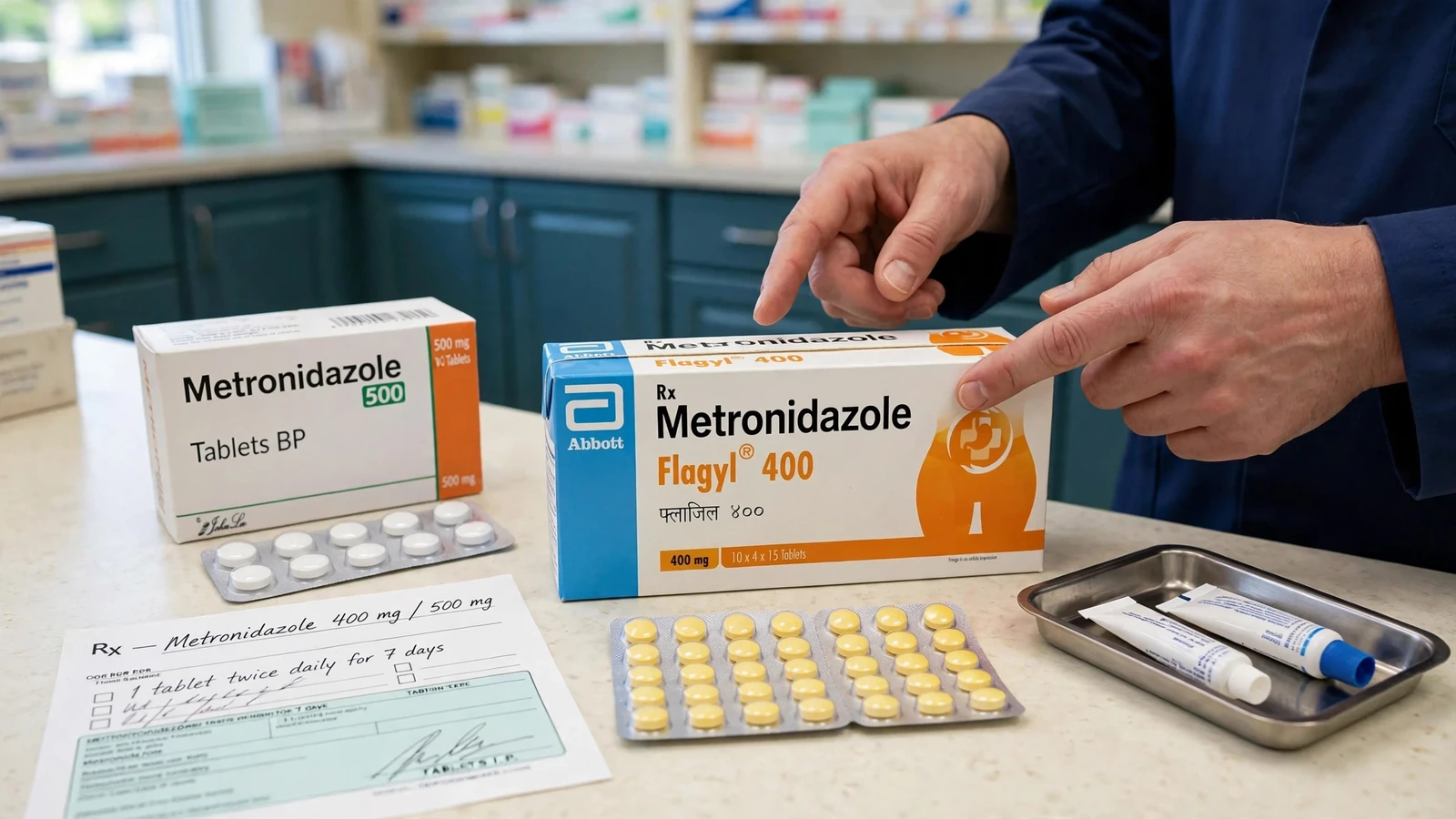
“Metronidazole” describes an active ingredient, not a complete dispensing instruction. Oral tablets and capsules differ from vaginal and dermatologic products. The pharmacy should match the route, dosage form, strength, quantity, and directions in the prescription before producing the patient label.
Compare the patient name, prescriber, medicine name, form, strength, and directions across the order, package, and label. Ask the pharmacist about an unexpected change in appearance or manufacturer. Generic substitution does not remove the need to verify the dosage form and the actual product supplied.
Keep the package sealed if the label is unclear, the route appears wrong, the patient name differs, or the package is damaged. Contact the dispensing pharmacy through independently verified details.

Before, during, after
Metronidazole oral tablet safety continues after prescribing
Before the first use
Read the patient label and supplied information. Confirm the correct patient and oral dosage form, know how to contact the pharmacy and prescriber, and identify which symptoms require routine contact or urgent assessment.
During treatment
Use the medicine only according to the patient-specific label. Track new symptoms, changes in the underlying condition, new medicines, and missed or conflicting instructions. Do not change the regimen based on a general supporting page.
When symptoms occur
Record the symptom, onset, severity, progression, and effect on function. Keep the package available during the call. The 500 mg adverse-effects page organizes contact and warning-sign records without assigning a cause.
At follow-up
Report whether symptoms improved, persisted, recurred, or changed. Bring the product label, adherence record, new medicine list, and any test results so the clinician can decide whether the diagnosis or plan needs reassessment.
Escalation
Do not force every problem into routine messaging
Severe allergic symptoms, breathing difficulty, swelling of the face or throat, seizure, severe confusion, loss of consciousness, or another rapidly worsening condition needs urgent assessment. Worsening infection symptoms, inability to keep fluids down, severe pain, or significant functional change may also require direct evaluation. Use the emergency service appropriate to the situation.
For non-emergency questions, contact the prescribing clinician or dispensing pharmacist before changing the plan. A support agent or marketplace message cannot evaluate a neurologic symptom, confirm an allergy, interpret testing, or decide whether treatment should stop.
Scope limits
Actions this checklist does not authorize
- Using leftover, shared, or informally sourced tablets
- Choosing oral treatment from symptoms alone
- Substituting a topical or vaginal product for an oral prescription
- Changing strength, schedule, or duration without the responsible clinician
- Stopping another prescribed medicine to avoid a possible interaction
- Accepting a damaged, unsealed, or mismatched package
- Treating low price or fast delivery as evidence of pharmacy legitimacy
Current FDA and DailyMed labeling for the exact product remains the formal source for contraindications, warnings, precautions, and patient information. The clinician and pharmacist apply that information to the person and the dispensed product.
Related oral-tablet questions
Return to the oral safety checks
The prescription-status and 500 mg oral-tablet page connects this screening record to adverse-effect and interaction information.
Bring to the visit
One packet for a complete decision
- Symptom and recurrence timeline
- Relevant examination or test results
- Allergy and prior-reaction history
- Complete medicine and supplement list
- Pregnancy and breastfeeding context when relevant
- Neurologic and liver history
- Prior antibiotic records
- Pharmacy and follow-up contact details
Final readiness check
Do not leave the first-use plan implicit
Before the medicine is used, the patient should have the correct sealed package, a readable patient label, the supplied information, contact details for the pharmacist and prescriber, a clear follow-up route, and instructions for urgent symptoms. Any contradiction between the portal, prescription, package, or label should be resolved in writing.
Keep the screening record with the medicine list and symptom timeline. It helps another clinician understand what was considered if care is transferred, symptoms change, or treatment must be reassessed.

Clinical subject-matter profile
Marisa Holubar, MD, MS, FIDSA
Infectious diseases and antimicrobial stewardship
Clinical focus: oral metronidazole screening and medicine safety.
This page supports preparation for clinical and pharmacy checks and does not replace diagnosis or patient-specific instructions.