
500 mg strength context · adverse-effect recognition · escalation
Metronidazole 500 mg Side Effects That Need Attention
Metronidazole 500 mg side effects should be interpreted by symptom, severity, timing, and the patient’s health record, not by the strength printed on the carton alone. Some effects can be uncomfortable and require counseling, while allergic, neurologic, severe skin, or rapidly worsening symptoms may require prompt medical care.
The 500 mg phrase identifies a product strength; it is not a dosing recommendation. This page does not tell anyone to start, continue, stop, or change treatment. Use the exact prescription label, official patient information, and direct advice from the prescriber or pharmacist. See the oral-tablet prescription and safety page for prescription-status and screening details.
Three response levels
Metronidazole 500 mg side effects by urgency
Record and ask
New taste changes, stomach upset, nausea, headache, or other non-severe effects described in official patient information should be recorded and discussed when persistent, worsening, or difficult to interpret.
Contact promptly
New numbness, tingling, marked weakness, unusual coordination problems, concerning mood or mental changes, persistent vomiting, or symptoms that interfere with hydration need direct clinical advice.
Seek urgent care
Breathing difficulty, facial swelling, seizures, confusion, fainting, a widespread or blistering rash, or a rapidly worsening severe reaction should not wait for a routine message response.
These categories are an orientation tool, not a diagnosis. Official labeling and the patient’s clinician determine the appropriate response. When uncertain about a severe symptom, use urgent medical services rather than a shipping or customer-support contact.
Strength versus regimen
A 500 mg package does not explain exposure
The experience of an adverse effect cannot be interpreted from tablet strength without the prescribed schedule, duration, formulation, condition, other medicines, health history, and timing of symptoms. A patient should not compare their package with a web example or another person’s prescription. The patient label and issued instructions are the relevant record.
Do not split, combine, repeat, or stop tablets based on this page. If symptoms occur, note when they began relative to treatment, what else was taken, whether a dose was missed or vomited, and whether the condition itself is worsening. Contact the prescriber or pharmacist for patient-specific instructions.
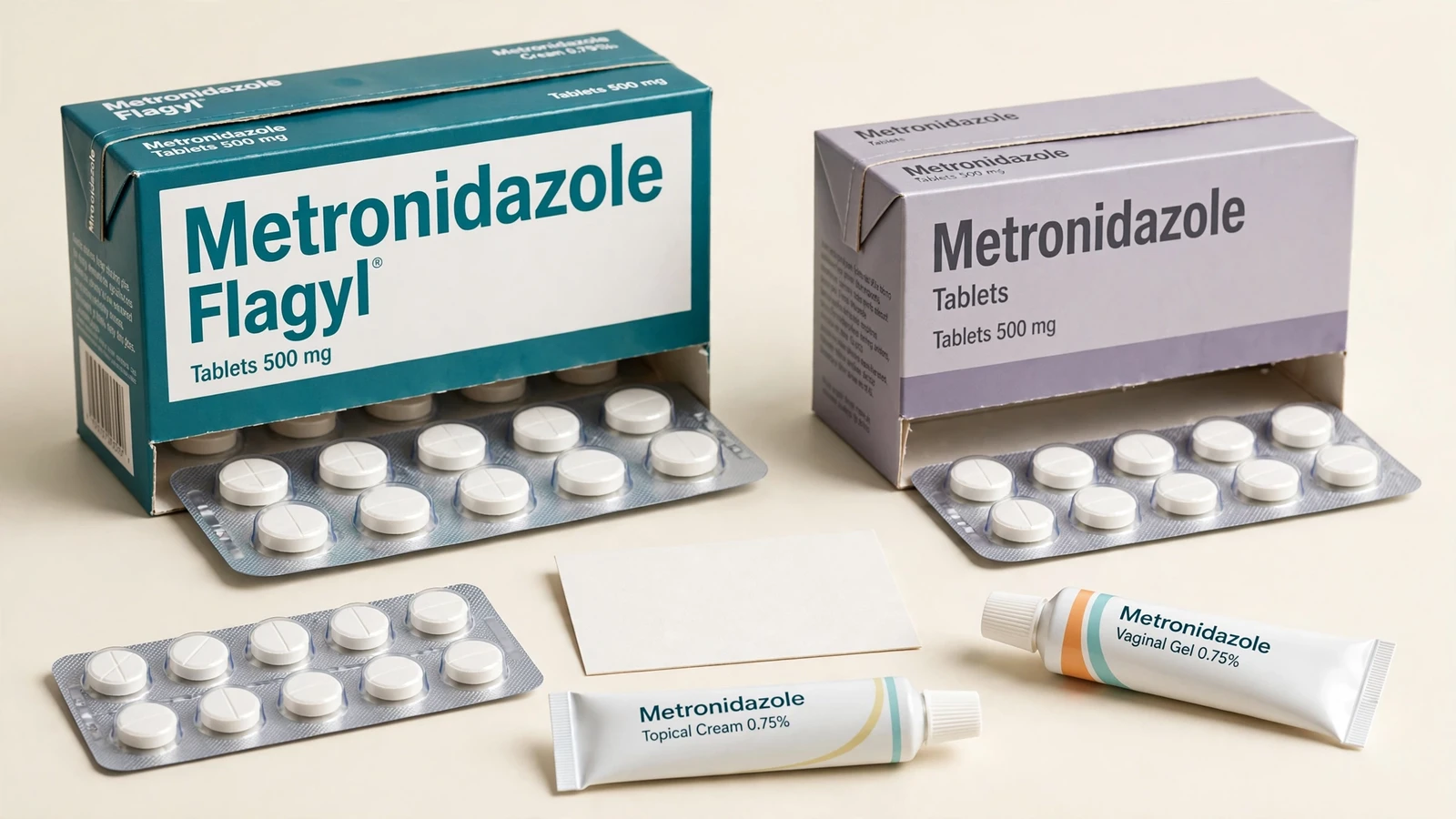
Symptom diary
Record metronidazole 500 mg side effects clearly
What
Describe the symptom in plain language and where it occurs.
When
Record onset, duration, pattern, and relation to the medicine.
How severe
Note effects on hydration, walking, alertness, breathing, or daily function.
What else changed
List medicines, supplements, illness, food, alcohol context, and missed instructions.
Use specific observations rather than a general rating alone. For example, whether the patient can keep fluids down or whether numbness is spreading is more informative than the word “bad.” Do not delay urgent care to complete a diary.
Possible effects
Use official labeling as the source of the symptom list
FDA prescribing information, DailyMed labeling, and MedlinePlus patient information describe possible gastrointestinal, taste, neurologic, allergic, skin, and other adverse effects. The list varies by product and source context. Rather than copying a long undifferentiated catalog, the patient should use the information supplied with the exact dispensed medicine and ask about unfamiliar symptoms.
| Observation group | Examples to document | Useful context | Contact route |
|---|---|---|---|
| Digestive or taste | Nausea, stomach upset, taste change | Hydration and persistence | Pharmacist or prescriber |
| Neurologic | Numbness, tingling, coordination change | Onset and progression | Prompt clinical contact |
| Skin or allergic | Rash, swelling, breathing symptoms | Spread and severity | Urgent when severe |
| General condition | Weakness, fever, worsening illness | Underlying infection signs | Clinical reassessment |
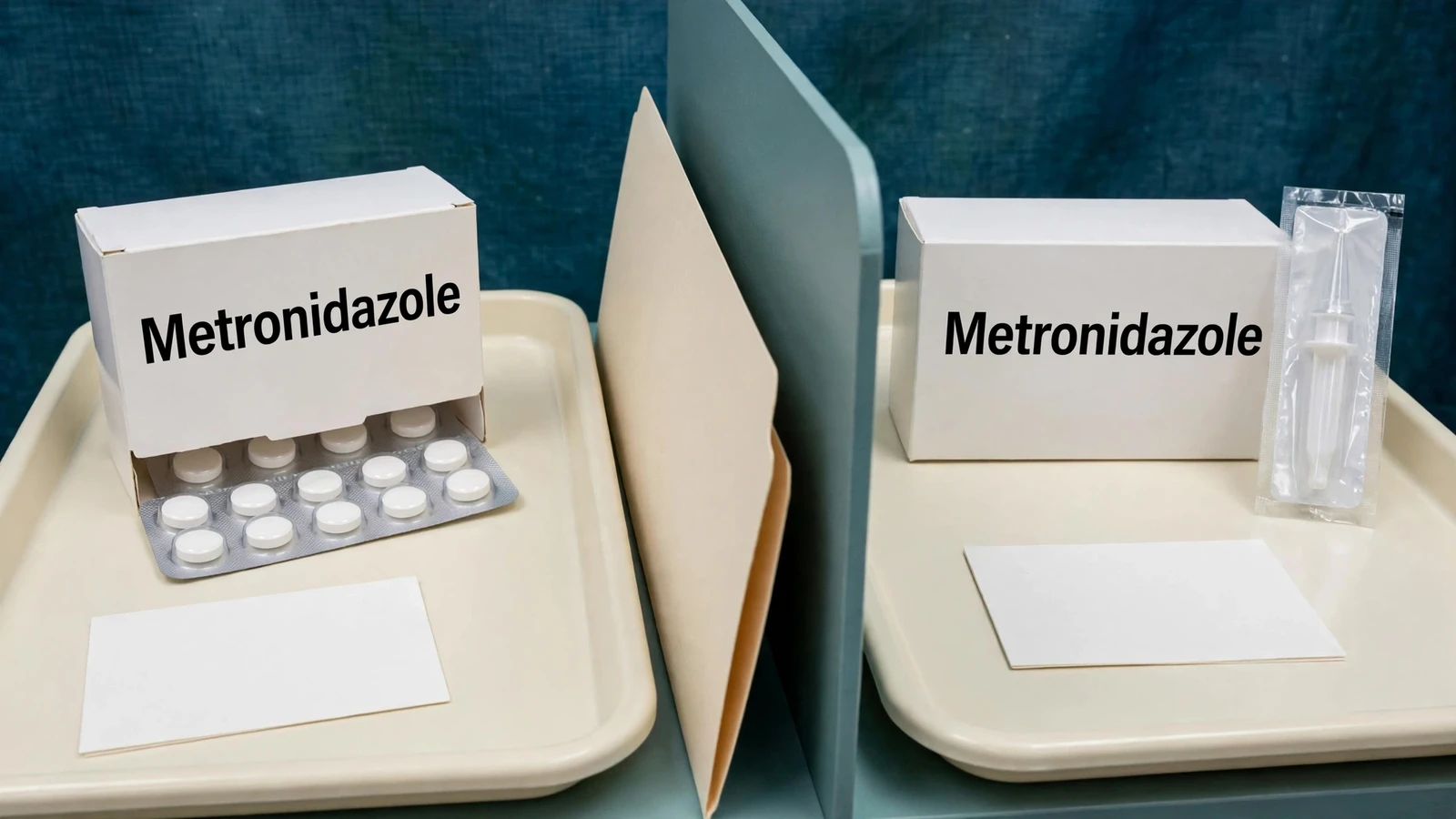
Pharmacist counseling
Keep the product package available during a symptom call
The package and patient label identify the exact product, formulation, strength, directions, manufacturer, pharmacy, and prescription record. That information helps the pharmacist distinguish a product question from a clinical problem and check whether the patient is describing the expected medicine.
Ask the pharmacist how to use the supplied patient information, what to do if the label is damaged or unclear, and whom to contact after hours. The pharmacist can also identify whether a medicine-reconciliation issue needs prescriber clarification. A customer-service representative cannot replace that clinical role.
Interactions and other causes
Side effects should not absorb every safety question
A new symptom may relate to the condition, metronidazole, another medicine, a combination, dehydration, or a separate illness. This is why the dedicated metronidazole interactions page remains distinct. It focuses on the complete medicine and supplement record rather than repeating the adverse-effect list.
Do not omit occasional medicines, supplements, recently stopped products, or alcohol-use context when asked. Official labeling contains important interaction warnings. The clinician and pharmacist apply those warnings to the patient’s full record.
Who should not rely on this page
Clinical decisions require direct assessment
- Anyone with severe or rapidly worsening symptoms
- A person considering someone else’s tablets
- A patient with a mismatched or damaged package
- Anyone planning to change the prescribed regimen
- A patient with new neurologic symptoms
- Anyone with breathing difficulty or facial swelling
- A patient whose original condition is worsening
This content cannot determine whether a symptom is caused by metronidazole or whether treatment should change. Direct the question to the prescribing clinician or dispensing pharmacist, and use urgent services when the symptom is severe.
Related safety questions
Keep adverse effects, interactions, and screening separate
Return to the oral-tablet prescription and safety page. The related pages cover interactions and pre-treatment oral-tablet checks. If the symptom question also involves a new medicine, supplement, uncertain package, or changed diagnosis, carry that evidence into the relevant topic rather than forcing every issue into an adverse-effect category. Keep each response with the symptom timeline so later care does not depend on memory alone.
Records for follow-up
Bring evidence, not a product screenshot
- Exact medicine package
- Patient label
- Symptom timeline
- Current medicine list
- Allergy history
- Prescriber instructions
- Pharmacy contact details
Symptom handoff
When metronidazole 500 mg side effects need prompt care
A useful symptom message identifies the exact product and patient label, when treatment began, when the symptom began, how it has changed, what function is affected, and whether another medicine, supplement, illness, or exposure changed at the same time. Avoid writing only “side effect” or copying a long list from a website. The care team needs the event that is happening now.
Describe
Use plain language and include location, sensation, visible changes, frequency, and anything that makes the symptom better or worse.
Time
Record the start date and time, progression, relation to the medicine, and whether the symptom is constant, intermittent, or rapidly changing.
Function
Note breathing, alertness, walking, hydration, eating, sleep, work, and ability to carry out ordinary activities.
Context
List new medicines, missed instructions, alcohol context, illness, pregnancy status when relevant, and the original condition’s current symptoms.
Keep a copy of the clinician’s or pharmacist’s response. If the advice changes the plan, ask for the updated instruction in the patient record. Do not infer a dose change from a general adverse-effect list.
Underlying condition
Worsening illness can resemble a medicine problem
Persistent or worsening symptoms may reflect the original condition, an incorrect diagnosis, another condition, inadequate response, a complication, or an adverse medicine event. General content cannot separate those causes. Report both the new symptom and whether the reason for treatment is improving, unchanged, or worsening.
When testing or direct examination was part of the original plan, missing that step can limit what a remote message can resolve.
Package evidence
Preserve the label during any safety question
The patient label shows the person, pharmacy, prescriber, formulation, strength, and individualized directions. The stock package adds manufacturer, lot, expiration, and product identity. Keep both available. If the package is damaged, unsealed, or inconsistent with the label, do not use it and contact the dispensing pharmacy.
Photograph the label and package only to preserve the record; do not use appearance to diagnose a reaction or identify an unknown tablet.

Clinical subject-matter profile
Marisa Holubar, MD, MS, FIDSA
Infectious diseases and antimicrobial stewardship
Clinical focus: adverse-effect recognition and medicine safety.
This page does not replace diagnosis, product labeling, pharmacist counseling, or urgent medical care.