
Male fertility assessment
Clomid for Male Infertility: Assessment and Monitoring
Clomid for male infertility is an off-label option considered only after a male fertility assessment defines the problem and the limits of available evidence. Clomiphene can alter pituitary and testicular hormone signaling, but changes in testosterone or semen measures do not guarantee pregnancy. Diagnosis, partner context, alternatives, adverse effects, and follow-up determine whether a trial is reasonable.
When Clomid for male infertility may be considered
A prescription should name the target: a hormonal pattern, a semen abnormality, a fertility-preserving goal, or another defined reason. “Improve fertility” is too broad. It does not say what evidence supports treatment or what outcome will be measured.
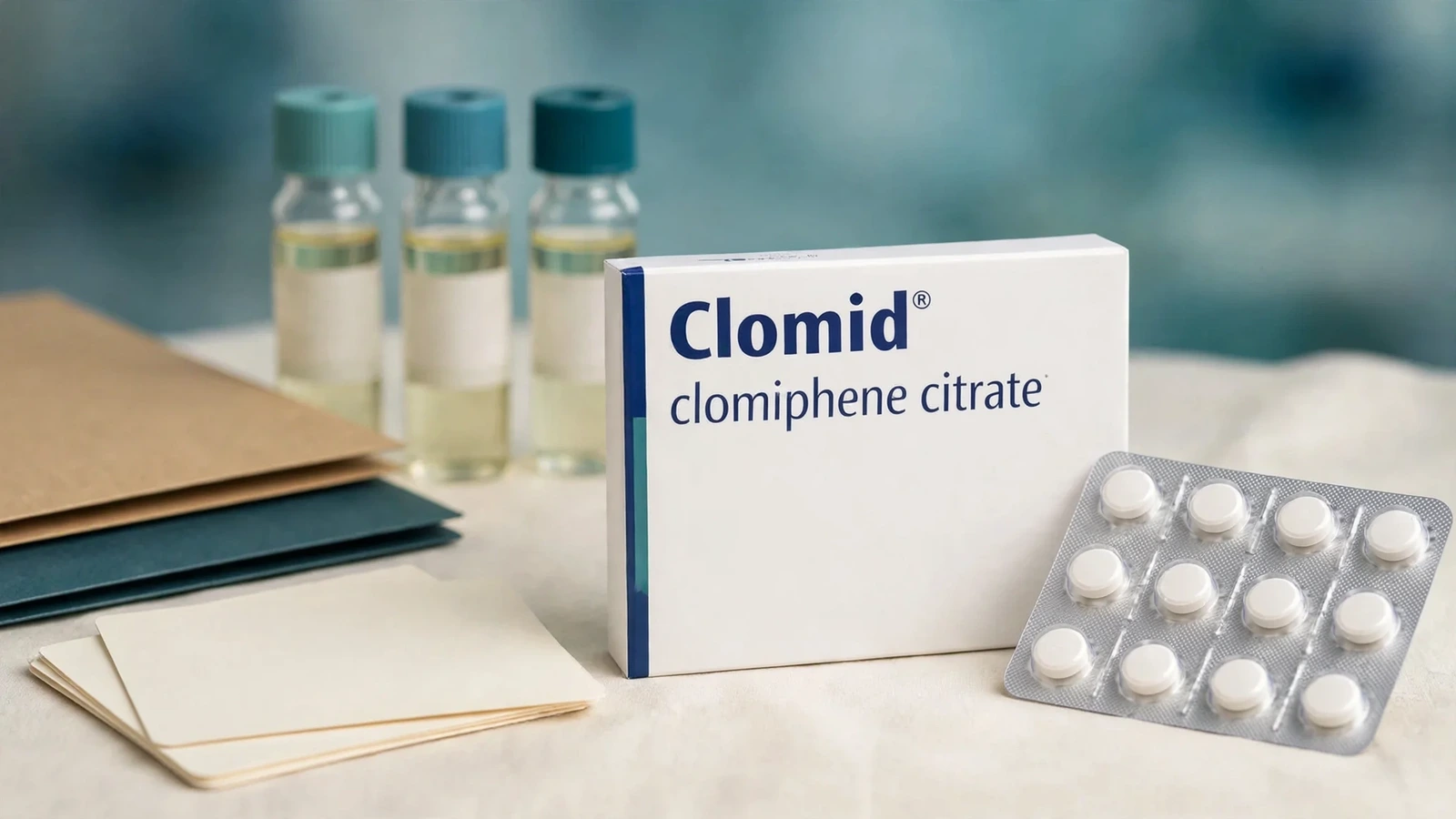
What a male infertility assessment can include
The AUA and ASRM male infertility guideline, amended in 2024, describes a structured evaluation using reproductive history, physical examination, semen analysis, and selected hormone, genetic, or imaging tests. The exact workup depends on findings; no single laboratory panel covers every cause.
Semen measures can vary between samples. An abnormal result may need confirmation and interpretation alongside abstinence interval, collection conditions, illness, heat exposure, medicines, supplements, and other factors. A treatment decision based on one isolated value risks aiming at noise instead of a persistent clinical problem.
The partner’s evaluation also matters. Fertility is a couple-level outcome even when a male factor is present. Age, ovarian reserve, tubal factors, ovulation, treatment timing, and shared reproductive goals can change whether empiric male medication is useful or whether another route should be considered sooner.
| Outcome | What it can show | What it cannot guarantee |
|---|---|---|
| Hormone change | Biologic response to signaling | Improved semen or pregnancy |
| Semen change | Shift in measured parameters | Natural conception |
| Symptom change | Patient-reported response | Hormonal normalization |
| Pregnancy | Couple-level reproductive outcome | Which single intervention caused it |
Clomiphene’s role is off-label in men
The current DailyMed Clomid label is for selected women with ovulatory dysfunction. It does not establish a male indication or male dosing plan. In men, a specialist may consider clomiphene because blocking estrogen feedback can increase gonadotropin signaling and stimulate endogenous testosterone production. Whether that hormonal signaling can respond depends on the underlying condition.
Off-label use should be transparent. The patient should understand why the clinician is considering it, what alternatives exist, how evidence matches the diagnosis, what will be monitored, and what result would end the trial. A prescription obtained without that explanation is missing part of informed decision-making.
Why the trial literature calls for restraint
Evidence is mixed across different male populations. A 1992 multicenter randomized double-blind trial in couples with idiopathic impairment of semen quality found no evidence that the tested clomiphene regimen improved semen quality or pregnancy rates. Older smaller trials and newer selected studies have reported changes in hormones or semen parameters.
A recent randomized placebo-controlled study indexed by PubMed reported improvements in several semen and hormone measures in a narrowly defined group of infertile men. Its size, selection criteria, duration, and surrogate outcomes limit what can be generalized. These apparently conflicting findings reinforce the same point: subgroup, diagnosis, and outcome definition matter.

Monitoring Clomid for male infertility against the treatment target
If the stated target is hormonal, repeat hormone testing should be interpreted with timing and symptoms. If fertility is central, semen analysis and the couple’s treatment timeline matter. If a new adverse effect emerges, safety can outweigh a favorable laboratory trend. A single improving number should not automatically authorize indefinite continuation.
The male clomiphene monitoring page separates baseline from follow-up records. It also explains why semen results, hormone results, symptoms, and adverse effects should not be collapsed into a single “working” or “not working” label.
Safety, contraindications, and medication history
MedlinePlus describes male infertility as an off-label clomiphene use and advises discussing the risks with a clinician. It also directs patients to provide the complete list of prescription medicines, nonprescription medicines, vitamins, supplements, and herbal products. New medicines, anabolic agents, testosterone products, and substances that affect hormones or fertility belong in that record.
The approved label’s sex-specific ovarian warnings do not apply to male anatomy, but visual symptoms, liver-related contraindication, hypersensitivity, and systemic adverse effects remain relevant. The prescriber should explain which official warnings transfer directly and which risks are known mainly from male off-label experience.
Common errors in male fertility treatment
- Treating one semen result as a complete diagnosis
- Assuming higher testosterone proves better fertility
- Ignoring the partner and the couple’s timeline
- Using a regimen copied from a forum
- Skipping adverse-effect and vision questions
- Continuing without a defined reassessment point
Who this page is not for
This material cannot decide whether clomiphene is appropriate for unexplained infertility, severe sperm abnormalities, anatomic obstruction, genetic conditions, pituitary or testicular disease, or a fertility-preservation goal. It cannot interpret an individual semen analysis or hormone panel. Men with acute scrotal pain, a new mass, severe systemic symptoms, or rapidly changing health need direct medical assessment.
Questions that expose the real tradeoffs
- What diagnosis makes clomiphene biologically plausible?
- Ask which findings suggest that increasing endogenous signaling could address the target.
- Which outcome matters most now?
- Separate hormone, semen, symptom, pregnancy, and treatment-timeline goals.
- What evidence argues against this approach?
- Discuss conflicting trials, subgroup limits, and alternatives rather than hearing only favorable findings.
- When will the trial end?
- A time-bound reassessment protects against continuing a prescription that has no defined benefit.

Clinical subject-matter profile
Urology, male infertility, and men’s health. This specialist profile provides subject-matter context; individual diagnosis and treatment decisions require direct clinical care.
Medical information notice: This page explains evidence and clinical boundaries. It does not diagnose male infertility, recommend off-label treatment, or replace specialist care.
A semen analysis is not a single stable score
Collection conditions, abstinence interval, illness, laboratory method, and normal biological variability can influence semen findings. The specialist decides whether a result is interpretable and whether repeating it would change the plan. A person should not diagnose severe or permanent infertility from one isolated number.
When changes are observed, separate semen concentration, motility, morphology, total motile count, hormones, and the couple’s outcome. Improvement in one measure is not proof that every measure improved or that pregnancy will follow. That distinction is particularly important when evidence from male clomiphene studies is mixed.
What the couple’s timeline changes
The value of a time-limited off-label trial depends partly on the female partner’s age, ovarian reserve, tubal and uterine factors, prior treatment, and the time available before another approach is considered. These are not reasons to make assumptions about either partner. They are reasons for coordinated fertility planning.
Ask how long the team expects to wait for a measurable response, which outcome matters first, and which result would trigger assisted reproduction, surgery, genetic assessment, or another treatment plan.
Protect the diagnostic signal
Record testosterone or anabolic use, fertility supplements, heat exposure, recent fever, major illness, and medication changes because they may affect interpretation. Bring prior semen and hormone reports rather than copying selected values into a message. A trend is only useful when the underlying records remain traceable.
If the diagnosis points to obstruction, severe primary testicular dysfunction, a genetic condition, or another mechanism unlikely to respond to endogenous stimulation, a different clinical workup may be more appropriate. Clomiphene should not delay investigation of a finding that needs a specific intervention.
Preserve the original clinical question
Write down why clomiphene is being considered and which result would support or weaken that rationale. At follow-up, compare the same outcome rather than selecting whichever number improved.
If the answer remains uncertain, document whether the next step is repeat measurement, different diagnostic testing, another treatment, or stopping. Uncertainty is a finding, not permission for indefinite renewal.
Decision boundary: male clomiphene use remains off-label. The specialist must connect the suspected diagnosis to the treatment mechanism, define the outcome, and state when the plan will be reconsidered. A semen or hormone change alone is not a promise of pregnancy or live birth.