
Men’s hormone assessment
Clomid for Low Testosterone in Men: What Clinicians Check
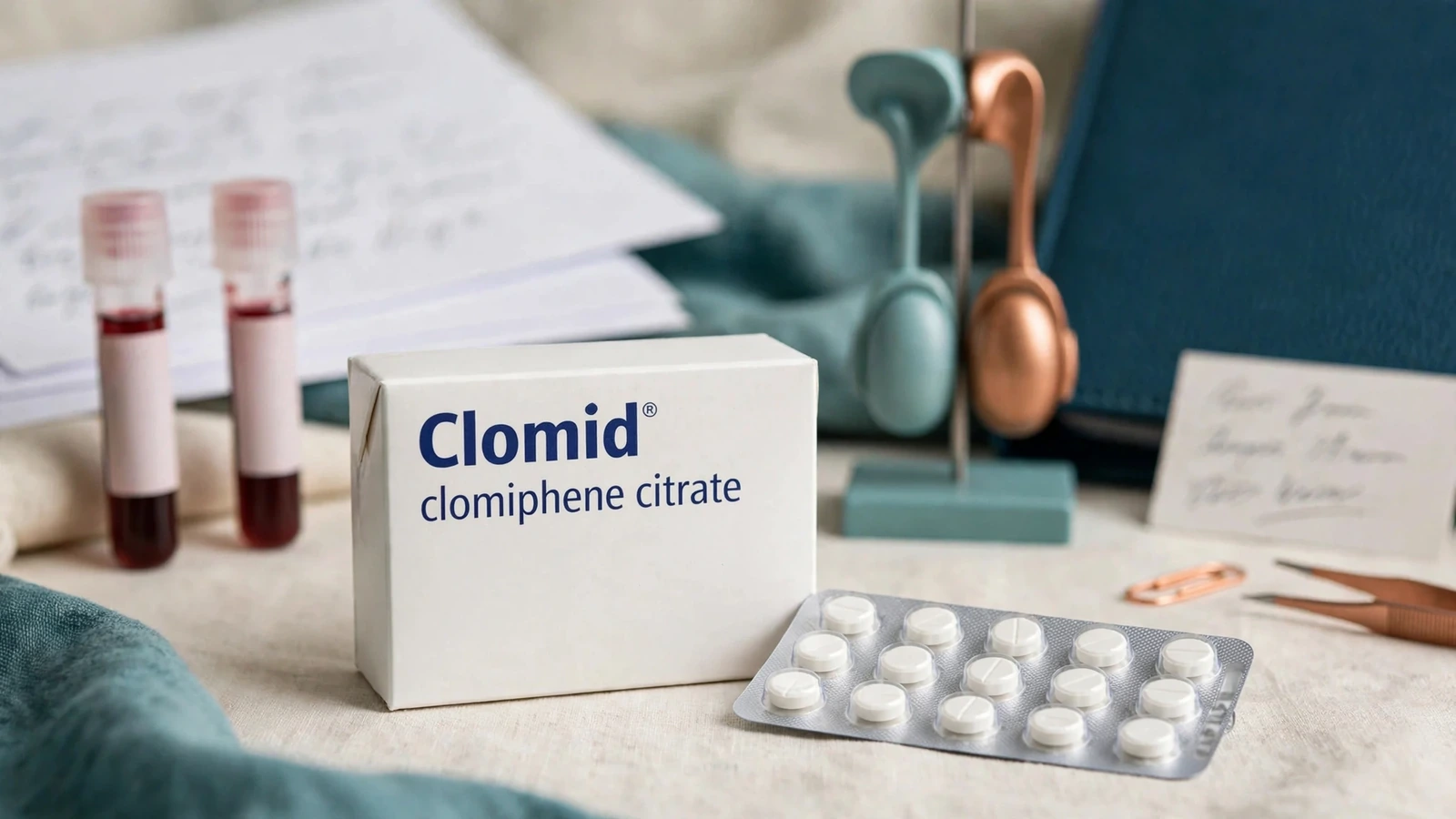
Clomid for low testosterone in men is an off-label treatment considered in selected cases after symptoms and repeated hormone measurements support a diagnosis. Clomiphene can stimulate endogenous gonadotropin signaling, but it is not interchangeable with testosterone therapy, does not fit every cause of low testosterone, and does not guarantee symptom, fertility, or laboratory improvement.
Diagnosis is more than one laboratory value
The AUA testosterone-deficiency guideline connects diagnosis to symptoms or signs and appropriately obtained low testosterone measurements. Fatigue, sexual symptoms, mood changes, and reduced energy are not specific enough to diagnose testosterone deficiency without that context.
Timing, acute illness, sleep, weight change, medicines, substance use, and laboratory variation can affect the result. Repeating and interpreting measurements protects against turning a transient or misleading value into long-term treatment.
How Clomid for low testosterone differs from replacement therapy
Clomiphene is a selective estrogen receptor modulator. By reducing estrogen feedback at the hypothalamic-pituitary level, it may increase luteinizing hormone and follicle-stimulating hormone, which can support endogenous testicular testosterone production when the hypothalamic-pituitary-testicular signaling system remains responsive. Exogenous testosterone supplies testosterone directly and can suppress gonadotropin signaling.
That distinction matters when fertility is a current or future goal. It does not make clomiphene a universally fertility-safe answer. Semen parameters, hormones, symptoms, adverse effects, and the underlying diagnosis still require follow-up. The male infertility page owns semen and fertility evidence; this page stays focused on the low-testosterone decision.
The current DailyMed Clomid label does not include a male indication or a male regimen. Any use in men is off-label and should be described as such on the prescription discussion, pharmacy record, and follow-up plan.
| Question | Why it matters | Record to keep |
|---|---|---|
| Is the diagnosis confirmed? | Avoids treating a transient value | Timed repeat results |
| What is the likely cause? | Predicts whether signaling can respond | Clinical assessment |
| Is fertility a goal? | Changes treatment tradeoffs | Reproductive plan |
| What ends the trial? | Prevents indefinite treatment without benefit | Reassessment criteria |
Evidence supports possibility, not certainty
A randomized study published in 2018 compared clomiphene, human chorionic gonadotropin, and their combination in men with hypogonadism who wished to preserve fertility. Testosterone and symptom measures changed during the short study. The selected population, treatment period, and measured outcomes limit how far those findings can be generalized.
Related trials of enclomiphene, one component of the clomiphene isomer mixture, have examined endogenous hormone signaling and sperm counts. Enclomiphene is not identical to the marketed clomiphene mixture, and those studies do not authorize a direct conversion or prove the same outcome for every clomiphene prescription. A clinician should distinguish the exact product and evidence being discussed.

Monitoring Clomid for low testosterone: numbers and symptoms
Follow-up may include repeat hormones, symptoms, adverse effects, and semen analysis when fertility is relevant. A higher testosterone value is not automatically a meaningful benefit if symptoms do not improve, adverse effects appear, or fertility goals are not being met. Conversely, symptom change without an interpretable laboratory context may not answer the original diagnostic question.
The male monitoring page explains how baseline and follow-up records are reconciled. The plan should name the expected decision after follow-up: continue, adjust, investigate further, change approach, or stop. It should also state which symptoms require earlier contact.
Medication history and contraindication screening
MedlinePlus advises sharing all prescription medicines, nonprescription medicines, vitamins, supplements, and herbal products with the clinician and pharmacist. Testosterone products, anabolic agents, opioids, glucocorticoids, fertility medicines, and substances that affect sleep or hormones can change the diagnostic interpretation and the care plan.
Clomiphene’s approved label contraindicates use in people with liver disease or a history of liver dysfunction and in people with hypersensitivity to clomiphene. Sex-specific contraindications from the female indication need careful interpretation, but they do not erase systemic warnings. Off-label use requires the prescriber to define which risks and monitoring duties apply.
Common mistakes
- Diagnosing from one untimed laboratory value
- Treating fatigue as proof of testosterone deficiency
- Assuming off-label means lower risk
- Equating a hormone rise with fertility success
- Skipping semen assessment when fertility matters
- Continuing without a stop or reassessment rule
Who this page is not for
This information cannot distinguish primary from secondary hypogonadism, identify pituitary or testicular disease, interpret an individual hormone panel, or decide whether clomiphene is appropriate. Men with acute testicular pain, a new mass, severe headache with visual or neurologic symptoms, or rapidly changing health need direct assessment rather than an internet treatment comparison.
Questions for a specialist
- What confirms the diagnosis?
- Ask how symptoms, timing, repeated results, and the suspected cause fit together.
- Why choose endogenous stimulation?
- Discuss fertility goals, alternatives, evidence limits, and whether the hormonal signaling system is likely to respond.
- What is the primary outcome?
- Separate symptoms, hormone levels, semen parameters, and fertility outcomes.
- What triggers a change?
- Clarify safety symptoms, inadequate response, and the planned reassessment point.

Clinical subject-matter profile
Urology, male infertility, and men’s health. This specialist profile provides subject-matter context; individual diagnosis and treatment decisions require direct clinical care.
Medical information notice: This page provides general evidence context. It does not diagnose testosterone deficiency, recommend off-label treatment, or provide an individual regimen.
Distinguish the number from the syndrome
Testosterone deficiency is not established by fatigue, low mood, sexual symptoms, or one laboratory value in isolation. Symptoms can have multiple causes, and hormone measurements require proper timing and interpretation. The clinician should explain whether repeat testing is needed and which additional findings distinguish a testicular, pituitary, medication-related, systemic, or functional cause.
That distinction affects whether clomiphene is biologically plausible. A medicine that stimulates endogenous signaling cannot be assumed to overcome every mechanism of low testosterone. The off-label rationale should connect the suspected hormonal mechanism to a measurable outcome without promising a response.
| Question | Evidence to bring | Decision it supports |
|---|---|---|
| Is the result confirmed? | Original timed laboratory reports | Whether further diagnosis is needed |
| What is the likely mechanism? | Related hormones, history, examination | Whether stimulation is plausible |
| Does fertility matter now? | Goals and semen assessment when indicated | How options are compared |
Define benefit before looking at follow-up
The plan should say whether the primary target is symptoms, a hormone finding, preservation of sperm production, semen parameters, or another clinical outcome. Changing the target after seeing the results creates a misleading success story. Use the same target at baseline and reassessment, then document safety and tradeoffs separately.
Compare options using the same questions
When discussing clomiphene and alternatives, compare the indication, mechanism, fertility implications, monitoring burden, adverse effects, evidence for the desired outcome, and the stop rule. A treatment can look attractive on one dimension and still be a poor fit for the diagnosis or priorities.
Ask whether the proposal is intended to preserve endogenous production, address symptoms, change a laboratory value, or support fertility planning. Then ask what evidence shows that the suspected hormonal mechanism can respond. This makes the off-label reasoning visible rather than treating clomiphene as a generic substitute for testosterone therapy.
Document a stop rule
The plan should state what adverse effect, inadequate response, new diagnosis, goal change, or time point triggers reassessment. An available refill or a higher laboratory value does not replace that decision.
Bring the conditions behind each result
Record collection time, recent illness, sleep disruption, major weight change, and changes in medicines or supplements. These details can affect whether two hormone results are comparable. The specialist should decide whether an apparent change reflects treatment, biological variation, collection conditions, or another health factor. Do not change treatment to chase a single result. Preserve the original reports and ask what evidence would confirm a meaningful, safe response at the planned reassessment.