acne treatment options work best when they match the type of breakout, its severity, the risk of scarring, and the skin’s tolerance for treatment. Comedones, inflammatory lesions, and deeper nodules do not always respond to the same approach. Start by identifying the pattern and recording what has already been tried, including irritation or worsening.
How Acne Type Changes Treatment Options
A plan for mostly clogged pores may emphasize a different combination of products than a plan for painful inflammatory or nodular acne. Distribution, menstrual pattern, pregnancy potential, other medicines, and prior reactions can also change the options. A dermatologist may combine topical care, oral treatment, procedures, and maintenance rather than rely on one product.
When Acne Treatment Needs a New Assessment
Reassessment is useful when acne is scarring, painful, rapidly worsening, or unchanged after a consistent trial. Bring product names and photographs instead of adding several treatments at once. The skin care article archive connects this overview with related discussions of ingredients, procedures, and daily routines.
Types of Acne Breakout
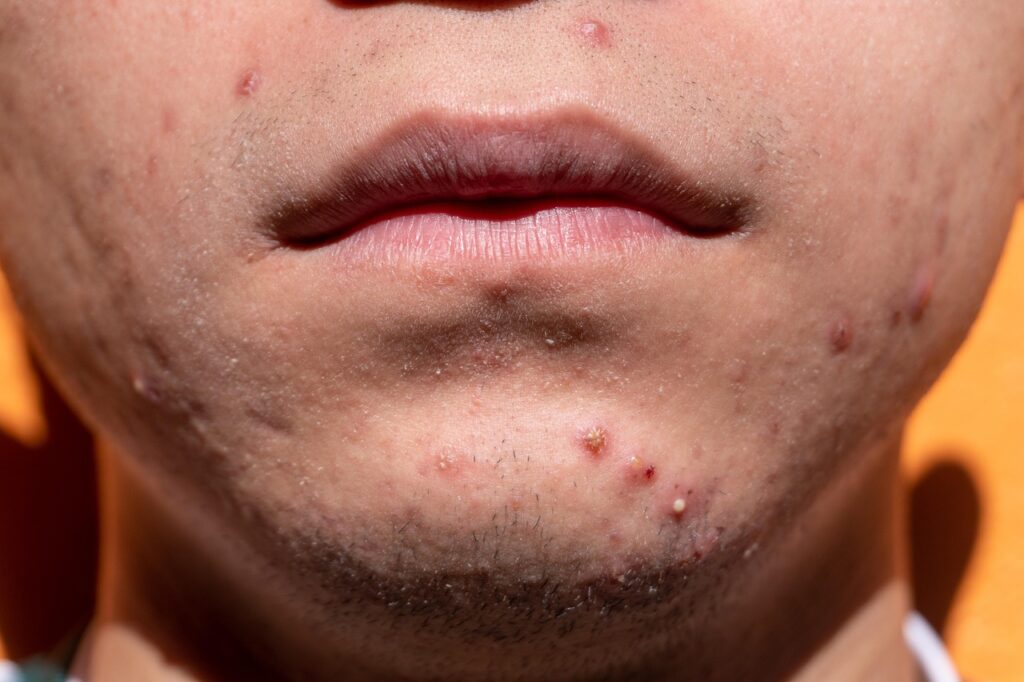
For effective acne treatment in Saginaw, MI, it is necessary to identify the specific type of breakout you are suffering from. Common forms of acne include:
- Blackheads – These manifest as open bumps on the skin that are filled with excess oil and dead skin cells. They tend to look like dirty black spots, but this is due to an irregular light reflection off the clogged pore.
- Whiteheads – The pores are impacted with dead skin and sebum and form a whitish bump on the skin.
- Papules – They are caused by bacteria build-up in the pre and appear as tiny red, hard pimples.
- Pustules – These are just like papules but are filled with pus that is made up of dead white cells.
- Nodules – These are pimples that extend deeper into the skin’s layer. They appear as large, inflamed lesions.
- Cystic Acne – This is a severe form of acne that also tends to spread to the deeper layer of the skin, causing it to become inflamed. They look like soft red lumps containing pus that are usually painful and challenging to treat. You need to visit a skin dermatologist near you to successfully get rid of them.
Are There Risk Factors for Getting Acne?
Unfortunately, there are several myths that attempt to explain why some people are more likely to develop acne than others. Some associate the breakouts with foods such as chocolate and French fries, while others associate it with poor hygiene. However, there is no scientific evidence that conclusively supports these claims. There are four main factors that play a role in the development of acne, and they include excess production of sebum, bacteria, inflammation, and pores clogged by oil and dead skin cells.
It has, however, been observed that some things or behaviors can trigger or worsen the factors above.
- Hormonal changes such as during puberty, menstruation, and pregnancy can lead to breakouts. The hormones produced during this period cause the sebaceous glands to produce more sebum, a factor contributing to acne.
- Certain medications such as birth control pills or corticosteroids could also put you at risk of acne.
- Stress does not directly cause acne but has shown to worsen already existing conditions.
- Genetics may also play a role in acne. If you have a family history of the condition, you are highly likely to develop it too.
How is Acne Treated?
Acne skin treatment in Saginaw, MI, will depend on the type of acne you have and its severity. Some people are lucky enough, and the condition resolves on its own or through simple home remedies. Unfortunately for others, professional advice from a medical clinic in Saginaw is needed to successfully treat the condition. But for whatever approach is taken to treat acne, patience is needed.
At MI Health Dermatology, treatment begins with Dr. James Yousif examining the areas of the skin affected by acne. This is to ensure that the signs you are presenting are because of acne and not any other skin condition. While there is no cure for acne, treatment options available help get rid of and prevent new outbreaks.
Over-the-counter treatment solutions that include medicated cleansers, gels, creams, and lotions can be of help. These products contain ingredients such as glycolic acid, benzoyl peroxide, salicylic acid, niacinamide, azelaic acid, and topical retinoids. They work by preventing the pores from clogging, reducing the production of sebum, exfoliating the skin’s top layer, and fighting bacteria.
In some cases, prescription products need to be used, and these include topical or oral antibiotics, retinoids, topical and oral antihormonal drugs, corticosteroid injections, and isotretinoin. In-office dermatological procedures such as laser resurfacing therapy, chemical peels, steroid injections, light therapy, and drainage or extraction of pimples are also used.