
Accutane Dry Lips: How to Stay Ahead of the Cracking

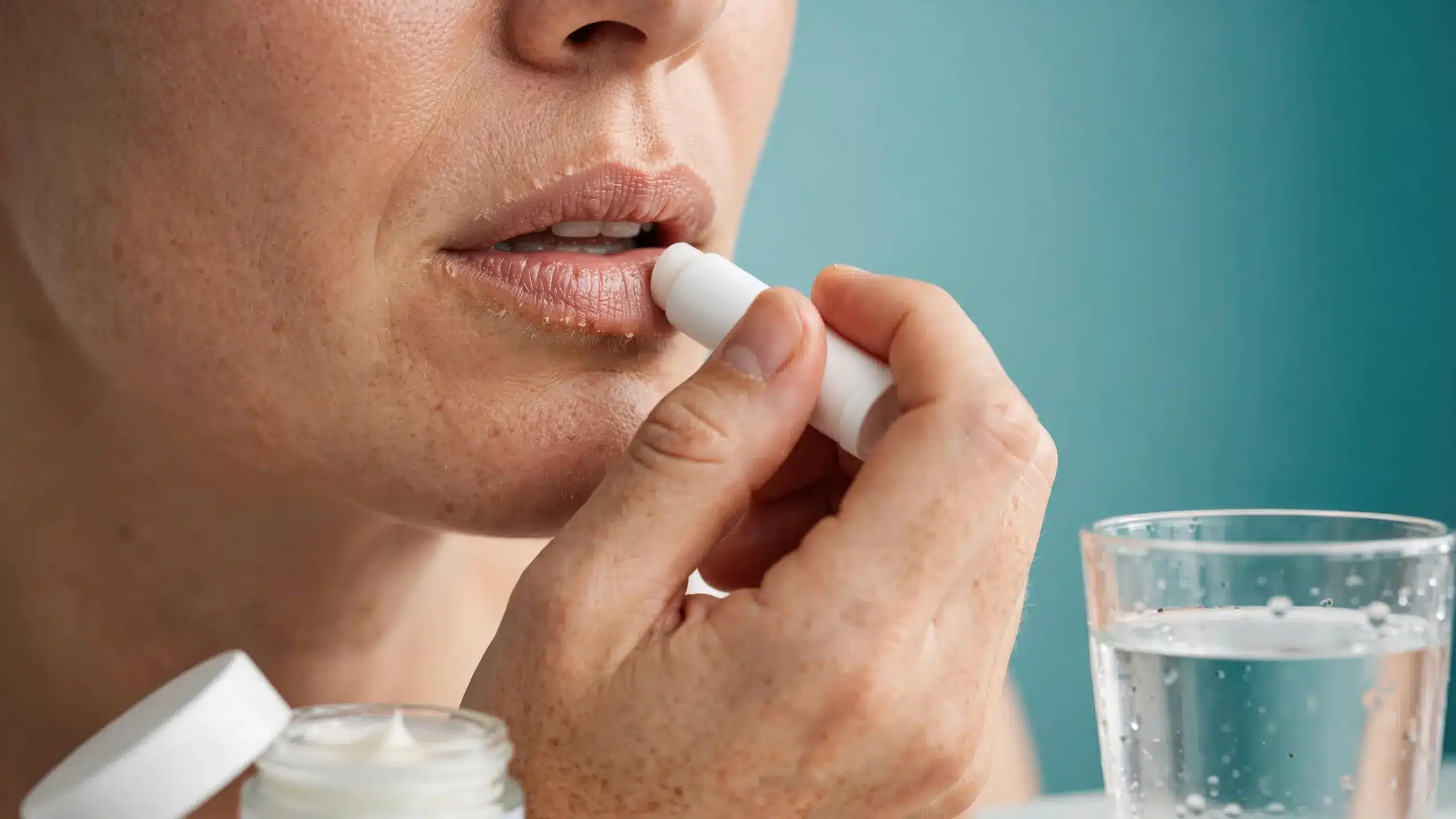
Accutane dry lips are the first thing almost every patient notices, and they usually arrive within days rather than weeks. This is not a rare reaction or a sign of intolerance. It is the most predictable effect the medicine has, and it happens because oil production drops everywhere at once rather than only where the acne was.
Handled from day one it stays a nuisance. Handled once the cracking has started it becomes the thing patients remember most about the whole course.
Dry lips are common, but they are only one part of the safety picture. The Accutane side-effects overview separates expected dryness from symptoms that deserve prompt clinical attention.
How Bad Do Accutane Dry Lips Get?
Worse than ordinary chapping, and on a different scale from a cold winter. Lips can tighten, peel, split at the corners, and bleed when you open your mouth too wide. Eating becomes awkward for some people and talking through a long day becomes uncomfortable.
Severity varies with the daily amount and with how early you started treating it. Patients who begin ointment on the first day rarely reach the splitting stage at all. Timing beats product.
What Actually Helps With Accutane Dry Lips?
Ointment rather than balm sticks, applied far more often than feels reasonable. The waxy sticks most people carry are designed for mild chapping and simply are not up to this. What works is a thick, greasy ointment that sits on the surface and stays there.
Dryness changes through the course
Early and late, respectively. Dryness usually shows up in the first stretch of the course, builds for a while, and then settles into something steady that you manage rather than fight. It does not keep worsening indefinitely. That plateau is a relief when it finally arrives, and most patients only notice it in retrospect, some weeks after the worst of the tightness has quietly stopped being the first thing they think about each morning.
It ends after the course does, though not instantly. Lips take some weeks to return to normal once the capsules stop, and most patients keep the ointment habit for a while out of caution.
Cracking can cross from expected to concerning
Dryness itself, no. What matters is when the picture changes character rather than degree.
Any of those warrant a call the same day rather than a heavier balm. Do not wait.
Dryness and ultraviolet sensitivity often arrive together, so pair this routine with the details about sun protection during treatment. If aching becomes the bigger problem, see how joint pain is assessed.
Use symptoms to decide when Accutane dry lips need more help
| What you notice | Reasonable next step |
|---|---|
| Tightness or light flaking | Use a plain protective product regularly, not only after discomfort starts. |
| Repeated cracks or bleeding | Tell the clinic and check whether irritation, licking, or a product is making it worse. |
| Swelling, spreading rash, blisters, or sores elsewhere | Seek prompt clinical advice rather than treating it as ordinary dryness. |
Photographs and the names of products used can help distinguish a routine barrier problem from contact irritation or a broader reaction.
Medically reviewed by Dr. Sarah Mitchell, MD, FAAD, Board-Certified Dermatologist. Reviewed Aug 17, 2026.