
Symptom triage during supervised oral treatment
Ivermectin Side Effects: When Symptoms Need Medical Care
Ivermectin side effects during human oral treatment range from mild gastrointestinal, skin, or neurologic symptoms to rare allergic, neurologic, or severe inflammatory reactions. The diagnosed infection changes the picture because killing parasite stages can also provoke symptoms. Timing, severity, progression, co-infection risk, and the complete medicine list determine the response.
This page addresses effects during prescribed systemic treatment. It does not cover seller risks, nonprescription use, or personal dose selection.


Ivermectin side effects, infection symptoms, or treatment reactions?
Symptoms after a dose do not all have the same cause. A medicine can produce an adverse effect. The underlying infection can continue causing symptoms. In onchocerciasis, inflammatory responses to dying microfilariae can produce a Mazzotti-type reaction. A separate illness, dehydration, or another medicine may also be responsible. Clinical triage begins by keeping those possibilities open.
The current DailyMed human tablet label reports gastrointestinal effects such as nausea, vomiting, diarrhea, reduced appetite, abdominal discomfort, and constipation in strongyloidiasis trials. Dizziness, sleepiness, vertigo, tremor, itching, rash, urticaria, and fatigue were also reported. Listing an effect does not predict that a particular patient will experience it.
The useful question is not simply whether a symptom appears in a list. Ask when it began relative to treatment, how severe it is, whether it is worsening, which body systems are involved, what the infection was doing before treatment, and what other medicines or health changes are present.
Use three response levels for ivermectin side effects
Record and monitor
Mild nausea, brief loose stool, modest headache, or limited itching may be documented when they remain stable and the written plan allows monitoring. Hydration and ordinary supportive steps should follow clinician instructions.
Contact the team promptly
Worsening rash, persistent vomiting, marked dizziness, new swelling, fever, new numbness, significant weakness, or eye symptoms deserve same-day contact, especially when they progress.
Get emergency help
Breathing difficulty, facial or throat swelling, collapse, seizure, profound confusion, unusual unresponsiveness, blistering rash, or sudden major trouble walking require emergency assessment.
These categories are a communication aid, not a substitute for individual instructions. A symptom that seems mild in isolation may deserve faster action in a pregnant patient, a child, someone with possible loiasis, a person taking anticoagulation, or a patient with severe Strongyloides disease.
Strongyloidiasis changes what persistent symptoms mean
In intestinal strongyloidiasis, gastrointestinal and skin symptoms may come from infection or treatment. The CDC’s Strongyloides clinical care recommendations connect persistent symptoms and a prior positive stool examination with follow-up stool testing. Continued symptoms do not automatically mean that another dose should be taken.
Hyperinfection and disseminated strongyloidiasis are different. Severe abdominal pain, intestinal obstruction, gastrointestinal bleeding, shortness of breath, coughing blood, respiratory failure, confusion, meningitis-like symptoms, or sepsis can occur in serious disease, particularly with immune suppression. Those findings belong in urgent hospital-level assessment, not in a routine adverse-effect message.
If symptoms worsen while a person is receiving corticosteroids or another immune-suppressing treatment, surface the prior exposure and strongyloidiasis history immediately. The clinical team may need to assess both the parasite and the immune-suppressing medicine. The patient should not independently stop a critical prescription or extend ivermectin.
Onchocerciasis adds inflammatory and eye findings
When microfilariae die, inflammatory responses can contribute to itching, swelling, rash, fever, lymph-node enlargement or tenderness, joint symptoms, postural dizziness, faster heartbeat, and eye findings. The medicine label separates these Mazzotti-type reactions from adverse effects attributed directly to the drug, but the patient may experience them in the same period.
The CDC’s onchocerciasis treatment information highlights the need for expert consultation when Loa loa co-infection is possible because severe encephalitic reactions can occur. New confusion, lethargy, difficulty standing or walking, incontinence with neurologic change, seizure, stupor, or coma after treatment is an emergency.
Eye pain, marked redness, worsening vision, or a sudden visual change deserves prompt direct assessment. Do not assume that every eye symptom is an expected reaction. Baseline eye findings and the timing of treatment help an experienced clinician interpret the change.
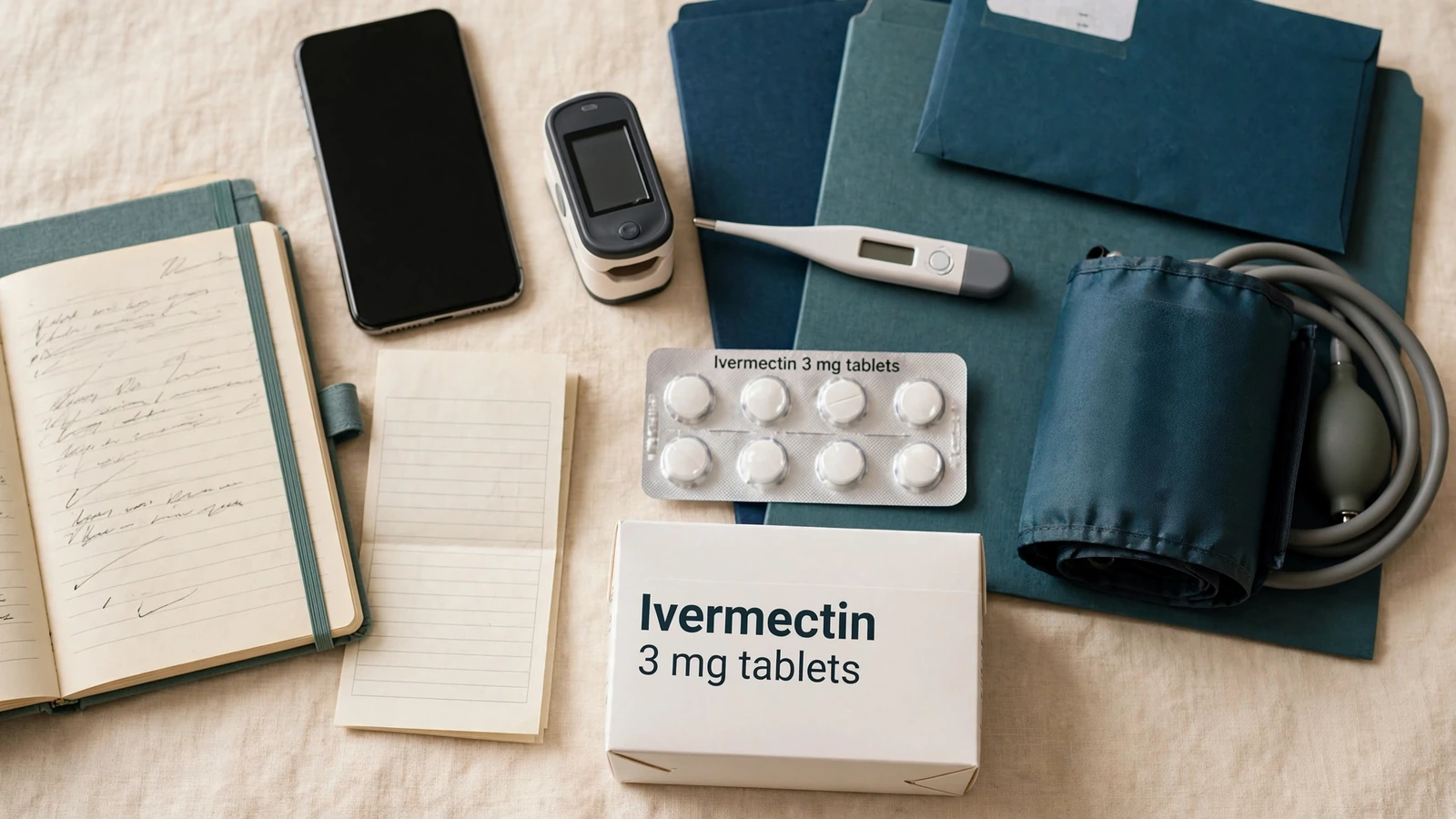
A symptom record makes triage more accurate
| Detail | Useful entry | Why it helps |
|---|---|---|
| Timing | Dose time and symptom onset | Shows temporal relationship |
| Progression | Stable, improving, or worsening | Supports urgency decision |
| Distribution | Body areas and systems affected | Separates local from systemic |
| Other medicines | Everything taken that day | Surfaces competing causes |
| Infection context | Diagnosis and baseline symptoms | Shows what preceded treatment |
| Objective data | Temperature or measured blood pressure | Improves remote triage |
Use measurements only when a reliable device and safe technique are available. Do not delay emergency care to complete a log. A photograph of a rash may help show progression, but it cannot assess breathing, mental status, eye injury, or internal organ involvement.
Prescription, contraindication, and interaction context
Human oral ivermectin is prescription-only and indicated for specific systemic parasite infections. The label contraindicates use in a person hypersensitive to any product component. CDC condition pages identify pregnancy, breastfeeding, low body weight, possible Loa loa co-infection, and severe illness among situations requiring individualized decisions.
Bring a full list of prescriptions, nonprescription medicines, vitamins, supplements, and herbals to the prescriber and pharmacist. The label notes postmarketing increased INR reports with warfarin. Bleeding, unusual bruising, blood in urine or stool, or a severe headache in a person receiving anticoagulation deserves prompt medical attention, while any medication change belongs to the anticoagulation and treating teams.
Do not use a symptom list to decide that another medicine must be stopped. The symptom may relate to the infection, an interaction, dehydration, or an unrelated condition. Coordinated assessment prevents one risk from being replaced by another.
Emergency warning signs
Call emergency services for trouble breathing; swelling of the face, lips, tongue, or throat; collapse; seizure; severe confusion; inability to wake normally; sudden major trouble walking; loss of bladder or bowel control with mental-status change; a rapidly spreading or blistering rash; coughing blood; severe chest pain; or signs of shock.
Do not drive yourself if consciousness, coordination, breathing, or vision is impaired. Bring the medicine container or a clear photograph of the label if this can be done without delaying care. Tell responders the diagnosed infection, dose time, other medicines, and any relevant travel or loiasis risk.
Common mistakes in symptom monitoring
- Assuming every symptom is a side effect.
- Dismissing neurologic change as ordinary fatigue.
- Ignoring eye findings during onchocerciasis care.
- Leaving anticoagulation off the medicine list.
- Repeating treatment because symptoms persist.
- Waiting to document before calling emergency services.
The safest plan is written before treatment: which mild effects can be monitored, whom to contact after hours, what objective information to record, and which warning signs require emergency care. That preparation makes uncertainty easier to manage without pretending that every possible reaction can be predicted.
Set up the safety plan before the first dose
Confirm that the treating team has a reachable daytime number and an after-hours route. Save the local emergency number, and decide who can help if dizziness, impaired vision, confusion, or weakness makes driving unsafe. A patient who lives alone may need a check-in plan when the clinician expects a higher risk of an inflammatory reaction.
Write down the baseline. Note existing rash, itching, bowel symptoms, dizziness, swelling, eye complaints, neurologic symptoms, temperature when relevant, and ordinary blood-pressure readings if the patient already monitors them correctly. A baseline prevents an old symptom from being mislabeled as new and makes real progression easier to recognize.
Keep the labeled medicine container, prescription directions, allergy list, diagnosed infection, relevant travel history, and complete medication record together. For onchocerciasis, record any concern about loiasis exposure. For strongyloidiasis, make immune-suppressing medicines visible. If warfarin is used, confirm which clinician owns anticoagulation monitoring.
This preparation does not predict whether a reaction will happen. It shortens the time between a meaningful change and an informed response. Emergency symptoms still override the record: call first, then bring the information if it is readily available.
Evidence boundary
This page is based on the current DailyMed human prescription label and the linked CDC clinical-care pages. It cannot diagnose a reaction or replace emergency services, the treating clinician, or a pharmacist.