
Medication reconciliation and longitudinal safety
Ivermectin Interactions and Monitoring Before and During Treatment
Ivermectin drug interactions are assessed through a complete medicine record, not a short prohibited-pair list. Current labeling specifically notes postmarketing increased INR reports with warfarin and describes CYP3A4 as the main enzyme involved in metabolism in vitro. Clinicians combine that evidence with the diagnosed infection, baseline risks, other medicines, and the planned treatment course.
This page organizes those checks. It does not direct a dose change, stop another prescription, or cover access, pricing, or broad treatment uses.

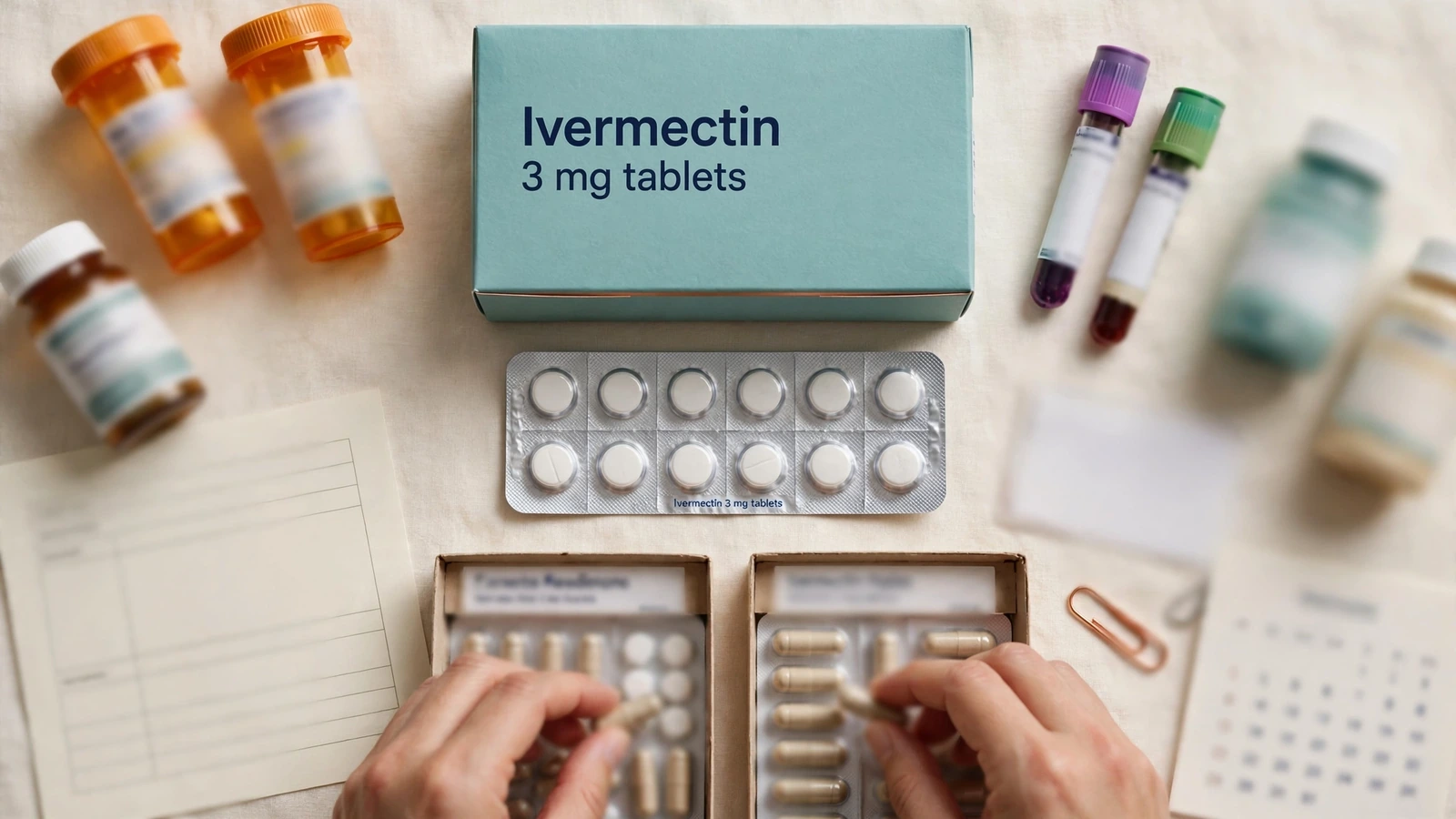
Start ivermectin drug interactions with one medicine list
A reliable interaction check begins with reconciliation. Patients often divide products into “real prescriptions,” occasional over-the-counter treatment, and supplements that seem unrelated. The clinician and pharmacist need all of them, including recently stopped medicines, injections, infusions, topical products used for other conditions, and products taken only when symptoms occur.
Identify each product
Record the generic and brand name when available, strength, route, schedule, reason for use, prescribing clinician, pharmacy, and the last dose. A photograph of the label can clarify spelling and strength.
Identify what changed
Mark new medicines, dose changes, missed doses, products stopped recently, and symptoms that began before ivermectin. Timing often distinguishes a possible interaction from a preexisting problem.
Include nonprescription products
List pain relievers, allergy medicines, stomach remedies, sleep aids, vitamins, minerals, herbals, and sports supplements. “Natural” does not mean irrelevant to reconciliation.
Connect the clinical teams
Name the anticoagulation clinic, transplant team, oncologist, or other service monitoring a narrow-therapeutic-index medicine or major health risk.
A pharmacy profile is useful but may be incomplete when prescriptions are filled at several pharmacies or received through a hospital, specialist clinic, or infusion center. The patient-held list closes those gaps. The goal is not to make the patient interpret interaction evidence; it is to give clinicians the inputs needed to do so.
Ivermectin drug interactions: what the label says about warfarin
The current DailyMed human tablet label notes postmarketing reports of increased international normalized ratio when ivermectin was used with warfarin. This is a safety signal from reports after marketing. It does not provide a predictable frequency, prove that ivermectin caused every event, or tell an individual patient how to change anticoagulation.
The correct operational response is coordination. A person taking warfarin should tell the ivermectin prescriber, dispensing pharmacist, and anticoagulation service before treatment. Those clinicians decide whether INR timing or other monitoring should change. The patient should not hold warfarin, take extra warfarin, or alter ivermectin directions independently.
Unusual bruising, persistent nosebleed, blood in urine, black or bloody stool, vomiting blood, severe headache, sudden weakness, or a significant fall deserves prompt medical assessment. Some findings are emergencies. The anticoagulation team needs the dose dates, other new medicines, recent illness, diet changes, and available INR results to interpret the event.
CYP3A4 metabolism is a clue, not a complete interaction list
In-vitro studies in the label identify CYP3A4 as the principal enzyme involved in ivermectin metabolism, with lesser involvement from CYP2D6 and CYP2E1. The label also reports that clinically relevant concentrations did not significantly inhibit several listed CYP enzymes in the laboratory. These statements describe metabolic behavior under studied conditions.
They do not support declaring every CYP3A4 inhibitor or inducer either prohibited or harmless. Clinical interaction evidence depends on exposure, duration, other metabolic mechanisms, patient factors, and the strength of the data for a specific pair. A pharmacist can distinguish a theoretical concern from a documented interaction and decide what action, if any, is justified.
This nuance prevents two opposite errors. A patient should not stop a necessary medicine because an interaction checker shows a broad metabolic warning. The patient should also not dismiss a product because it is absent from a short consumer list. Reconciliation and professional interpretation are the bridge between mechanism and care.
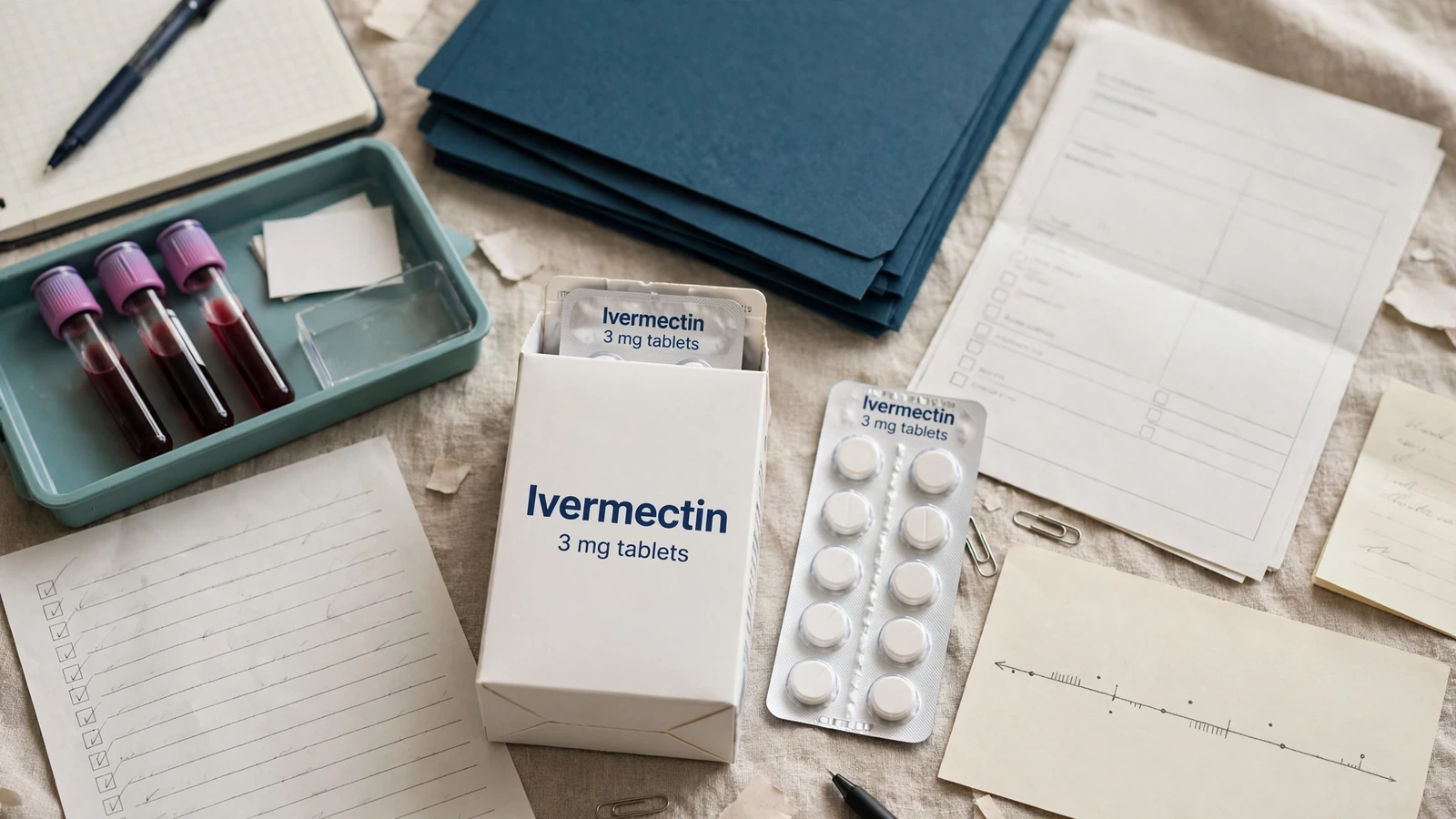
Monitoring begins before treatment
Baseline
Confirm the parasite diagnosis, clinical form, current weight, allergies, pregnancy or breastfeeding, neurologic symptoms, immune status, relevant travel, possible loiasis, and the full medicine list. Record symptoms that already exist.
Dispensing
Match the patient, human oral product, strength, directions, indication, and pharmacist counseling. Resolve discrepancies before the first dose rather than guessing from tablet appearance.
Early treatment period
Track dose timing, new symptoms, hydration, rash, swelling, dizziness, mental status, eye findings when relevant, and any additional medicine taken. Use the written contact thresholds.
Condition-specific follow-up
Strongyloidiasis may require repeat stool evidence when prior tests were positive and symptoms persist. Onchocerciasis monitoring can include skin, eye, and continued infection findings.
Routine laboratory testing is not identical for every patient. A clinician may use targeted tests when another medicine, organ concern, symptom, or clinical condition makes them relevant. Listing possible tests as mandatory would be as misleading as omitting them when a patient’s anticoagulation or severe illness clearly requires monitoring.
The diagnosed infection changes the monitoring plan
The CDC’s Strongyloides clinical care page highlights immune suppression, severe disease, oral absorption problems, and follow-up stool examinations for selected patients with persistent symptoms and prior positive stool findings. A corticosteroid or transplant history can therefore be more important to monitoring than a simple pairwise interaction result.
The CDC’s onchocerciasis treatment recommendations emphasize possible Loa loa co-infection, inflammatory reactions after microfilariae die, and continued treatment decisions while evidence of infection remains. Skin, eye, neurologic, and geographic information belongs beside the medicine list.
These are condition-drug interactions in the broader clinical sense. The medicine is being used within an infection that changes expected reactions and follow-up. A generic database that ignores the diagnosis cannot replace an infectious-disease assessment.
Medication questions that need resolution before the first dose
| Question | Why it matters | Likely coordinator |
|---|---|---|
| Is warfarin being used? | INR monitoring may need coordination | Anticoagulation team |
| Were medicines recently changed? | Timing affects causality | Prescriber and pharmacist |
| Is immune suppression planned? | Strongyloides severity risk may change | Treating specialist |
| Is loiasis exposure plausible? | Microfilaricidal risk can be severe | Parasite specialist |
| Can oral medicine be absorbed? | Ileus or malabsorption changes care | Hospital team |
| Which symptoms predate treatment? | Creates an accurate baseline | Patient and prescriber |
The table does not mean every patient needs several specialists. It identifies ownership when a high-risk issue already exists. Clear ownership prevents contradictory advice, duplicated tests, and silent assumptions that another clinician is monitoring the problem.
Prescription, contraindication, and adverse-effect boundaries
Human oral ivermectin is prescription-only and used for specific systemic parasite infections. The label contraindicates the product in anyone hypersensitive to a component. Pregnancy, breastfeeding, low body weight, severe illness, impaired absorption, and possible loiasis require individualized decisions rather than a standard interaction-screen output.
Reported adverse effects include nausea, vomiting, diarrhea, dizziness, itching, rash, urticaria, and fatigue, with condition-specific inflammatory reactions in onchocerciasis. Neurotoxicity, including altered consciousness and severe outcomes, has been reported after marketing. A monitoring plan should name both ordinary symptoms and the warning signs that change urgency.
Common reconciliation failures
- Using one pharmacy profile as the whole list.
- Omitting vitamins, herbals, or occasional products.
- Failing to name the anticoagulation service.
- Changing medicine from a database warning alone.
- Ignoring symptoms that began before treatment.
- Ending monitoring before condition-specific follow-up.
The best record is short enough to keep current and detailed enough to act on. Date every update. Carry it across visits. When a clinician changes a plan, record who made the change and why. This reduces interaction risk without forcing the patient to become the interpreter of complex pharmacology.
Official evidence and source status
This page is based on the current DailyMed human prescription label and the linked CDC clinical-care pages. It cannot decide whether to start, stop, or change any medicine; those decisions require the patient-specific record and qualified clinical care.