
How Pharmacies Verify and Dispense Human Oral Ivermectin
Ivermectin pharmacy dispensing starts with a verifiable legal pharmacy, a valid prescription, and a product record that follows the medicine to the patient. A familiar box, pill image, or website badge cannot establish those facts by itself.
This page follows the pharmacy handoff from license search to label inspection. It does not select a dose, evaluate a patient, compare prices, or recommend a seller.
Ivermectin pharmacy dispensing starts with legal pharmacy identity
The name shown on a care or shopping platform may differ from the legal name of the pharmacy that dispenses the prescription. Ask which business will appear on the pharmacy label. Then use the official state record to match that legal name, physical address, credential type, and current status. A seller-controlled badge or testimonial is not an independent license check.
- NameObtain the legal dispensing pharmacy, not only the storefront brand.
- LicenseFind the active record through the relevant state authority.
- AddressMatch the U.S. physical address and published telephone number.
- PharmacistConfirm access to a state-licensed pharmacist for medicine questions.
- PrescriptionConfirm the pharmacy requires and has received a valid prescription.
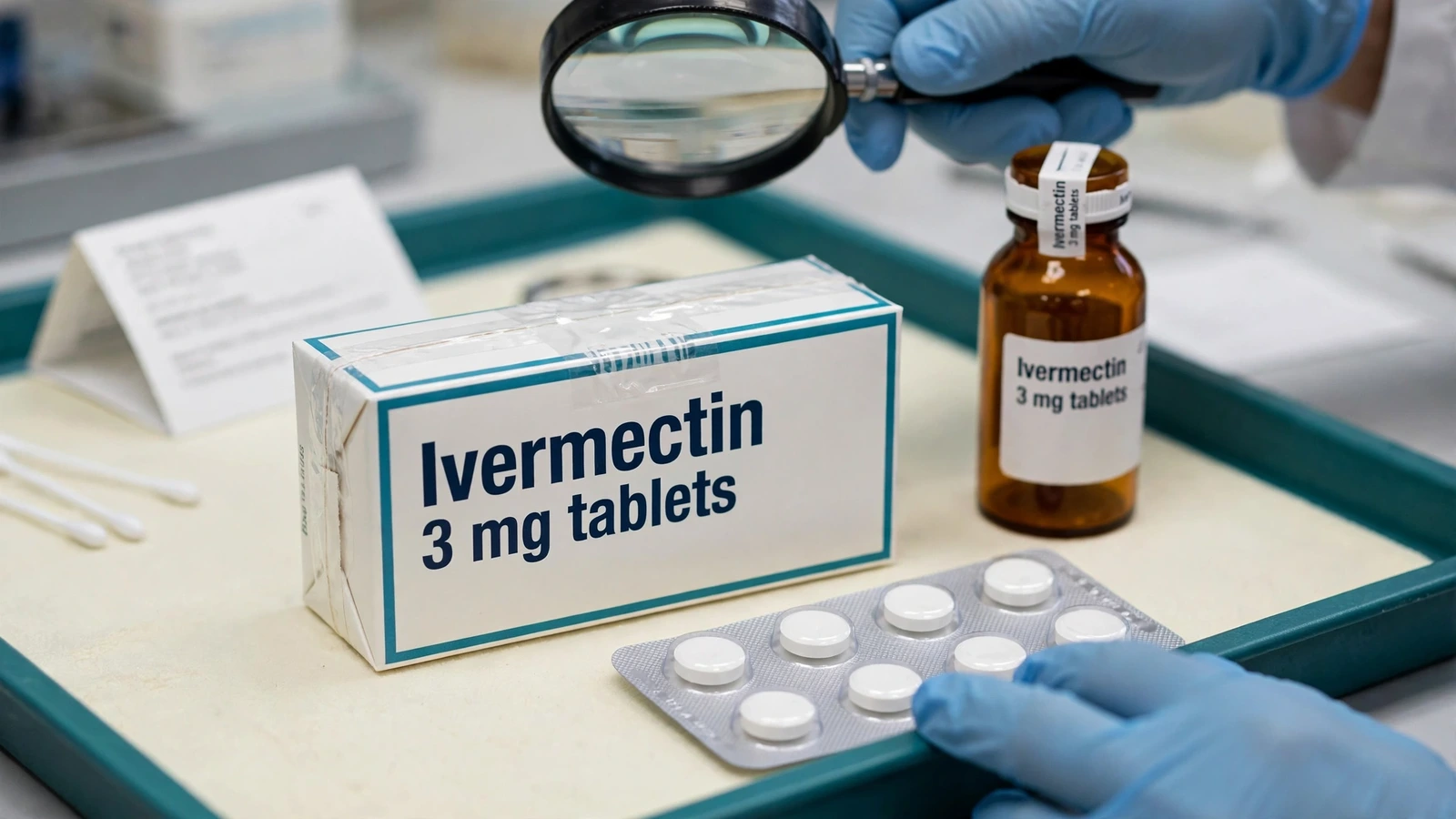
Ivermectin pharmacy dispensing matches prescription, product, and label
A legitimate pharmacy should be able to connect the patient, prescription, dispensed product, manufacturer, and label. The product may look different when the manufacturer changes, but the pharmacist can explain that change and identify the product supplied. Do not use color, shape, or a web image as the only identifier.
| Record | Details to match | Evidence | Action if different |
|---|---|---|---|
| Patient | Legal name, date of birth, contact, allergies, and relevant pharmacy profile | Patient identity and pharmacy record | Resolve the mismatch before dispensing |
| Prescription | Medicine, oral dosage form, directions, quantity, prescriber, and status | Electronic or written prescription record | Pharmacist contacts the prescriber when clarification is needed |
| Product | Human oral tablet, manufacturer, product identifier, package, and expiration | Stock and supply-chain record | Keep an unexpected product unused until reconciled |
| Label | Patient, medicine, directions, quantity, prescriber, pharmacy, and refills | Prescription label on the supplied package | Return it to the dispensing pharmacy for correction |
| Handoff | Pickup identity or delivery address, package integrity, and pharmacist contact | Pickup log or shipment record | Report loss, damage, or tampering promptly |
Inspect the package without trying to authenticate it by sight alone
- Confirm that the package is sealed, clean, dry, and not visibly altered.
- Read the patient label and compare it with the prescription directions supplied by the clinician.
- Check that the medicine is identified as a human oral product and that no animal label appears.
- Note the manufacturer, product identifier when shown, lot or expiration information, and pharmacy contact.
- Keep the receipt, patient leaflet, label, and package until questions are resolved.
- Call the dispensing pharmacist when a tablet, bottle, manufacturer, seal, or instruction is unexpected.
The product handoff has three accountable stages
Before dispensing
The pharmacy validates the prescription and patient, checks the available medication profile, resolves questions, and selects the human product that matches the order.
At dispensing
The pharmacy labels the product, provides required information, makes the pharmacist available, and records the supplied manufacturer and package.
After handoff
The patient checks the label and package, follows storage instructions, and contacts the pharmacist about damage, differences, missed delivery, or medication questions.
Accountability should not disappear during mail delivery. The shipment should still identify the dispensing pharmacy and preserve a route to the pharmacist. If a platform ships a package but no licensed pharmacy will accept responsibility for the label and product, the chain is incomplete.
Stop signals at the pharmacy and product level
FDA BeSafeRx identifies several unsafe signs: the website does not require a prescription, lacks U.S. state licensure, provides no licensed pharmacist, or sends medicine that differs unexpectedly, arrives in broken or damaged packaging, uses a foreign-language label, lacks an expiration date, or is expired. Unusually low prices and unclear privacy protections also require caution.
For ivermectin, add a strict species and route check. Veterinary paste, pour-on, injectable, or other animal products are not substitutes for human oral tablets. A topical product is also outside this page’s entity. If the intended human product is unavailable, the prescriber and pharmacist decide what legitimate alternative plan is appropriate; an animal-store shelf does not.
Do not send identity documents, medical history, or payment until the legal dispensing pharmacy can be identified and verified. End the transaction if the seller refuses to name the pharmacy, uses only a messaging account, promises medicine without a prescription, or pressures the patient to pay before product and pharmacy details are known.
Keep a compact dispensing record
A short record supports safer handoffs and faster problem resolution without creating a decorative block that says nothing. Store it with the prescription label rather than relying on memory.
The record does not replace a clinician or pharmacist. It gives them the exact facts needed to investigate a hold, substitution, damaged package, or suspected counterfeit. Report suspected counterfeit or unsafe pharmacy activity through the relevant official channels rather than confronting an anonymous seller with more personal information.
Dispensing checks do not select the treatment
DailyMed provides the official prescribing information for Stromectol, a human prescription tablet for oral use. The clinician determines whether the medicine fits the diagnosed condition and individual circumstances. The pharmacist confirms that the prescription and product can be dispensed accurately and addresses medication questions within the pharmacy role.
MedlinePlus tells patients to disclose prescription and nonprescription medicines, vitamins, nutritional supplements, and herbal products to the doctor and pharmacist and to follow the prescription directions. Do not change the dose, repeat treatment, combine products, or substitute a formulation because a seller or product label suggests it.
Seek urgent medical help for trouble breathing, swelling of the face or throat, fainting, seizures, severe confusion, or another rapidly worsening reaction. Contact the prescriber or pharmacist promptly when the package directions conflict with the clinical instructions, or when new symptoms or medication interactions are suspected.
Continue with pharmacy access questions
Dispensing and authenticity questions
What does ivermectin pharmacy dispensing verify?
It verifies the pharmacy’s status under that authority, not every product detail. The pharmacist should also reconcile the prescription, manufacturer, product record, label, and package.
What if the tablet looks different from a previous fill?
Keep it unused and call the dispensing pharmacist. A legitimate manufacturer change can alter appearance, but the pharmacist should identify and explain it.
Can a product photo authenticate ivermectin?
No. FDA explains that counterfeit medicine can be difficult to identify visually. Use a legitimate supply chain and pharmacy records.
Is veterinary ivermectin acceptable when the human product is unavailable?
No substitution should be made. Contact the prescriber and pharmacist about the intended human product and an appropriate clinical plan.
Official sources used for this page
This page explains pharmacy identity, dispensing, and product-record checks. It does not diagnose a condition, select a dose, quote a price, issue a prescription, or authenticate a named seller.