
Modafinil for Sleep Apnea: Why CPAP Comes First
modafinil for sleep apnea — may be considered for residual sleepiness after effective treatment of the airway obstruction. It does not open the airway, replace CPAP or explain poor adherence and persistent sleepiness by itself.

In obstructive sleep apnea, modafinil is considered only for sleepiness that remains after the apnea itself is being treated properly. It is an addition to that treatment, never a replacement for it.
The distinction is not bureaucratic. Untreated apnea carries risks to the heart and circulation that a wake-promoting medicine does nothing about, while making you feel well enough to ignore them.
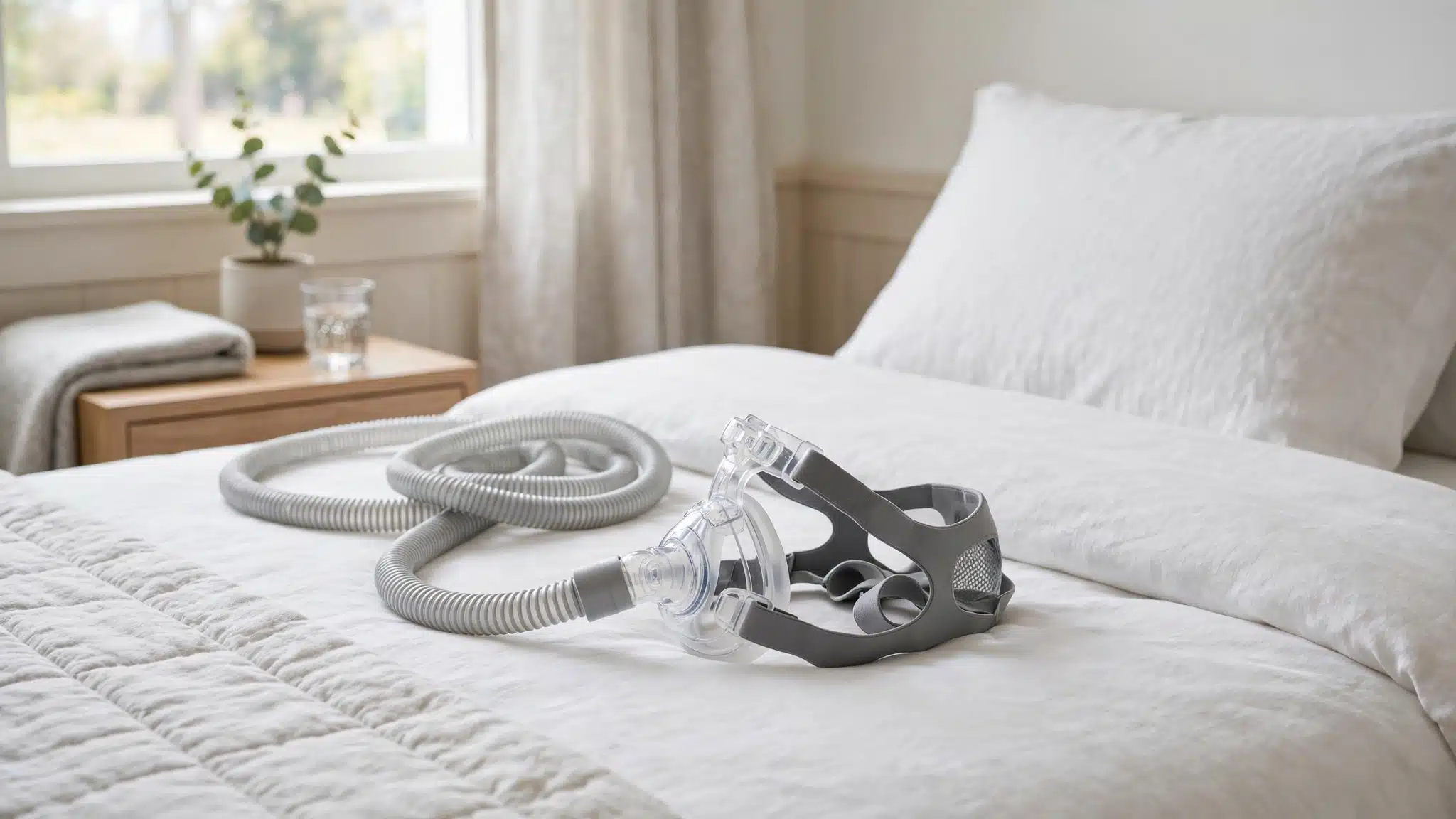
Why Is the Order Fixed With Modafinil Sleep Apnea?
Sleep apnea interrupts breathing during sleep, repeatedly, all night. The daytime sleepiness is a symptom of that. Treating the breathing addresses the cause; treating the sleepiness addresses how the cause feels.
Take away the symptom and leave the cause, and you have removed the main thing that motivates anyone to persist with treatment. While the underlying risk continues.
What Counts as Properly Treated?
- Treatment that is actually being used, most nights, for most of the night.
- Equipment that fits and pressure settings that have been checked rather than set once.
- Follow-up data looked at by someone, not just collected.
- Any weight, alcohol or sleeping-position factors discussed honestly rather than skipped.
What If You Cannot Tolerate the Treatment?
That is a common and solvable problem, and it is the conversation to have, not a reason to move to a tablet instead. Mask fit, pressure, humidification, claustrophobia and nasal congestion all have specific fixes, and alternative treatments exist for people for whom the standard approach genuinely does not work.
Say plainly that you are not using it. Adjustments cannot be made around a use figure that everyone pretends is higher than it is.
Modafinil sleep apnea when sleepiness survives treatment
Some people remain sleepy despite well-managed apnea. That is a recognised situation and it is where modafinil enters the discussion. Before it does, the useful checks are whether the apnea treatment is genuinely adequate, whether sleep is long enough to begin with, and whether a second condition is present alongside.
What About Driving?
| Situation | What it means |
|---|---|
| Untreated apnea with daytime sleepiness | Driving risk is significant, raise it directly with your clinician |
| Treatment started, sleepiness improving | Reassess honestly rather than assuming it is resolved |
| Sleepiness persisting on good treatment | A specific reason to be checked, not to push through |
Evidence needed before modafinil for sleep apnea
- Recent PAP use, mask leak and residual event data when available.
- Actual sleep duration, shift pattern, sedating medicines and alcohol.
- The timing and severity of residual sleepiness, including driving risk.
- Other causes considered when airway treatment appears effective.
What modafinil for sleep apnea cannot correct
It cannot repair mask intolerance, insufficient sleep, an untreated pressure problem or another medical cause of fatigue. When airway data show incomplete treatment, improving that treatment comes before interpreting a wakefulness response.
Bring the machine or app summary when available, plus the hours actually slept. Good event numbers from a short night do not prove adequate sleep, while long device use with major leak may not show effective airway treatment.
Sleepiness that remains unsafe despite treatment
Contact your prescriber promptly if you develop a rash of any kind, chest pain, a fast or irregular heartbeat, breathlessness, or new agitation, low mood or thoughts of harming yourself. A rash means stopping modafinil and seeking medical advice the same day rather than waiting for your next appointment.
Sleep-apnea treatment belongs within the wider evaluation of excessive daytime sleepiness. The neighboring condition pages explain the role of modafinil in narcolepsy and in shift-work sleep disorder.