
Accutane Hair Loss: How Common It Is and Whether It Lasts

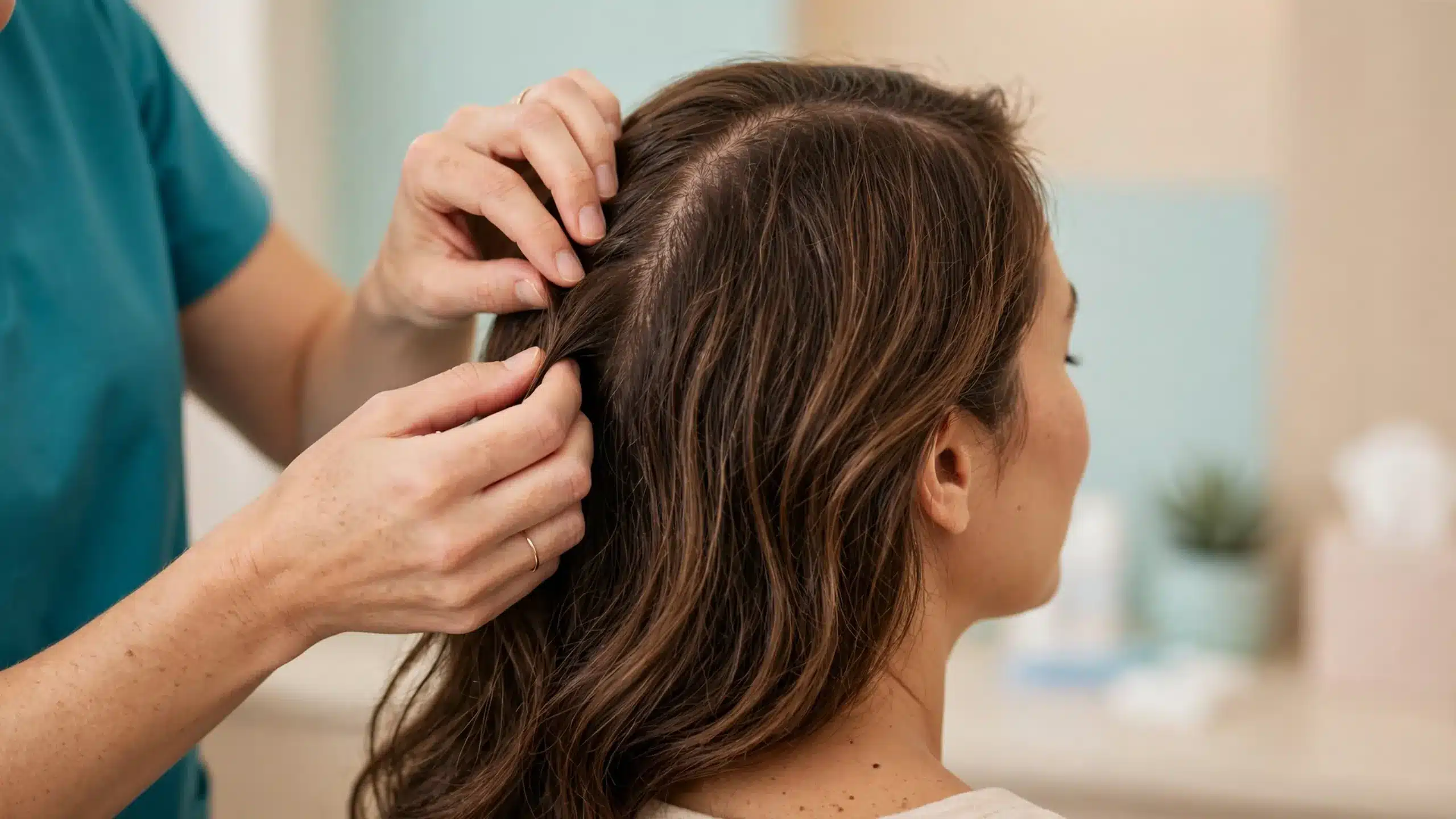
Accutane hair loss is one of the least common effects on the list and one of the most frightening to read about. Patients encounter it in a forum thread at two in the morning and arrive at the next appointment convinced it is inevitable. It is not.
Most people finish a course with their hair unchanged. For the minority who do shed, the pattern and the outcome are both more reassuring than the internet suggests.
Hair shedding can have several causes, so timing and the rest of the symptom pattern matter. The Accutane side effects and monitoring helps place it inside the complete monitoring picture.
How Common Is Accutane Hair Loss?
Uncommon, and much less common than the amount written about it implies. It appears on the recognized list of effects, so it is not imaginary, but it sits well down that list rather than near the top. Dryness affects nearly everyone. This does not.
Worth remembering too: hair sheds for many reasons, and a stressful year full of appointments and blood draws is itself a reason. Not every strand lost during a course belongs to the course.
Does Accutane Hair Loss Reverse After the Course?
In the great majority of cases, yes. Shedding linked to isotretinoin is usually the temporary kind, where hair moves into a resting phase early and is released together rather than being lost permanently. Regrowth follows, though slowly enough to test anyone’s patience.
Recovery is measured in months. That is normal and it is not a sign the hair is gone for good.
The shedding pattern helps identify the next step
More hair in the brush, in the drain and on the pillow, spread evenly rather than in patches. Thinning is diffuse when it happens at all. Distinct bald patches, an itchy or scaly scalp, or hair breaking off mid shaft point to something else entirely, and those deserve a proper look rather than an assumption.
Simplify hair care while the cause is assessed
Raise it rather than enduring it quietly. Occasionally the daily amount can be eased, and occasionally the cause turns out to be something separate and treatable, such as low iron or a thyroid problem worth checking.
Symptoms that are difficult to prove from appearance alone also include mood changes; the page on Accutane and depression explains how clinicians approach that uncertainty. For activity-related discomfort, see joint pain during a course.
Document hair shedding without turning it into a daily count
- Take consistent photographs of the part, temples, and any distinct patch.
- Note the first clear change and whether shedding is diffuse or localized.
- List recent illness, weight change, stress, supplements, and medicine changes.
- Record scalp itching, scaling, pain, or broken hairs separately.
Contact the clinic for rapid progression, bald patches, scalp inflammation, or associated symptoms. Do not start several supplements at once; that obscures the timeline and some products can create new risks. A clear pattern makes it easier to decide whether isotretinoin is the likely contributor or one part of a broader problem.
Medically reviewed by Dr. Sarah Mitchell, MD, FAAD, Board-Certified Dermatologist. Reviewed Aug 17, 2026.