
Accutane Blood Tests: What Is Checked and Why It Matters

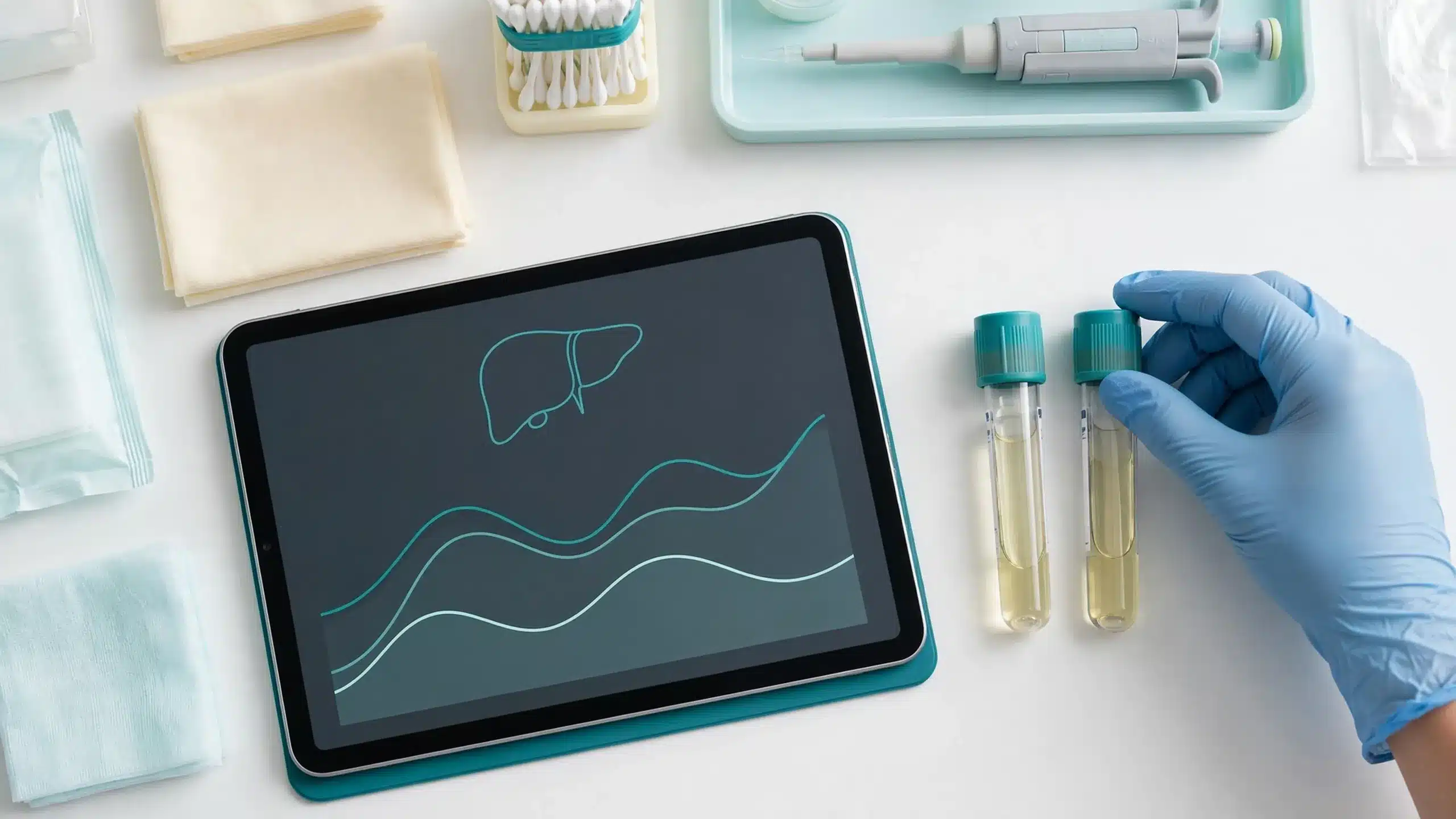
Accutane blood tests are the quiet backbone of a monitored course. Patients tend to treat them as paperwork standing between them and the next fill, which is understandable and slightly unfair to what they are doing. The things being watched do not announce themselves with symptoms until they are well advanced.
That is the entire point. The draws catch drift early, while it is still easy to correct by adjusting a dose rather than abandoning a course.
Laboratory monitoring is how a clinician looks for changes that cannot be seen in the mirror. The parent iPLEDGE blood-test and authorization requirements places those results beside symptoms, dose and individual risk.
What Do Accutane Blood Tests Measure?
Chiefly your liver and your blood fats, along with pregnancy testing where it applies. Isotretinoin can nudge both liver enzymes and lipid levels upward, usually mildly and usually without you feeling a thing. A baseline is taken before you start so that later results are compared against your own normal rather than a population average.
That baseline is more useful than people realize. Plenty of patients turn out to sit naturally outside the textbook range, and without a starting figure that looks alarming when it is simply how they are.
How Often Are Accutane Blood Tests Needed?
On a schedule your prescriber sets, tied to the monthly visits rather than to how you feel. Early in the course they come more often, since that is when changes are most likely to appear. Once results have proven stable the rhythm often eases.
The schedule is not negotiable in the way appointments sometimes are. A missed draw usually means a delayed fill, because nobody will release the next month without knowing where you stand.
An unexpected result starts a decision, not a verdict
Usually very little, and almost never an abrupt stop. Mild movement in liver enzymes or lipids is common and often settles on its own. The typical response is to repeat the test, look at the trend rather than the single figure, and adjust the daily amount if the drift continues.
Courses do get paused occasionally. That is the system working rather than failing, and a pause is not the same as an ending.
Prepare according to the specific laboratory order
Alcohol can complicate the same liver and lipid discussion covered by testing; read the alcohol and liver-safety discussion before assuming one rule fits everyone. The separate page on mood and Accutane explains monitoring that does not show up in a blood result.
Read each blood-test result with its context
| Question | Why it matters | What to record |
|---|---|---|
| Was preparation correct? | Food, timing, illness, and instructions can affect interpretation. | The conditions of the draw |
| Is the change new? | A trend can mean something different from one isolated value. | Previous result and current medicines |
| What is the clinical response? | The prescriber may recheck, adjust, pause, or investigate another cause. | The actual instruction and next date |
Medically reviewed by Dr. Sarah Mitchell, MD, FAAD, Board-Certified Dermatologist. Reviewed Aug 17, 2026.
Laboratory follow-up belongs inside the clinical route. See where monitoring fits into an online isotretinoin prescription before pharmacy fulfillment.