
When Human Oral Ivermectin Requires a Prescription
Does ivermectin require a prescription? Human oral ivermectin is a prescription medicine in the United States. A licensed clinician must make the patient-specific decision, and a licensed pharmacy should require a valid prescription before dispensing the human oral product.
This page answers the prescription-requirement question. It does not recommend a seller, determine a personal dose, discuss topical products, or turn animal ivermectin into a human option.
Does ivermectin require a prescription for human oral use?
A prescription requirement is not just a checkout restriction. It identifies who evaluates the patient, who authorizes the medicine, and who dispenses it. When a seller removes any of those roles, the patient loses an accountable professional who can examine the diagnosis, contraindications, interactions, product, and response.
Prescriber
Assesses the diagnosed condition, history, medicines, and whether human oral ivermectin is appropriate. The outcome is not guaranteed.
Pharmacist
Validates the prescription, matches the patient and product, performs dispensing checks, and answers medication questions.
Patient
Provides accurate information, follows the prescription label, checks the package, and reports discrepancies or symptoms.
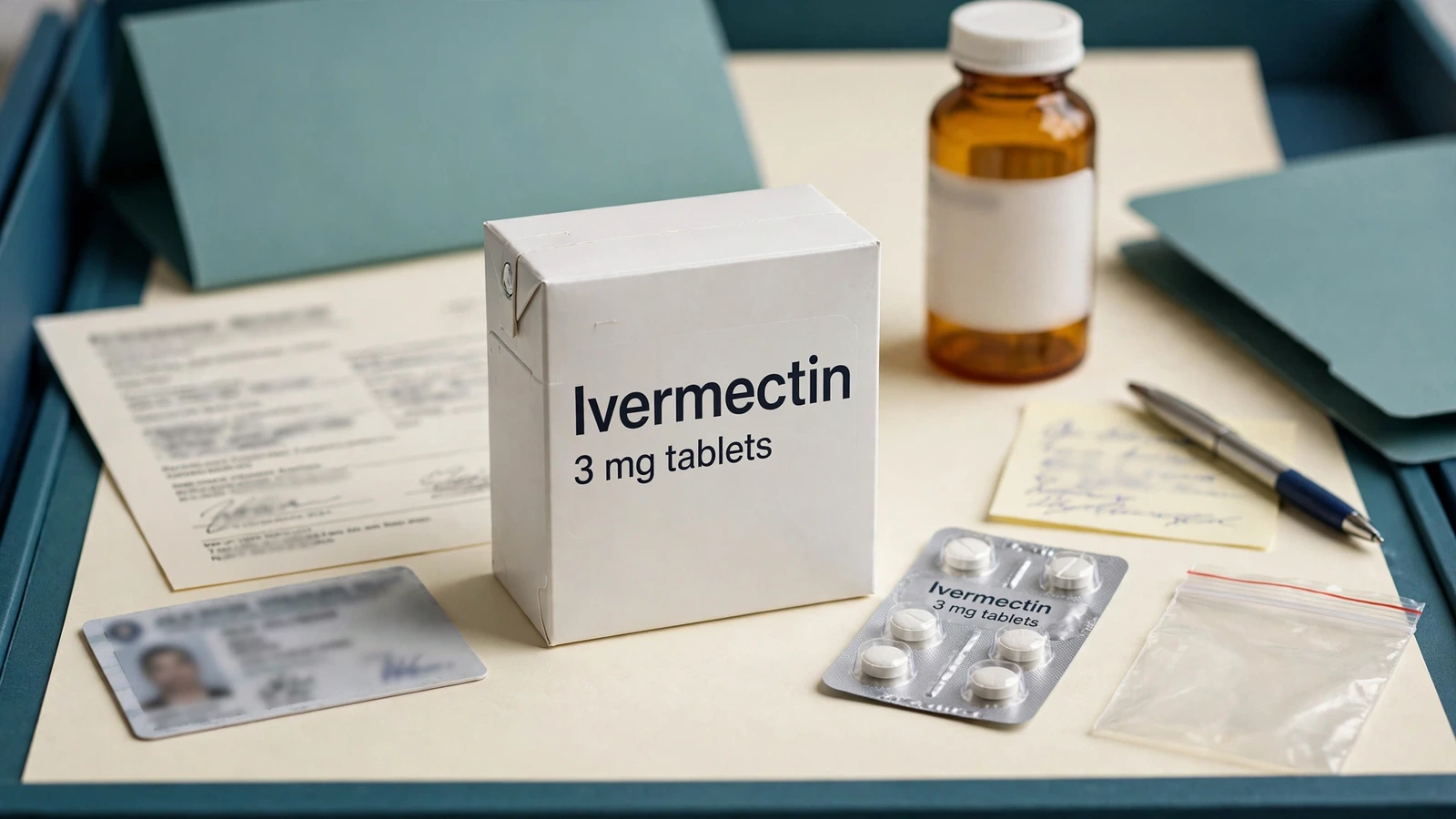
Why does ivermectin require a prescription before dispensing?
- A real clinical question is assessed.The clinician considers the diagnosed condition and patient-specific facts rather than beginning with a guaranteed medicine.
- The clinician decides the next step.The outcome may be a prescription, additional information, testing, a different treatment, in-person care, or urgent care.
- A valid prescription reaches a licensed pharmacy.The legal dispenser is identifiable and the pharmacy requires the prescription before supplying the human product.
- The pharmacist completes dispensing checks.The prescription, patient, human oral product, label, medication record, and product handoff are reconciled.
- The patient follows the documented plan.Directions come from the prescriber and pharmacy label, not a seller, forum, or animal package.
Convenient care is still prescription care
A remote clinician may be able to assess an appropriate patient under applicable rules, and a licensed pharmacy may offer mail delivery. Those conveniences do not convert human oral ivermectin into an OTC medicine. The prescriber must be able to make an independent decision, and the pharmacy must require the resulting valid prescription.
A form completed by the patient is information for the clinician; it is not itself the prescription. A payment receipt is also not proof that the medicine was approved or dispensed.
Claims that erase the prescription
- “No prescription needed” for a human prescription product.
- Automatic approval before a clinician assesses the history.
- A seller who will not identify the dispensing pharmacy.
- Directions copied from a previous patient or product label.
- A veterinary formulation offered as the easy substitute.
- A guarantee that every patient receives the same medicine.
Do not confuse prescription requirement with prescription format
The requirement answers whether a valid prescription is needed. The format and pharmacy status answer whether an already issued prescription contains the information needed for dispensing. A valid clinical decision can still lead to a pharmacy clarification request, and a complete-looking form can still be inappropriate if no licensed clinician made the decision.
| Question | What it means | Primary professional | What it does not answer |
|---|---|---|---|
| Is a prescription required? | Whether the human oral medicine is prescription only | Official product status and applicable regulation | Whether it is right for one patient |
| Should it be prescribed? | Whether the diagnosis and patient facts support treatment | Licensed prescriber | Which pharmacy has stock |
| Can the pharmacy dispense? | Whether the prescription, patient, product, and pharmacy record are complete | Dispensing pharmacist | Whether an anonymous seller is legitimate |
| Can the patient use it now? | Whether the supplied product and label match the current instructions | Patient, prescriber, and pharmacist | Permission to change or repeat the dose |
The prescription identifies a human product and route
DailyMed describes the human prescription product as a tablet for oral administration. A product intended for an animal is not made appropriate for human use merely because the word ivermectin appears on the package. Veterinary products can differ in concentration, route, inactive ingredients, and labeling. A topical prescription is also a different route and outside this page.
If the intended human product is unavailable, contact the prescriber and pharmacist. They can determine whether the prescription should be transferred, clarified, delayed, or changed through the legitimate clinical process. Do not convert a livestock dose, divide a paste, or use an animal label to create human directions.
The difference is not cosmetic. Species, product, route, concentration, packaging, and regulatory records must remain aligned with the human prescription.
Use the prescription requirement to screen the pharmacy
FDA BeSafeRx says a safer online pharmacy requires a prescription from a licensed healthcare professional, provides a physical address in the United States, is licensed by the relevant state board of pharmacy, and has a state-licensed pharmacist available. These checks should be verified independently, not accepted because a seller displays a badge.
Ask for the legal pharmacy name that will appear on the label. Use the FDA state-license locator or the state board’s own database to match the name, address, credential, and current status. Confirm that a pharmacist can be reached at the published pharmacy number. Do not send health information or payment when the dispenser remains hidden.
FDA warns about sites that bypass the prescription, lack U.S. licensure, lack a licensed pharmacist, or send unexpected or damaged medicine. A low price or fast shipment is not evidence that a pharmacy is safe. The prescription requirement should narrow the field to accountable pharmacies rather than be treated as an obstacle to avoid.
What the clinician and pharmacist need from the patient
MedlinePlus directs patients to tell the doctor and pharmacist about prescription and nonprescription medicines, vitamins, nutritional supplements, and herbal products. A complete history can also include allergies, pregnancy or breastfeeding, relevant medical conditions, previous reactions, travel or exposure context, and the diagnosed condition. The clinician decides which facts and examinations are necessary.
Follow the directions on the prescription label and ask the doctor or pharmacist to explain anything that is not understood. Do not take more, take it more often, repeat a course, or combine products without the prescriber’s direction. A previous prescription does not automatically remain appropriate for a new episode or a different person.
Seek urgent medical help for trouble breathing, swelling of the face or throat, fainting, seizures, severe confusion, or another rapidly worsening reaction. Contact the prescriber promptly for troublesome symptoms, and contact the dispensing pharmacist when the medicine, package, or label differs from what was expected.
Continue with prescription-status questions
Prescription requirement questions
Does ivermectin require a prescription in the United States?
This page treats human oral ivermectin as a prescription medicine. A legitimate pharmacy should require a valid prescription before dispensing it.
Does remote care remove the prescription requirement?
No. A licensed clinician may conduct appropriate care remotely, but the clinical decision and valid prescription remain necessary.
Can an old bottle or prior prescription authorize another fill?
Not by itself. The pharmacy determines whether a current valid prescription exists and whether the record can be dispensed.
Can veterinary ivermectin be used because it is sold without a human prescription?
No. Animal products are not substitutes for human oral tablets. Contact the prescriber and pharmacist about the legitimate human product.
Official sources used for this page
This page explains the prescription requirement for human oral ivermectin. It does not diagnose a condition, determine a dose, issue a prescription, recommend a seller, or endorse a seller.