
Product identity at the pharmacy
Clomid vs Clomiphene: What Changes at the Pharmacy
Clomid vs clomiphene is a brand-versus-generic comparison, not a choice between competing treatment plans. A generic clomiphene product may differ in appearance, package, manufacturer and inactive ingredients while matching the prescribed active ingredient, dosage form and strength. Compare the exact dispensed label and official product record instead of deciding from color or brand familiarity.
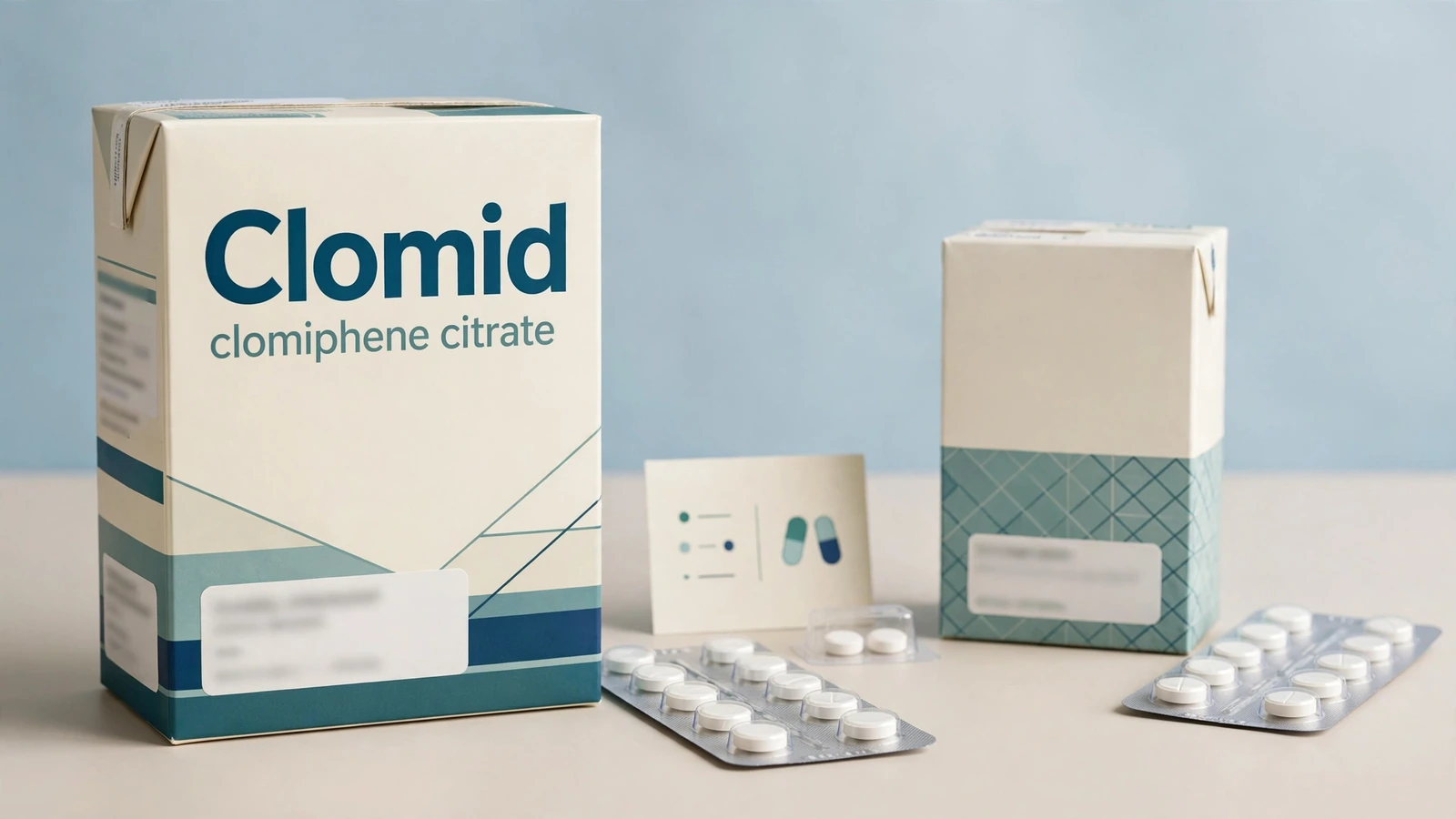
Start with four product fields
The label should identify clomiphene citrate as prescribed.
The pharmacy matches the prescribed oral tablet form.
The dispensed strength must match the prescription record.
The patient-specific pharmacy label controls use, not a product photo.
FDA’s Orange Book defines pharmaceutical equivalents as products in the same dosage form and route that contain identical amounts of the identical active ingredient and meet applicable standards of identity, strength, quality and purity. Such products do not necessarily contain the same inactive ingredients and may differ in features such as shape, scoring, packaging, excipients and certain labeling details. FDA’s therapeutic-equivalence framework adds evidence and regulatory criteria used to evaluate whether approved multisource products can be expected to have the same clinical effect and safety profile under labeled conditions.
That framework is more reliable than assuming all white tablets are interchangeable or that a familiar box must be superior. The pharmacist uses the prescription, approved product information and applicable law. The patient uses the dispensed label and asks questions when appearance, allergies, prior experience or prescriber instructions create uncertainty.
Clomid vs clomiphene: what may look different
| Feature | Possible difference | What to verify |
|---|---|---|
| Tablet appearance | Color, shape, score or imprint | Pharmacy label and official product description |
| Packaging | Bottle, blister, carton and labeler design | Seal, expiration, quantity and dispensing record |
| Inactive ingredients | Fillers, colors or other excipients | Product labeling when allergy or intolerance matters |
| Manufacturer or labeler | Company named on product records | Approved product information and pharmacy source |
| Cost and availability | Stock and quoted amount | Same ingredient, strength, form and quantity |
Clomid vs clomiphene: what should not change
The pharmacy should not quietly substitute a different active ingredient, strength or dosage form. The patient name and directions should match the prescription. The product should come from the licensed pharmacy’s documented supply chain and arrive with intact packaging and a readable patient label. If any of these fields differ, pause and contact the pharmacist before use.
A change in tablet appearance can occur when a pharmacy changes manufacturer, but the pharmacist should be able to identify the dispensed product. Do not rely on an image search or a seller’s message to resolve a mismatch. Provide the prescription number, pharmacy name, label details and tablet imprint to the dispensing pharmacist. If the source cannot produce a traceable dispensing record, authenticity becomes a separate safety concern.
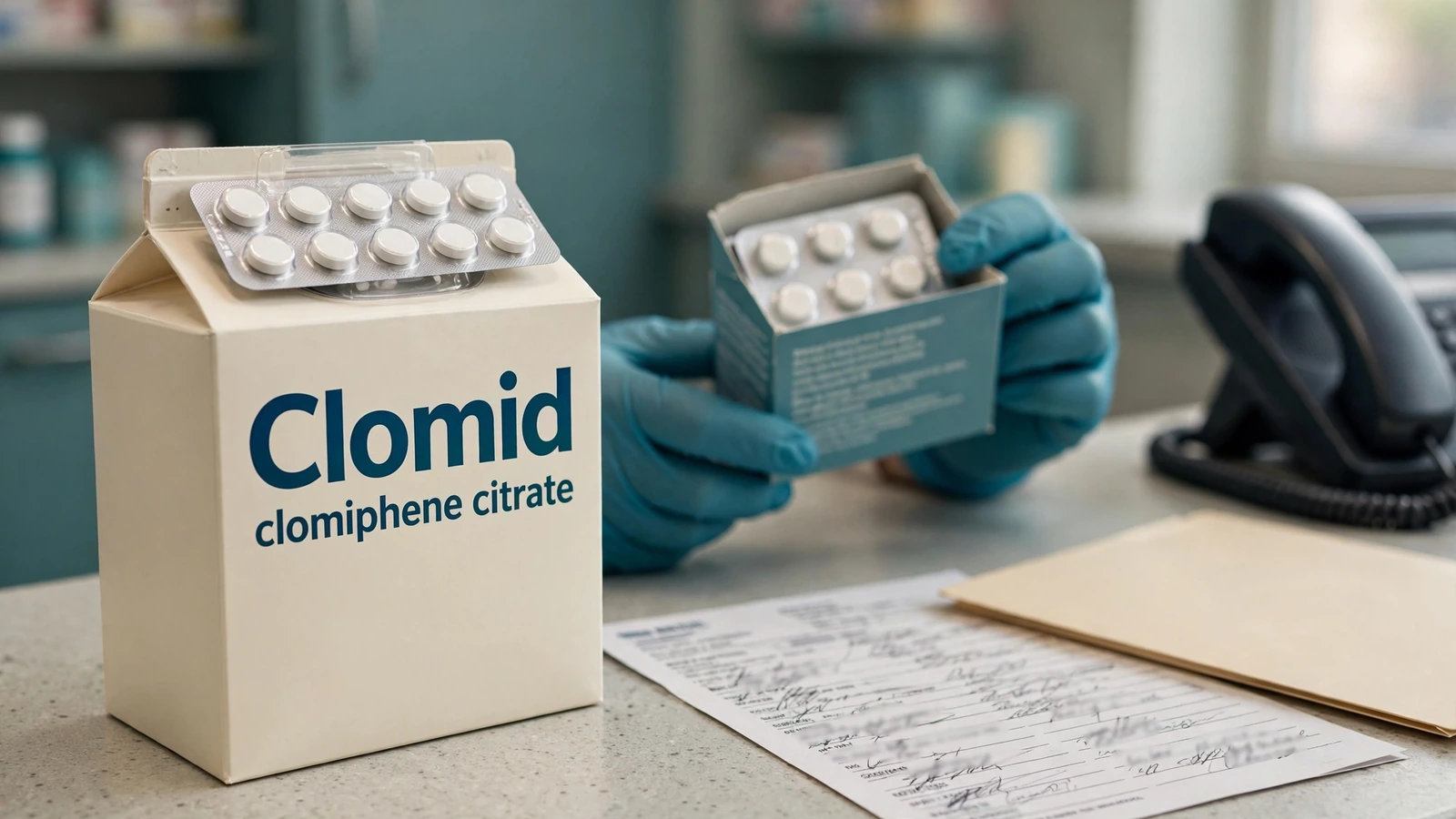
How pharmacy substitution is checked
The prescriber’s order establishes the product requirements and may include instructions that affect substitution. The pharmacist identifies available approved products, checks the ingredient, dosage form and strength, applies state law and payer requirements, and reviews any product-specific instruction. If clarification is necessary, the pharmacist contacts the prescriber. This is an accountable workflow rather than an automatic website preference.
- Read the prescription. Confirm the medicine name, strength, form, directions and quantity.
- Identify the available product. Use approved product records and the pharmacy’s inventory record.
- Check substitution boundaries. Apply prescriber instructions, state requirements and relevant plan terms.
- Resolve patient-specific concerns. Consider recorded allergies, inactive-ingredient questions and prior problems.
- Label the dispensed product. Provide patient-specific directions and pharmacist contact information.
The Orange Book does not tell a patient which medicine to choose, and its therapeutic-equivalence codes are not a ranking of brands. It is a source of approved-product and equivalence information used within professional and regulatory decision-making. When the exact product matters, ask the pharmacist to name the manufacturer or labeler and explain what will be dispensed.
Do not compare treatment results from package names
A product label does not predict an individual response. Treatment appropriateness, directions, monitoring and adverse-effect assessment remain clinical questions. Do not change the number of tablets, timing or duration because a package changes from brand to generic or between generic manufacturers. Follow the patient-specific label and contact the prescriber or pharmacist when instructions conflict.
Cost questions belong in their own comparison
Brand and generic availability can affect a pharmacy quote, but this page does not own Clomid price or insurance topic. To compare financial components without mixing products or quantities, use the insurance and cash cost breakdown. Record the exact product quoted, because a brand price and a generic price are not the same comparison.
Brand and generic questions
Does Clomid vs clomiphene mean every tablet is identical?
No. Approved products can differ in appearance, packaging and inactive ingredients. The pharmacist verifies whether the supplied product matches the prescription and applicable substitution requirements.
Does a different color mean the pharmacy made an error?
Not necessarily. Different manufacturers can use different appearances. Confirm the imprint and product record with the dispensing pharmacist before taking a tablet that looks unfamiliar.
Can I request a specific manufacturer?
You can ask about availability and raise allergy or inactive-ingredient concerns. Whether a particular product can be supplied depends on the prescription, inventory, law and coverage terms.
Use a product-change conversation
When the package or tablet changes, describe the observation rather than beginning with a conclusion. Tell the pharmacist the prescription number, the name and strength on the current label, the previous and current manufacturer or labeler if available, and the imprint, shape and color of each tablet. Report whether the seal is intact and whether all tablets in the package are consistent. This gives the pharmacist enough detail to compare the inventory and dispensing record.
Ask three separate questions: Is this the product the pharmacy intended to dispense? Does it match the active ingredient, dosage form and strength in the prescription? Are any inactive ingredients relevant to a documented allergy or intolerance? If the prescriber required a specific product, ask whether that instruction appears in the order. Do not change the dose or stop solely because the tablet looks different, but do not take an uncertain tablet while the mismatch remains unresolved.
If cost caused the product change, request a revised quote that identifies the exact product and quantity. If availability caused it, ask whether the pharmacy expects to use the same product for future fills or whether appearance may change again. Save the current label so later comparisons are based on the dispensing record rather than memory.
Counterfeit concerns require a different check. A legitimate manufacturer change can explain appearance, but an altered patient label, mixed tablets, broken seal, unknown seller or denial by the named pharmacy cannot be resolved by generic-equivalence information. Preserve the package and use the authenticity guidance. Product equivalence and product provenance are related but distinct questions.
Record inactive-ingredient concerns precisely
If a patient has a known allergy or prior reaction, name the ingredient or describe the documented reaction instead of asking for “brand only” without context. The pharmacist can inspect the product labeling and compare available formulations. The prescriber can decide whether a product-specific instruction is medically necessary.
Do not assume every symptom after a manufacturer change comes from an inactive ingredient. Record timing, tablets taken, other medicine changes and the package details, then seek professional assessment. Product appearance, equivalence and individual tolerability are separate questions that require different evidence.
Keep the leaflet and patient label for the current fill. They give the pharmacist a better reference than memory when the next package changes. Do not combine tablets from different fills in one container; doing so removes product identity, expiration and dispensing information needed to resolve questions.
That record also helps distinguish a routine manufacturer change from a dispensing discrepancy.

Clinical subject-matter profile
Medication safety, outcomes research and evidence appraisal
This specialist profile provides subject-matter context; individual diagnosis and treatment decisions require direct clinical care.