

Treatment safety
Clomid Treatment Safety: Dosing, Side Effects and Interactions
Clomid treatment safety depends on following the individual prescription, screening contraindications, reconciling medicines, monitoring response and acting on adverse effects. A general page cannot choose a dose or calendar, but it can separate instructions, symptom action levels and interaction checks. Use the current pharmacy label and prescriber instructions for the actual course. Before another tablet or treatment cycle, resolve any conflict between written, portal and verbal directions; review new medicines, pregnancy status and relevant health changes; and know which symptoms require urgent care. Keep the product name, strength, remaining quantity and follow-up date in the same record so the clinician or pharmacist can investigate a discrepancy without guessing.

The prescription label is the source for individual instructions
The DailyMed Clomid label updated in 2025 contains official indication, contraindication, warning, and administration information. The patient-specific pharmacy label and prescriber instructions control the actual course. This page deliberately does not reproduce a universal regimen.
If the bottle, portal, written plan, and verbal instruction disagree, contact the prescriber or pharmacist before taking another tablet. Familiarity with a prior course does not resolve a current discrepancy.
Three Clomid treatment safety questions to keep separate
| Decision | What it covers | Dedicated page |
|---|---|---|
| Following instructions | Label, timing, missed dose, clarification | How to take Clomid |
| Responding to symptoms | Expected, concerning, and urgent signs | Clomid side effects |
| Screening risk | Medicines, conditions, contraindications | Interactions and contraindications |
Approved use and prescription status
Clomiphene is a prescription ovulatory stimulant. The U.S. label indicates it for selected women with ovulatory dysfunction who desire pregnancy after obstacles to pregnancy have been excluded or adequately treated. Male fertility or low-testosterone use is off-label and requires a separate rationale and follow-up plan.
Prescription status is a clinical boundary, not only a legal one. Screening checks whether pregnancy, liver history, abnormal bleeding, ovarian findings, thyroid or adrenal control, pituitary disease, hypersensitivity, medicines, or other factors make treatment inappropriate or change monitoring. Buying the product does not answer those questions.
Contraindications are not a self-clearance checklist
The label contraindicates clomiphene during pregnancy and in people with liver disease or a history of liver dysfunction, unexplained abnormal uterine bleeding, or ovarian cysts or enlargement not due to PCOS. It also names uncontrolled thyroid or adrenal dysfunction and organic intracranial lesions such as a pituitary tumor.
A reader may not know whether a symptom or prior diagnosis falls within these categories. The purpose of the list is to improve the clinical history, not to declare eligibility. New health information can change the decision even when clomiphene was used before without an obvious problem.
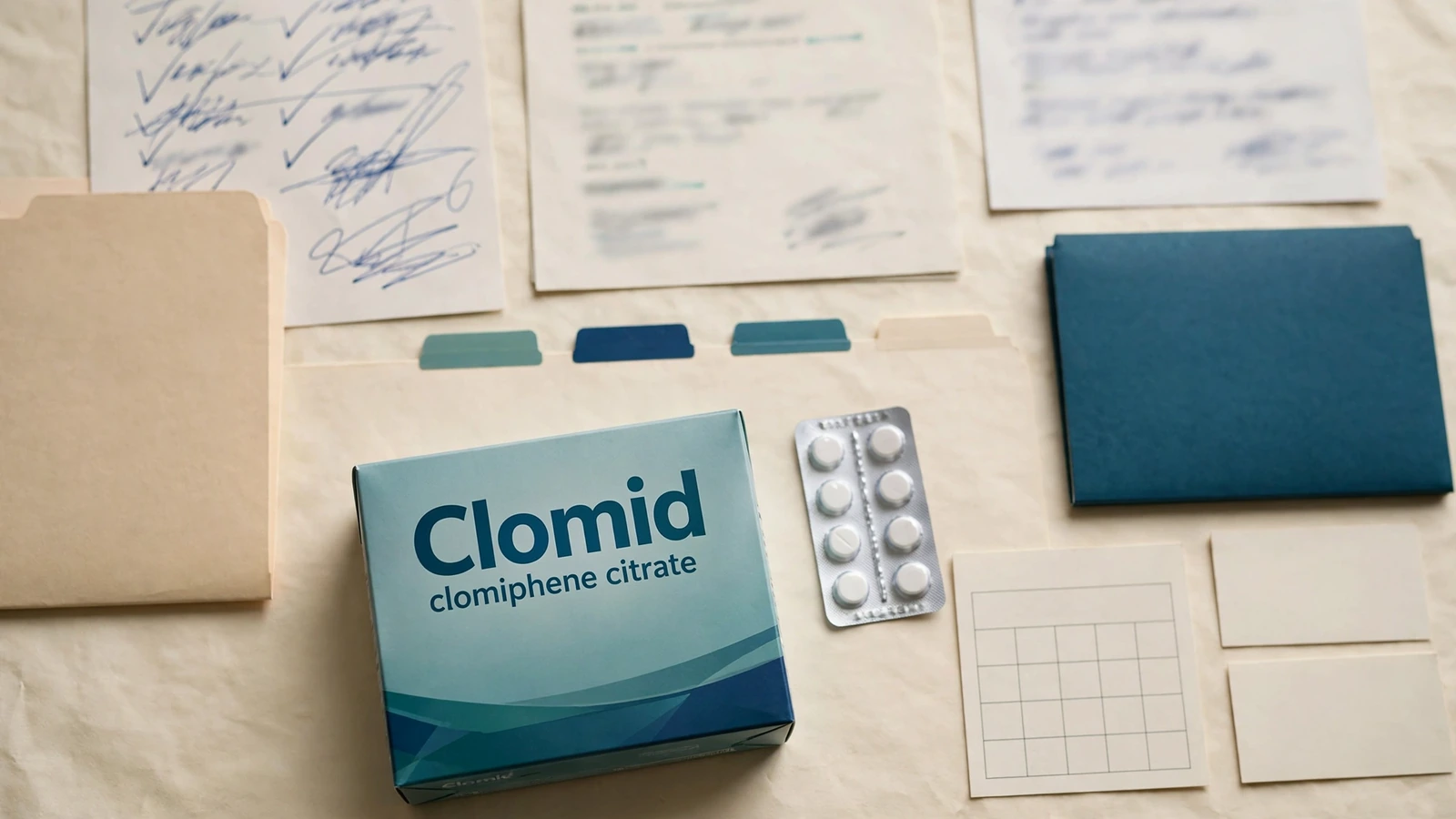
Medication reconciliation matters even without a famous interaction
MedlinePlus clomiphene information instructs patients to tell the clinician and pharmacist about prescription medicines, nonprescription medicines, vitamins, nutritional supplements, and herbal products. The list helps distinguish adverse effects from other causes and may reveal a condition, therapy, or reproductive goal that changes the plan.
Do not stop, start, or change another medicine because a website calls it an interaction. Record the exact product, route, reason for use, and recent changes, then ask the prescriber or pharmacist what action is appropriate. The interaction and contraindication page organizes that preparation.
Side effects should be sorted by action
MedlinePlus lists flushing, stomach upset, vomiting, breast discomfort, headache, and abnormal vaginal bleeding among possible effects. These may call for routine or prompt contact depending on severity, persistence, and the individual plan. A symptom list without an action threshold is incomplete.
Visual symptoms are a prominent label warning. Blurred vision, spots, flashes, double vision, or another visual disturbance requires prompt contact with the prescriber. Avoid driving or hazardous work while vision is affected. The label notes that visual effects may become more likely with greater total exposure or longer treatment and can persist after discontinuation.
Monitoring ends with a decision
A treatment record should show what was prescribed, what was actually taken, symptoms, relevant tests or imaging, and what happened next. Monitoring may lead to continuation, a changed plan, additional evaluation, or stopping. It should not become an open-ended collection of cycles without a reassessment point.
For women, cycle monitoring may address ovulation and ovarian response. For men using clomiphene off-label, monitoring may address hormones, semen when fertility is relevant, symptoms, and adverse effects. Those clinical contexts have different evidence and should not share a universal schedule.
Common Clomid treatment safety mistakes
- Following a generic schedule instead of the label
- Taking extra medicine after a missed dose
- Repeating a prior course without reassessment
- Ignoring vision or abdominal symptoms
- Leaving supplements out of the medication list
- Treating a favorable result as permission to continue indefinitely
Who should not rely on this overview
This page cannot confirm eligibility, interpret a personal symptom, reconcile conflicting instructions, or decide whether off-label use is appropriate. Anyone who may be pregnant, has new visual symptoms, severe abdominal symptoms, trouble breathing, unexplained bleeding, significant liver history, or a major health change needs direct clinical guidance.
Questions that make the safety plan usable
- Which written instruction controls?
- Resolve any difference among the prescription label, portal, calendar, and verbal plan.
- Which symptom requires same-day contact?
- Keep routine, prompt, urgent, and emergency actions distinct.
- Which medicine or condition changes the plan?
- Bring the full current list and relevant health history.
- What ends or changes treatment?
- Ask for a defined reassessment point and decision criteria.

Clinical subject-matter profile
Internal medicine, medication safety, and comparative evidence. This profile does not replace individual clinical care.
Medical information notice: This material does not select a patient, dose, schedule, or response. It does not replace the prescriber, pharmacist, or emergency service.
Separate four documents before treatment
| Document | What it controls | Who resolves a conflict |
|---|---|---|
| Prescription label | The dispensed product and patient-specific directions | Dispensing pharmacist and prescriber |
| Treatment plan | Clinical goal, monitoring, reassessment, and stop rules | Treating clinician |
| Medication list | Current and recent products considered in screening | Prescriber and pharmacist together |
| Urgent-care instructions | What bypasses routine follow-up | The care team or emergency service |
Keep these records together, but do not assume they are interchangeable. A portal message may summarize a decision while the pharmacy label controls what was dispensed. If the documents disagree, pause and obtain clarification rather than selecting the instruction that seems most convenient.
Exposure history matters to safety
Tell the clinician about prior clomiphene courses, interruptions, leftover tablets, treatment obtained elsewhere, and past visual or systemic symptoms. The label warns that visual effects may become more likely with greater total exposure or longer use. A new prescriber needs the previous record to make an informed decision.
For women, also keep pregnancy testing, bleeding, ovarian findings, and cycle response visible. For men, record the off-label rationale, hormone and semen baseline when relevant, and the agreed outcome. Neither context should convert prior tolerance into automatic eligibility.
Safety requires repeat clinical decisions
Screen before treatment, follow the current label, track meaningful symptoms, contact the correct professional when the plan changes, and document the reassessment before another course. No single checklist can replace those linked decisions.
Document what happened after contact
When the patient contacts the clinic or pharmacy, record the symptom or question, the professional who responded, the instruction given, and whether follow-up was arranged. A message that says only “called clinic” is not enough to reconcile later decisions.
If a serious symptom led to urgent assessment, preserve the discharge instructions and tell the treating prescriber before another course is considered. Do not restart from an old calendar simply because the symptom improved.
One final pre-treatment check
Confirm the current product, patient-specific label, pregnancy status when relevant, contraindication screen, medication list, monitoring purpose, reassessment point, and urgent-contact route. Missing information should trigger clarification, not improvisation.
Use the same language across the care team
Describe the product, actual use, symptom, and test by their exact names. Avoid vague summaries such as “everything was normal” or “the medicine worked.” The prescriber, fertility or men’s-health specialist, and pharmacist may each manage a different part of treatment and dispensing. A shared written record helps them identify a conflict without forcing the patient to reconstruct instructions from memory.