
Receipt, verification, dispensing and status
Clomid Pharmacy Dispensing: From Prescription Receipt to Pickup
Clomid pharmacy dispensing starts when an authorized prescription reaches the pharmacy, not when a request enters a shopping cart. The pharmacy matches the patient and product, resolves missing information, completes professional and payment checks, prepares a patient-specific label, and communicates whether the prescription is ready, delayed or requires contact. Each status means something different.
Prescription arrives through an accepted channel.
Patient, prescriber and medicine fields are reconciled.
Missing or conflicting information is resolved.
Product and label are prepared after checks.
The pharmacist remains available for questions.
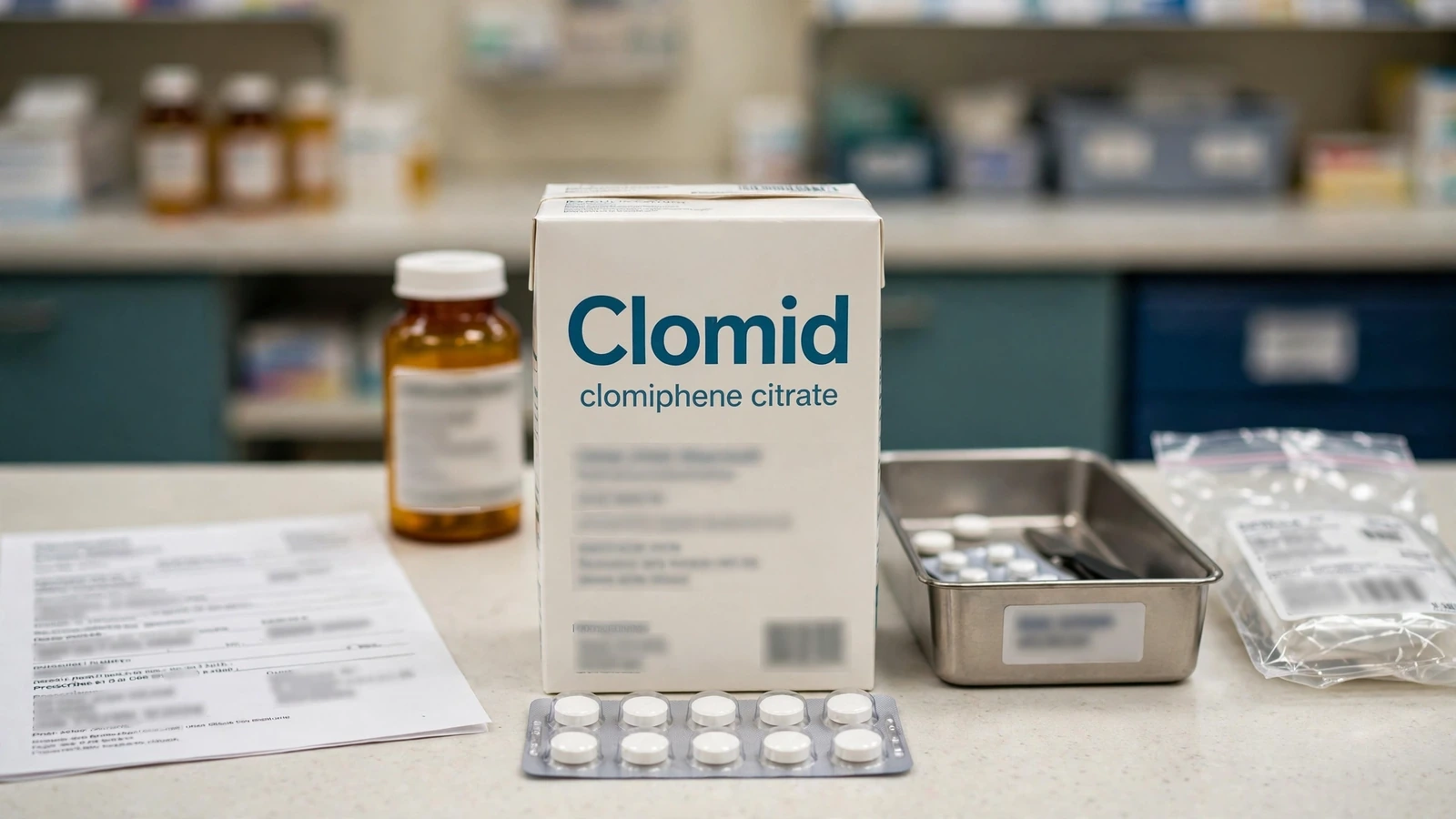
What Clomid pharmacy dispensing checks before release
The dispensing pharmacy needs enough information to connect the authorized prescription to the correct patient and product. Core fields include patient identifiers, prescriber information, medicine name, strength, dosage form, directions, quantity and date. The pharmacy also uses its patient profile, applicable law, professional checks, inventory record and payment information. If a required field is incomplete or inconsistent, contacting the prescriber is a normal safety step rather than a sign that the prescription has failed.
| Record | Match performed | Possible next step |
|---|---|---|
| Patient | Name, date of birth and contact/profile details | Confirm identity or correct a duplicate profile |
| Prescriber | Identity, authorization and contact details | Request clarification or a corrected order |
| Medicine | Ingredient, strength, form, directions and quantity | Resolve ambiguity or stock/product mismatch |
| Patient profile | Current medicines, allergies and relevant alerts | Pharmacist assessment or prescriber contact |
| Payment | Plan, network, claim or cash terms | Clarify rejection, authorization or patient cost |
Prescription status is not treatment status
“Received,” “processing,” “on hold,” “out of stock,” “refill too soon,” and “needs prescriber contact” describe pharmacy operations. They do not determine whether the medicine remains clinically appropriate. Similarly, a clinical decision to prescribe does not mean the pharmacy has finished every dispensing step. Keep the records separate so an operational delay is not interpreted as a new medical instruction.
- Received
- The pharmacy has a record, but matching and professional checks may still be pending.
- Clarification
- The pharmacist needs information from the patient or prescriber before proceeding.
- Insurance hold
- The claim or plan requirements need resolution; this is not a dose instruction.
- Out of stock
- The product is unavailable at that pharmacy; alternatives require proper pharmacy and prescriber handling.
- Ready
- Dispensing is complete, but the patient must still check the label and package.
Transfers and destination changes
A patient may ask to move a prescription because of location, stock, network or cost. Whether and how a prescription can be transferred depends on applicable requirements, the prescription record and the pharmacies involved. Do not create a second order from memory or send a photograph of a label as though it were a new prescription. Ask the receiving pharmacy what information it needs and let the pharmacies and prescriber use their authorized channels.
Before requesting a transfer, verify the receiving pharmacy’s license and confirm that it can supply the prescribed product. Record which pharmacy currently holds the prescription and whether any dispensing has occurred. Duplicate active requests can create confusion about status and remaining quantity. If the prescriber must issue a new prescription rather than transfer the existing one, the pharmacy should explain that requirement.
How Clomid pharmacy dispensing handles refill requests
The presence of a refill number or a prior prescription does not guarantee that the pharmacy can dispense again. The record may have no remaining quantity, may be outside the allowed period, may require prescriber authorization, or may need updated clinical information. The pharmacy may also need to resolve coverage, stock or product questions. A refill status should never be used as permission to repeat old instructions when the clinician has changed the plan.
Ask the pharmacy to state what is missing: a refill authorization, a new prescription, patient confirmation, insurance information, stock or prescriber clarification. Contact the prescriber when the pharmacy requests it. If treatment has been interrupted or directions are uncertain, do not double tablets or invent a restart schedule. MedlinePlus advises contacting the doctor for missed-dose instructions and not taking a double dose to make up for a missed one.
What exact record or authorization is missing?
Does the current clinical plan support another prescription?
Do the new label and directions match the current plan?
Check the dispensed package before use
Confirm the patient name, medicine, strength, directions, quantity, pharmacy and prescriber details. Inspect the seal and expiration. If the product appearance differs from a prior fill, ask the pharmacist to identify the manufacturer or labeler and confirm the product. The brand and generic product comparison explains why appearance can change. If the issue is financial, use the cost and coverage breakdown rather than mixing a status question with a price quote.
Dispensing questions
Why can Clomid pharmacy dispensing require prescriber contact?
The pharmacy may need to clarify identity, product, strength, directions, quantity or another required field. Contact is a normal way to resolve ambiguity before dispensing.
Does “processing” mean the prescription was approved?
It means the pharmacy is working on the prescription record. Clinical authorization and pharmacy processing are different stages. Ask which exact step remains.
What if the package does not match the label?
Do not use an uncertain product. Keep the packaging and contact the dispensing pharmacist immediately so the prescription and inventory records can be checked.
Resolve a delayed prescription without creating duplicates
When a prescription appears delayed, begin with the pharmacy that is supposed to hold it. Ask whether a record was received, which patient and prescriber information it contains, and the exact step that is incomplete. “We do not have it,” “we have it but need clarification,” “the claim rejected,” and “the product is unavailable” require different responses. Record the employee or pharmacist contact, date, time and status in neutral language.
If the pharmacy has no record, confirm the destination details with the prescriber’s office. If clarification is pending, ask whether the pharmacy has contacted the prescriber and what information is needed. If the issue is payment, capture the exact plan response and determine whether it concerns network, product, quantity, timing or documentation. If the product is unavailable, ask whether the prescription can be transferred or whether the prescriber must issue a new order under applicable requirements.
Do not ask several pharmacies to process copied information simultaneously. Duplicate requests can leave the patient uncertain about which pharmacy has the active record and whether any dispensing occurred. Name one destination, confirm the status, then close or transfer the prior path through authorized channels. A screenshot, email or photograph of a label should not be treated as a substitute prescription.
Before pickup or delivery, ask which product will be dispensed and what the patient amount will be. After receipt, compare the label with the current prescription and keep the pharmacy contact information. If directions differ from an older label, follow the current authorized instructions only after resolving any conflict with the pharmacist or prescriber.
Keep a status timeline
Write each status with the date, pharmacy, contact and required next action. A useful timeline might state that the prescription was sent, received, held for clarification, processed for payment, prepared and supplied. It should not translate those operations into a medical conclusion. If the prescriber changes or cancels the plan, record that separately and make sure the pharmacy receives the updated instruction.
Close the loop after every transfer. Confirm that the sending pharmacy no longer expects to dispense and that the receiving pharmacy has the correct record. This avoids duplicate parcels, conflicting labels and uncertainty about which pharmacist should answer product questions.
Delivery notification is not the final safety check. Match the parcel sender with the dispensing pharmacy, inspect the package, and read the patient label. If temperature, moisture or damage is a concern, contact the pharmacist before use rather than relying on the courier’s delivery status.

Clinical subject-matter profile
Medication safety, outcomes research and evidence appraisal
This specialist profile provides subject-matter context; individual diagnosis and treatment decisions require direct clinical care.