
PCOS and ovulation
Clomid for PCOS and Irregular Ovulation
Clomid for PCOS may be considered when polycystic ovary syndrome is associated with anovulatory infertility, but the diagnosis does not make clomiphene the automatic treatment. A clinician evaluates ovulation, other fertility factors, prior therapy, ovarian findings, metabolic context, contraindications, and the monitoring plan before deciding where clomiphene fits.

Where Clomid for PCOS fits in care
PCOS is a heterogeneous condition. Irregular ovulation is common, yet the same diagnosis can appear with different reproductive goals, cycle patterns, androgen features, metabolic risks, and additional causes of infertility. A medication choice should address the person’s current problem, not the diagnosis label in isolation.
The 2023 international evidence-based PCOS guideline hosted by ASRM compares ovulation-induction options and places each option within prior treatment, candidacy, monitoring, and patient circumstances. Its recommendations mean that a page about Clomid must discuss alternatives and decision boundaries rather than imply that PCOS and clomiphene are a fixed pair.
The official U.S. label is narrower. The DailyMed Clomid label updated in 2025 indicates clomiphene for selected women with ovulatory dysfunction who desire pregnancy after obstacles to pregnancy have been excluded or adequately treated. PCOS may be the context for ovulatory dysfunction, but it is not the entire fertility evaluation.
Questions that define candidacy
- Is anovulation part of the current infertility problem?
- Have other infertility factors been considered?
- Is pregnancy excluded before treatment?
- Do ovarian findings change the risk assessment?
- What prior therapy and response matter now?
- What monitoring result will change the plan?
PCOS assessment extends beyond the cycle calendar
A menstrual history can identify irregularity, but irregular cycles do not establish every part of the diagnosis or explain every barrier to pregnancy. A clinician may need to assess endocrine causes, pregnancy status, medication effects, ovarian anatomy, and other fertility factors. The ASRM fertility-evaluation opinion from 2021 supports a systematic evaluation tailored to history rather than an identical test package for every person.
Metabolic and cardiovascular considerations may also be relevant to PCOS care even though clomiphene’s immediate treatment target is ovulation. They can affect the wider health plan, pregnancy preparation, and the choice or sequence of interventions. This page does not turn those considerations into a personal recommendation. It shows why a narrow “Which pill?” question often needs a broader clinical answer.
| Decision | What it asks | What it does not prove |
|---|---|---|
| Diagnosis context | Why ovulation is irregular | That Clomid is preferred |
| Fertility context | Whether other barriers matter | That ovulation alone is sufficient |
| Safety context | Whether contraindications apply | That prior tolerance predicts current safety |
| Monitoring context | How response changes the plan | That one test settles the outcome |
Why alternatives belong in the conversation
The 2023 PCOS guideline gives an evidence-based sequence for ovulation induction and does not position clomiphene as the sole oral option. A clinician may weigh effectiveness evidence, access, contraindications, monitoring, prior response, and patient preferences. Those tradeoffs are more useful than a blanket claim that one medicine is stronger or safer.
Availability can complicate the real-world decision. A preferred option may not be accessible, affordable, or appropriate in a particular setting. Another option may be available but require different counseling or monitoring. These are treatment-planning questions. They do not justify buying a prescription medicine from an unverified seller or substituting an online anecdote for a current prescription.
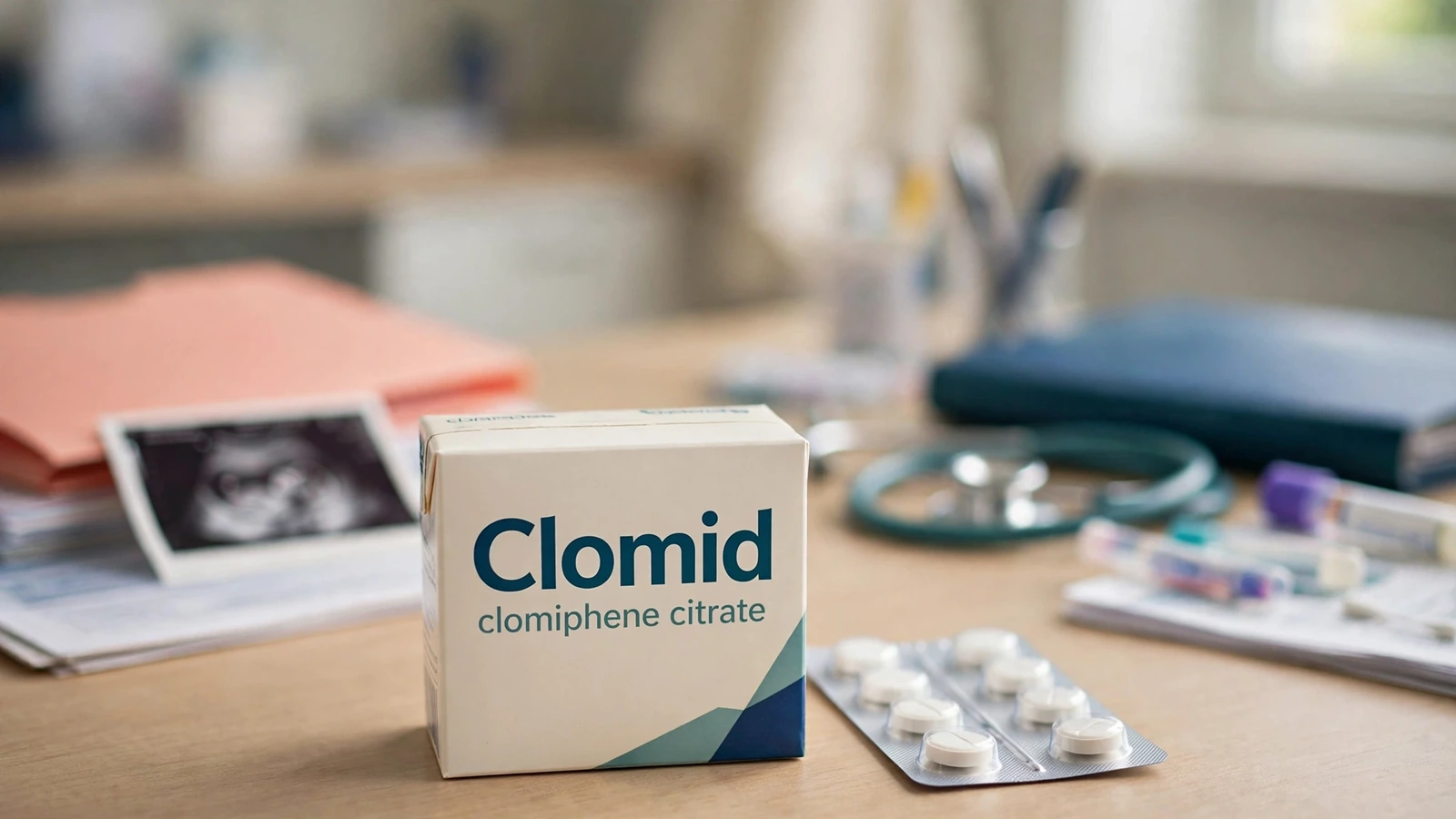
How clinicians monitor Clomid for PCOS
Monitoring should be designed around a question. It may assess whether ovulation occurred, whether ovarian response is concerning, or whether symptoms require reassessment. The method varies. Menstrual history, laboratory testing, ovulation tracking, and ultrasound can each contribute, but no single tool belongs in every plan.
The label warns about ovarian enlargement and ovarian hyperstimulation syndrome. PCOS does not remove those concerns. Severe or increasing abdominal or pelvic pain, marked swelling, rapid weight change, shortness of breath, or reduced urination needs urgent medical assessment. The response plan should be discussed before treatment so that a new symptom does not become a search-engine question during a time-sensitive event.
Contraindications, medicines, and health history
Clomiphene is contraindicated during pregnancy and in people with liver disease or a history of liver dysfunction, unexplained abnormal uterine bleeding, and ovarian cysts or enlargement not due to PCOS. The label also identifies uncontrolled thyroid or adrenal dysfunction and organic intracranial lesions such as a pituitary tumor. PCOS is an exception in one ovarian-cyst clause; it is not an exception to the need for evaluation.
MedlinePlus clomiphene information directs patients to share prescription and nonprescription medicines, vitamins, supplements, and herbal products with the clinician and pharmacist. A complete list helps distinguish medication effects from PCOS symptoms and supports safe pharmacy counseling. Do not stop or change another medicine based on this page.
Who should not use this page as a treatment decision
- People without a confirmed PCOS and ovulation assessment
- People who may already be pregnant
- People seeking a universal dose or cycle calendar
- People with unexplained bleeding or relevant liver history
- People with new visual or severe abdominal symptoms
- People planning to reuse another person’s prescription
Questions to bring to the fertility visit
- Which PCOS feature is this treatment intended to address?
- Ask how the current findings establish anovulatory infertility and what other factors were assessed.
- Why is this option being considered now?
- Discuss alternatives, prior treatment, access, contraindications, and the evidence that shapes sequencing.
- What result changes the next step?
- Clarify how response will be observed and what happens if it is absent, excessive, or unclear.
- Which symptoms need urgent contact?
- Write down the plan for vision changes, abdominal symptoms, breathing changes, bleeding, and any individual risk.

Clinical subject-matter profile
Internal medicine, medication safety, and comparative evidence. This profile does not replace individual clinical care.
Medical information notice: This page summarizes official labeling and PCOS guidance. It does not diagnose PCOS, choose fertility treatment, provide dosing, or replace individualized clinical care.
PCOS care is broader than an ovulation prescription
PCOS can involve menstrual, metabolic, dermatologic, and reproductive concerns that do not all have the same treatment target. A fertility plan should identify which problem clomiphene is expected to address and which problems require separate care. Improvement in one measure does not prove that every PCOS-related concern is controlled.
The 2023 international PCOS recommendations emphasize shared decision-making and individualized fertility care. They also place clomiphene within a broader evidence landscape rather than as the automatic choice for every person. Local availability, contraindications, previous response, other infertility factors, and monitoring capacity can change the discussion.
Build the question before choosing the test
- Confirm that irregular ovulation is the current treatment target.
- Identify other fertility factors that may alter the timeline.
- Decide which observation will show response and when it is interpretable.
- Define symptoms or findings that stop the routine plan.
- Schedule the decision point before another course is considered.
When to return to diagnostic assessment
Unexpected bleeding, severe pain, marked swelling, a possible pregnancy, visual symptoms, or a changing health condition should not be folded into a routine PCOS calendar. They require direct clinical guidance. A lack of an interpretable response may also be a reason to reassess the diagnosis, the monitoring method, or the larger fertility plan rather than simply repeating the same approach.
Bring the current medication and supplement list because other treatments may affect symptoms, bleeding, laboratory interpretation, or fertility planning. Record what was actually taken, not only what was originally prescribed.
Key boundary: this page explains the PCOS context. It does not select clomiphene over another treatment or create an individual fertility plan.
Use the next visit to confirm the active question
Ask whether the current problem is ovulation, treatment response, cycle safety, another fertility factor, or a broader PCOS concern. The answer determines which evidence matters next. A person can move between these questions over time, but each visit should still name the active question. That discipline keeps general PCOS information from turning into an individualized medication recommendation.