
Care, coverage and dispensing costs
Clomid Cost With Insurance or Cash Payment
Clomid cost is not one stable retail number. A useful estimate separates clinical assessment, testing, the prescribed product, pharmacy processing, insurance rules and follow-up. Compare the same medicine details at the same prescription stage, and do not let a low advertised price replace pharmacy or prescription verification.
Assessment, records, laboratory work and follow-up can be separate charges.
Ingredient, strength, dosage form, quantity and manufacturer affect a quote.
Formulary, network, authorization, deductible and plan stage can change patient cost.
A cash quote is time-, pharmacy-, product- and quantity-specific.
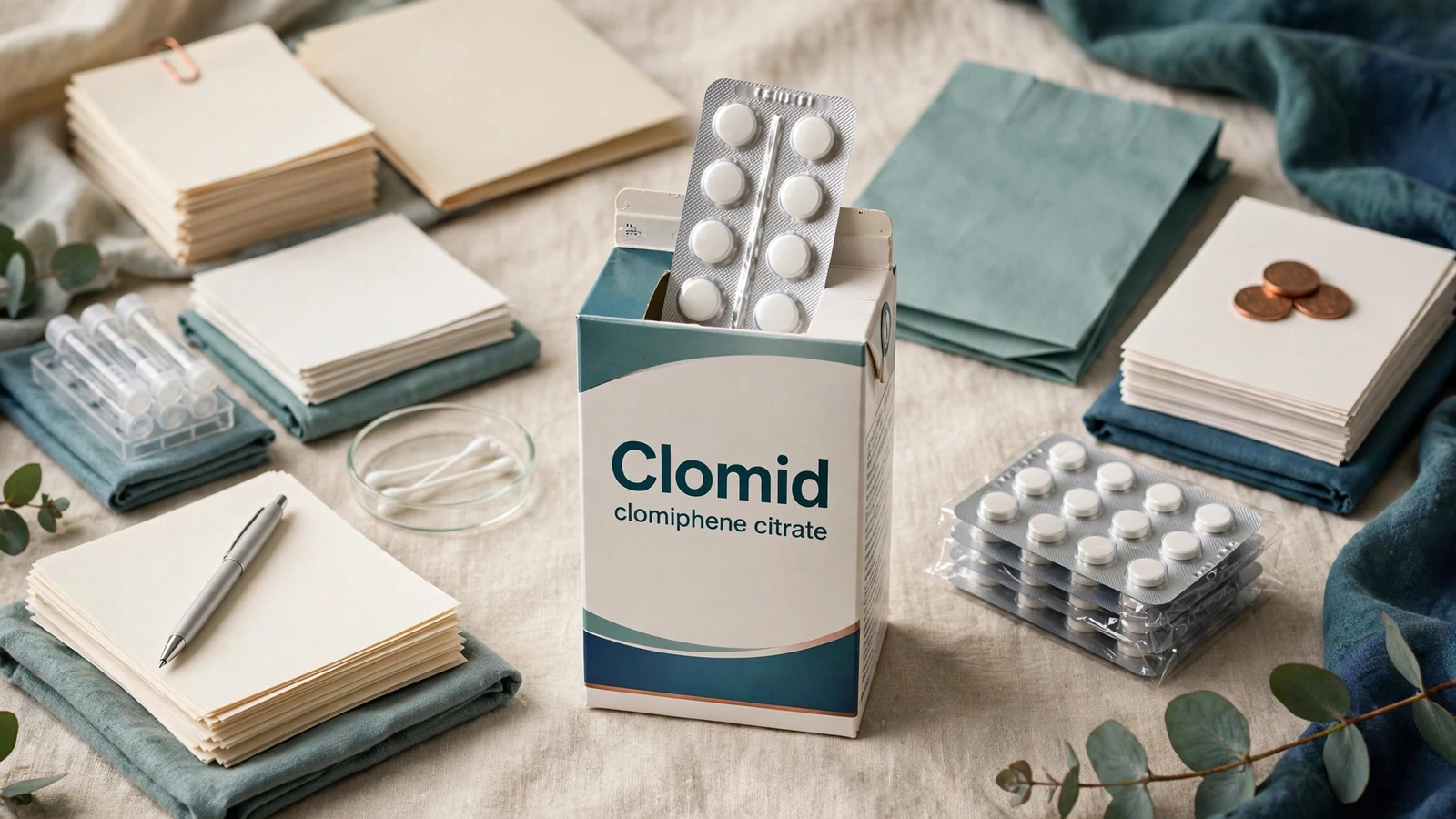
Build the estimate line by line
When a person asks for the Clomid price, the answer depends on what is being priced. A pharmacy quote covers the medicine and applicable dispensing terms; it does not automatically include a clinician visit, diagnostic testing or follow-up. A clinical service fee may cover an assessment but not laboratory work or the pharmacy product. An insurance estimate may be provisional until the prescription is processed. Keeping these categories separate prevents a low entry price from being mistaken for the total cost of care.
| Cost component | Record to request | Variable to hold constant | Common source of confusion |
|---|---|---|---|
| Clinical assessment | Written fee scope and refund terms | Type of appointment | Assuming payment guarantees a prescription |
| Testing | Order, facility and billing details | Same tests and laboratory | Treating all monitoring as included |
| Medicine | Ingredient, strength, form and quantity | Same prescribed product details | Comparing different quantities or products |
| Insurance | Processed claim or plan estimate | Same pharmacy and date | Confusing list price with patient responsibility |
| Cash quote | Dated itemized amount | Same pharmacy, product and quantity | Treating a temporary discount as permanent |
Clomid cost with insurance
Insurance coverage is not a single yes-or-no fact that applies to every patient. The relevant plan may consider the product, indication, prescriber, pharmacy network, benefit category, deductible, authorization rules and other plan terms. A medicine can appear on a formulary while still producing different patient costs at different stages of coverage. A plan representative or pharmacy can explain processing, but the final amount may not be known until the prescription details are submitted.
Ask whether the quote refers to the brand name, a generic clomiphene product, or either. Confirm the strength, dosage form and quantity. Ask whether the pharmacy is in network and whether the plan requires prior authorization or other documentation. If the claim rejects, record the exact message rather than assuming the medicine is never covered. A rejection can reflect missing information, an ineligible pharmacy, a product mismatch, a timing issue, or a plan rule that needs clarification.
- Plan name and member details
- Product and quantity submitted
- Pharmacy network status
- Deductible or coverage stage
- Authorization requirement
- Claim response and date
- Estimated patient responsibility
- Who supplied the estimate
Clomid cost without insurance
A clomid cash price is the amount a particular pharmacy quotes for a particular product and quantity at a particular time. It can change with availability, manufacturer, pharmacy purchasing arrangements and temporary programs. Compare cash quotes only after confirming that each pharmacy is quoting the same ingredient, strength, dosage form and quantity. Ask whether dispensing or shipping charges are included and when the quote expires.
Do not give health or payment information to an unverified seller just to reveal a price. FDA identifies very low prices that seem too good to be true as one warning sign of an unsafe online pharmacy, especially when the site also avoids a prescription or cannot be verified with a state board. A legitimate cash comparison still requires a valid prescription and a licensed dispensing pharmacy.
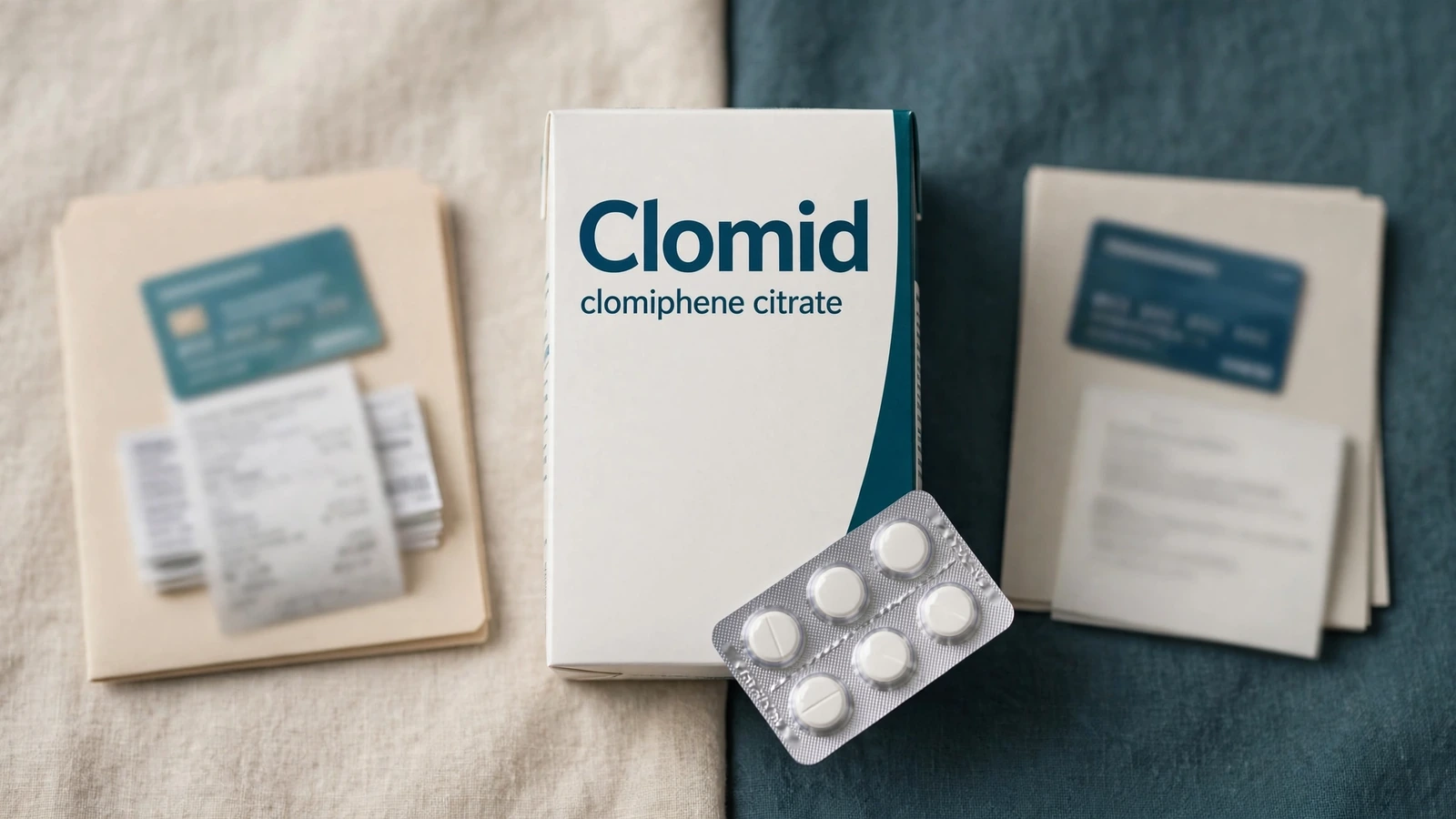
Brand and generic can change the quote
People may use “Clomid” as a familiar term while the available prescription product is labeled clomiphene citrate. FDA’s Orange Book explains how approved multisource prescription products and therapeutic-equivalence evaluations are organized. Approved products can differ in appearance, packaging, inactive ingredients and certain labeling features. Those differences do not automatically make one product better or worse, but they can affect availability, patient preferences, allergy questions and the amount quoted.
Ask the pharmacy which approved product it expects to dispense. If the prescriber specified a particular product or the patient has a concern about an inactive ingredient, raise it before the prescription is filled. For the product distinction itself, see Clomid and generic clomiphene differences. That comparison explains product differences, while the cost discussion here shows how product identity changes a quote.
A price does not authorize treatment
Paying an assessment fee, receiving an estimate or finding pharmacy stock does not mean clomiphene is appropriate or that a prescription will be issued. The clinical decision remains separate. Likewise, a prescription does not guarantee that a particular pharmacy has stock, that insurance will pay, or that a refill is available. Keep each status in its own record so a commercial signal is not mistaken for a medical decision.
Cost questions to ask
Why can Clomid cost differ between two pharmacy quotes?
They may refer to different manufacturers, quantities, pharmacy fees, coverage terms or dates. Verify that both quotes use the same prescribed product details and ask for an itemized record.
Does an insurance estimate guarantee the final amount?
No. It may be based on current plan information and can change when the actual prescription is processed. Record whether the amount is an estimate or a completed claim response.
Should I choose the lowest online price?
Price is only one field. First verify the prescription requirement, legal pharmacy identity, state license and pharmacist access. Compare the same product and quantity, then evaluate the itemized cost.
Run a same-prescription comparison
Before comparing prices, create a reference line from the actual prescription: ingredient, strength, dosage form and quantity. Add the date, expected manufacturer or labeler if known, and whether the quote includes dispensing or delivery charges. Every competing quote must match that line. If a pharmacy quotes another quantity, another product or an incomplete total, mark it as noncomparable until the difference is explained.
For insurance, distinguish a benefit explanation from a processed claim. Ask whether the pharmacy is in network, whether the quoted product is covered, whether a deductible or other coverage stage affects the amount, and whether authorization is pending. Record the exact rejection or pending message. Do not replace that message with a guess such as “not covered.” A specific response can be taken back to the pharmacy, plan or prescriber for clarification.
For cash, request a dated total and the expiration of any temporary offer. Ask whether the pharmacy will honor the quote when the prescription arrives and whether a different product changes the amount. A discount program can affect the transaction, but it does not verify the pharmacy, authorize treatment or guarantee stock. License, prescription and product checks remain separate gates.
After dispensing, compare the receipt with the quote and patient label. Save the record if a later claim, refund or refill question arises. A complete file should show what care was purchased, what product was dispensed, what the plan paid or denied, what the patient paid, and which items remain estimates. That level of detail is more useful than a single headline price and helps prevent duplicate charges.
Avoid double-counting follow-up
Ask whether follow-up contact is included in the original clinical fee, billed separately, or dependent on new testing. A pharmacy counseling question is not the same as a clinician follow-up visit. Record who provides each service and what triggers another charge. This prevents a low initial fee from hiding later components and prevents the same service from being counted twice.
If a quote changes, ask which field changed: product, quantity, pharmacy, network, plan response, date or service scope. Reprice only that field before rebuilding the total. This keeps an insurance change from being mistaken for a pharmacy markup and keeps a clinical fee from being attributed to the medicine.

Clinical subject-matter profile
Medication safety, outcomes research and evidence appraisal
This specialist profile provides subject-matter context; individual diagnosis and treatment decisions require direct clinical care.